
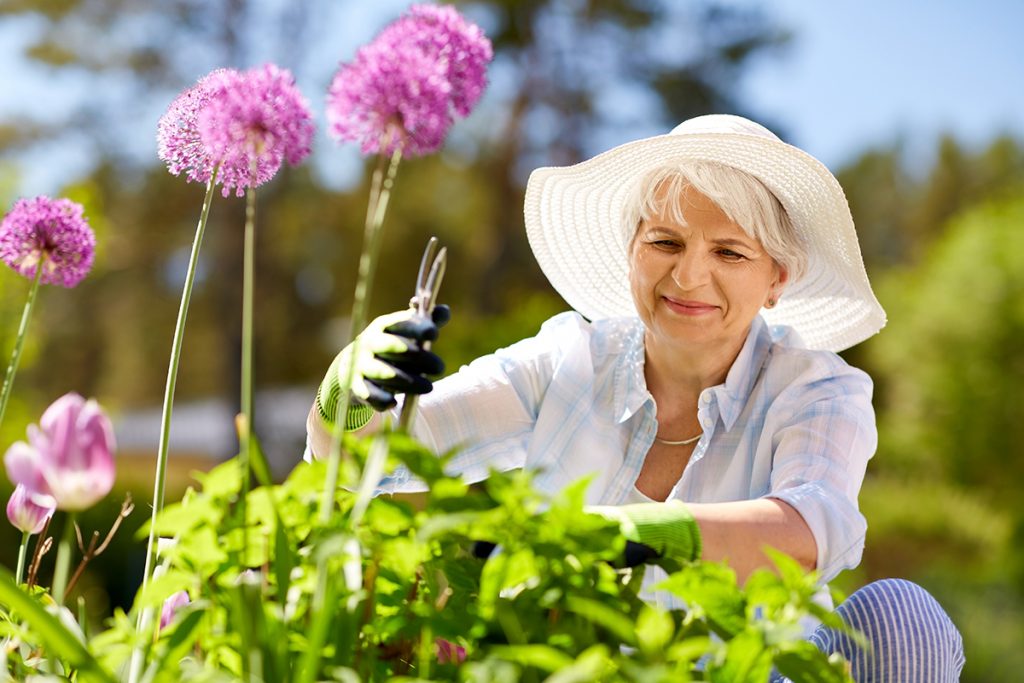
Did you know gardening is a fun family activity that can lower your blood pressure? Since May is Stroke Awareness Month, now’s a great time to learn about the many health benefits of gardening. Planting flowers, herbs, and vegetables around your house and/or community garden can give you fresh-cut bouquets and fresh fruits and vegetables all summer long. More importantly, digging in the dirt and caring for plants provides physical benefits as well.
GARDENING HELPS BOOST YOUR MOOD
Interacting with nature can improve your mood and mental health in more ways than imagined. Gardening is a great hobby because it’s fun and easy to participate in for both young and elder. If you know a senior who tends to stay indoors, this is a great activity to get them motivated, and up and out of the house. Being outdoors in the fresh air, under the sun, can bring about a feeling of tranquility.
MORE BENEFITS TO GARDENING
Gardening can also help reduce symptoms of depression, and relieve anxiety and stress. The activity lowers levels of cortisol, which alleviates stress in our body and reduces blood pressure, which is why gardening is good for your heart. Gardening takes a little bit of effort, but the benefits are hard to pass up! There’s a lot of planning, digging, planting, watering, and weeding – all of which help burn calories and strengthen your heart without it feeling like exercise. The Centers for Disease Control (CDC) counts it as moderately intense exercise, so it provides important cardiovascular benefits. One study found that regular gardening can reduce the risk of heart attack and stroke by as much as 30% for people over 60. We encourage you to share this astounding statistic with the seniors you love and care about, as we are passionate and active in sharing these health benefits while May is Stroke Awareness Month and all year long.
THINGS TO REMEMBER WHILE OUTDOORS
Being outdoors in the sunshine can also increase vitamin D levels, which has also been shown to reduce the risk of heart disease. It’s important to take precautions when spending time in the sun and if you’re going to be spending a lot of time outside, remember to do so safely by limiting your exposure and using sunscreen. If you plan to be outdoors for longer periods of time, don’t forget to reapply your sunscreen. You can also reduce your exposure by spreading out your gardening activities throughout the day. Remember, it’s also important to take lots of water breaks to stay hydrated.

GARDENING BURNS CALORIES
As we continue to share about the health benefits of gardening during Stroke Awareness Month, we can’t forget to mention that gardening burns calories. Activities like lifting planters, digging in the dirt, bending, and stretching to pull weeds, and pushing a lawn mower can collectively engage every single muscle in your body. You can burn more than 330 calories an hour. For some, that could be an entire meal such as breakfast! More involved work like chopping wood, or hauling heavy bags of mulch, can burn even more calories.
DEMENTIA RISK AND GARDENING
Gardening is a good way to bond with others such as family, friends, and your community. Of course, gardening can also be a solo activity in which you escape and become one with nature. But why not use it as an opportunity to bond with those around you? The happiness and stress relief that gardening provides is a great thing to share with your loved ones. It’s a great way to make and preserve memories. Gardening is also known to impact dementia risk in seniors. The exact cause of Alzheimer’s disease and other dementias is not known; however, research shows that positive life choices have a great impact on lowering the risks of developing them. Engaging in activities that involve dexterity, problem-solving, endurance, and sensory awareness are the types of activities that are important to take part in.
EATING HEALTHY FOR STROKE PREVENTION
Growing your own food can also support a healthy eating lifestyle. Growing and harvesting your own produce in your backyard is as farm-to-table as it gets. If you grow your own vegetables, herbs, or fruits, you’re getting the freshest produce that you know hasn’t been treated with potentially harmful pesticides or fertilizers. People who grow their own fruits and vegetables are also far more likely to eat them. This is especially true for children. So, if you have picky eaters who aren’t fans of vegetables, gardening together as a family may be the answer you’ve been looking for!
There’s no doubt that gardening improves your well-being by helping your mind and body function better. Along with all the benefits mentioned above, it always feels good to accomplish a new task. Give it a try and you may just find yourself more in tune with yourself – and the earth!
HOW IN-HOME CARE CAN HELP
As we continue to share about the American Stroke Association and Stroke Awareness Month, if you or an elderly person you know is having difficulty with getting around the house, could use some assistance with activities to promote exercise, finding hobbies to promote mental health, implementing a well-balanced diet, in-home meal preparation and more, maybe in-home care is your answer to help them. Having a caregiver and companion in the home to promote all these things will help keep your loved one happy, healthy and safe at home. Source: The Caregiver Connection
ABOUT OUR SERVICES
Assisting Hands® Rockford can provide assistance in the privacy of their own home for you or a loved one. Our caregivers have training and experience in providing in-home care. They have successfully passed extensive background checks, as well as being insured, bonded, and trained in CPR and First Aid. Assisting Hands® Rockford will help you select the best matched caregiver from its pre-screened group of available assistants. We can have qualified help placed in your home generally within 48 hours or less of the initial call.


