
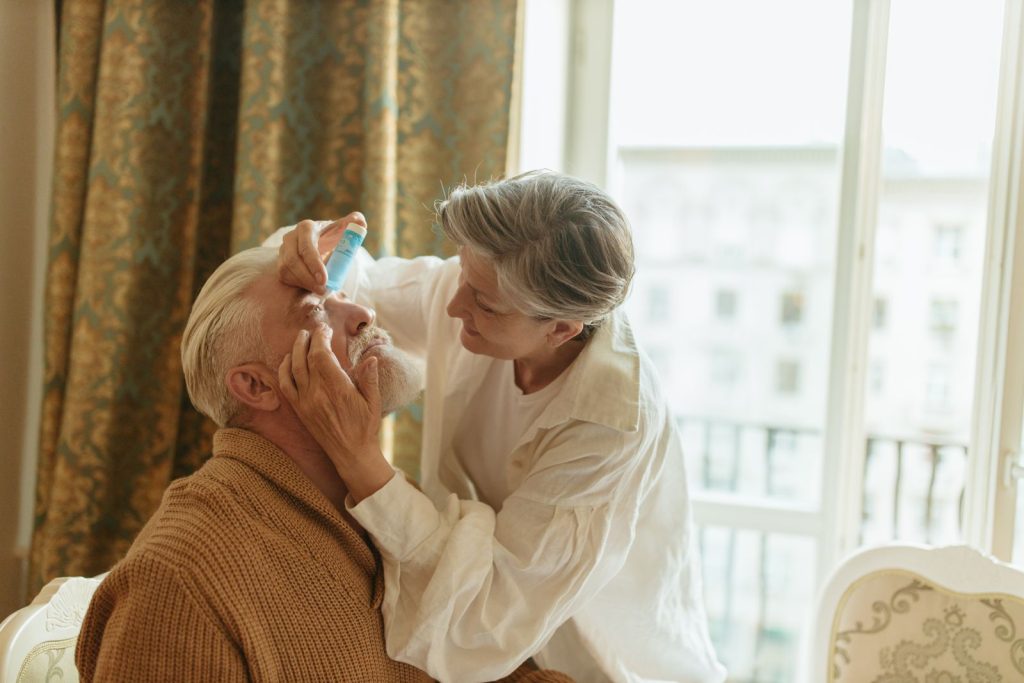
Watery eyes are one of the most common complaints we hear from older adults, and one of the most brushed off. Tears running down the cheeks while reading, wiping eyes all through a walk, a tissue always tucked in a sleeve. Many people assume it’s just part of getting older.
Sometimes it is. But constant tearing can also point to a problem that’s easy to treat, and occasionally to one that needs prompt care. Here’s what usually causes it, what may help, and how to tell when it’s time to call the doctor.
Why watery eyes are so common with age
Your eyes make tears all day to keep the surface moist and clear. Normally those tears spread across the eye with each blink, then drain through tiny openings in the inner corners of the eyelids, down a duct and into the nose.
Watery eyes happen when that system gets out of balance. Also the eyes make too many tears, or the tears can’t drain away fast enough. Both become more likely with age. Eyelids loosen, drainage ducts can narrow, and the glands that keep tears from evaporating often stop working as well as they used to.
The medical term is epiphora, in case you hear it at the eye doctor’s office.
Common causes in older adults
Dry eye
It sounds backward, but dry eye is one of the most common reasons for watery eyes. When the eye surface gets dry and irritated, it sends out a flood of reflex tears. Those tears are mostly water, so they don’t coat the eye well and run off instead. People often notice burning, grittiness or a feeling that something is in the eye, along with the tearing.
Blocked tear duct
The drainage duct that carries tears into the nose can narrow or close with age, after sinus problems or after an infection. When it’s blocked, tears have nowhere to go but over the lower lid. It often affects one eye more than the other.
Eyelid changes
With age, the lower eyelid can loosen and sag outward, a condition called ectropion. When that happens, the drainage opening no longer touches the eye and tears can’t get in. The opposite problem, entropion, turns the lid inward so lashes rub the eye and cause irritation and tearing.
Blepharitis
This is irritation along the edges of the eyelids, often with crusting or flakes at the base of the lashes. It’s common in older adults and can cause red, itchy, watery eyes, especially in the morning.
Allergies and irritants
Pollen, dust, pet dander, smoke, wind and cold air can all set off tearing. In the Fort Mill and Charlotte area, the heavy spring pollen season can make this worse for weeks at a time. Ceiling fans and car vents blowing toward the face are common culprits too.
Infection
Conjunctivitis, often called pink eye, can cause redness, tearing and discharge. Some kinds are contagious, so hand washing matters.
Medications and other conditions
Some medications, including certain chemotherapy drugs, can cause tearing. So can facially nerve problems like Bell’s palsy, which can keep an eyelid from closing fully. If watery eyes started around the same time as a new medicine, mention it to the doctor or pharmacist.
What may help at home

For mild tearing with no other worrying symptoms, these simple habits help many people. It’s still a good idea to check with a doctor before starting any new eye drops, especially if your loved one takes several medications or has glaucoma.
- Use a warm compress. A clean washcloth soaked in warm water and held on closed eyes for a few minutes can loosen oil glands and soothe irritated lids.
- Clean the eyelids gently. A doctor may suggest a diluted baby shampoo or a store-bought lid cleanser to remove crust along the lashes.
- Ask about artificial tears. If dry eye is the cause, lubricating drops may calm the reflex tearing. Preservative-free versions are often easier on sensitive eyes.
- Block wind and glare. Wraparound sunglasses help outdoors, and pointing fans and car vents away from the face helps indoors.
- Add moisture to the air. A humidifier can help, especially when the heat is running in winter.
- Pat, don’t rub. Rubbing makes irritation worse and can spread germs. Use a clean tissue each time.
- Wash hands often, and don’t share towels or pillowcases if an infection is possible.
If tearing doesn’t improve within a couple of weeks, it’s time for an appointment rather than more home remedies.
When to make an appointment
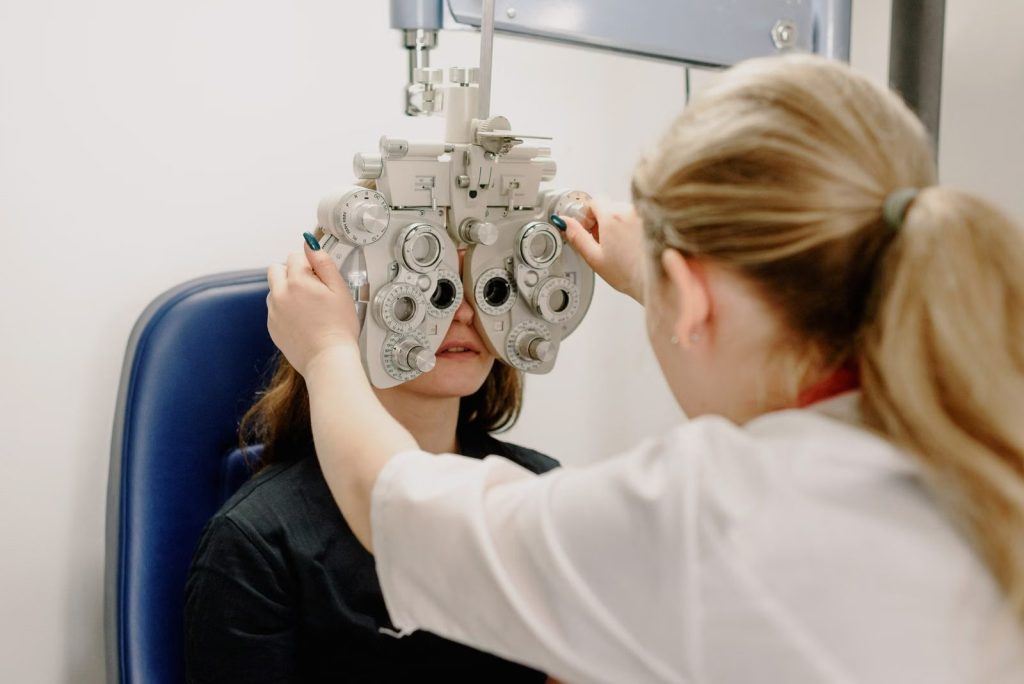
Schedule a visit with a primary care doctor, optometrist or ophthalmologist if watery eyes:
- Last more than two or three weeks, or keep coming back
- Make it hard to read, drive, watch TV or see clearly
- Come with redness, itching or crusting that doesn’t clear up
- Affect only one eye
- Come with a sagging or inward-turning eyelid
- Started after a new medication
- Cause irritated, raw skin on the cheeks from constant wiping
Many causes of watery eyes, including blocked ducts and loose eyelids, can be treated with minor procedures. People often live with the problem for years before learning that.
How a caregiver can help

Eye problems can quietly chip away at an older adult’s independence. Watery, blurry eyes make it harder to read medication labels, cook safely, get around the house and drive. They also raise the risk of falls.
At Assisting Hands Home Care of Fort Mill, our caregivers can drive your loved one to eye appointments, including visits where their eyes are dilated. They can remind them about eye drops prescribed by their doctor, keep the home well-lit and free of trip hazards, and help with reading mail and labels when vision is blurry. They also notice changes, like new redness or more squinting, and pass them along to the family.
If you’d like extra support for a parent or loved one in Fort Mill, Tega Cay or nearby communities, give us a call. We’re happy to talk through what would help.
This article is for general educational purposes only and isn’t a substitute for professional medical advice, diagnosis or treatment. Always ask a doctor or other qualified healthcare provider about any questions regarding a medical condition.

