

You stop by to visit your mom on a Saturday afternoon. She is asleep in her chair — again. You call your dad at 2pm. He just woke up from his third nap of the day.
It happens so often that you start to wonder. Is this normal? Should I be worried? Is something wrong?
If you are asking these questions you are not alone. Changes in sleep are one of the most common concerns families raise about aging loved ones. And the answer is not always simple — because sometimes it is perfectly normal, and sometimes it is a warning sign that deserves attention.
In this guide we will walk you through exactly what you need to know — clearly, honestly, and backed by current research.
Quick Takeaways
- Most seniors need 7 to 9 hours of sleep per night — the same as younger adults
- According to the National Council on Aging (NCOA), between 20 and 60% of older adults report taking daytime naps, often to make up for poor overnight sleep
- According to research published in the NIH National Library of Medicine, almost half of seniors over age 65 who live at home are dissatisfied with their sleep, and nearly two-thirds of those in nursing home facilities suffer from sleep disorders
- Excessive sleep in seniors is most commonly caused by depression, medications, medical conditions, sleep apnea, or social isolation — not just aging
- A sudden increase in sleep is always worth discussing with doctor
Is It Normal for Seniors to Sleep More?
The short answer is yes — to a point.
As we age our sleep patterns naturally shift. But here is something that surprises many families: sleep needs do not actually decline with age.
According to the National Sleep Foundation, it is a common misconception that a senior’s sleep needs decline with age. Research indicates that sleep needs remain constant throughout adulthood — seniors should strive to achieve between 7 and 9 hours of restful, quality sleep nightly.
According to NIH research on sleep in the elderly, as part of the natural aging process sleep becomes more fragmented and lighter, with an increase in arousals and awakenings that reduce sleep efficiency and total sleep time. The elderly tend to go to bed earlier and wake up earlier compared to younger adults, due to shifts in the circadian rhythm generated by the suprachiasmatic nucleus of the hypothalamus.
Normal age-related sleep changes include:
- Going to bed earlier and waking up earlier than before
- Waking more frequently during the night
- Sleeping more lightly overall
- Taking one or two short daytime naps
- Feeling tired earlier in the evening
These changes are a normal part of aging. They do not automatically mean something is wrong.
However — sleeping excessively, being very difficult to wake, or suddenly sleeping much more than usual may indicate an underlying issue that deserves attention.
How Much Sleep Is Too Much for a Senior?
Most seniors do well with 7 to 9 hours of nighttime sleep plus a brief daytime nap.
According to the National Council on Aging, middle-aged adults who sleep fewer than six hours each night show brain changes linked to dementia and stroke risk — while consistently sleeping too much carries its own health risks as well.
Watch closely for these signs of excessive sleep:
- A sudden and significant increase in how much they sleep
- Difficulty staying awake during meals or conversations
- Sleeping through activities they used to enjoy
- Being very hard to wake up
- Seeming confused or disoriented upon waking
Any of these could point to an underlying cause that deserves medical attention.
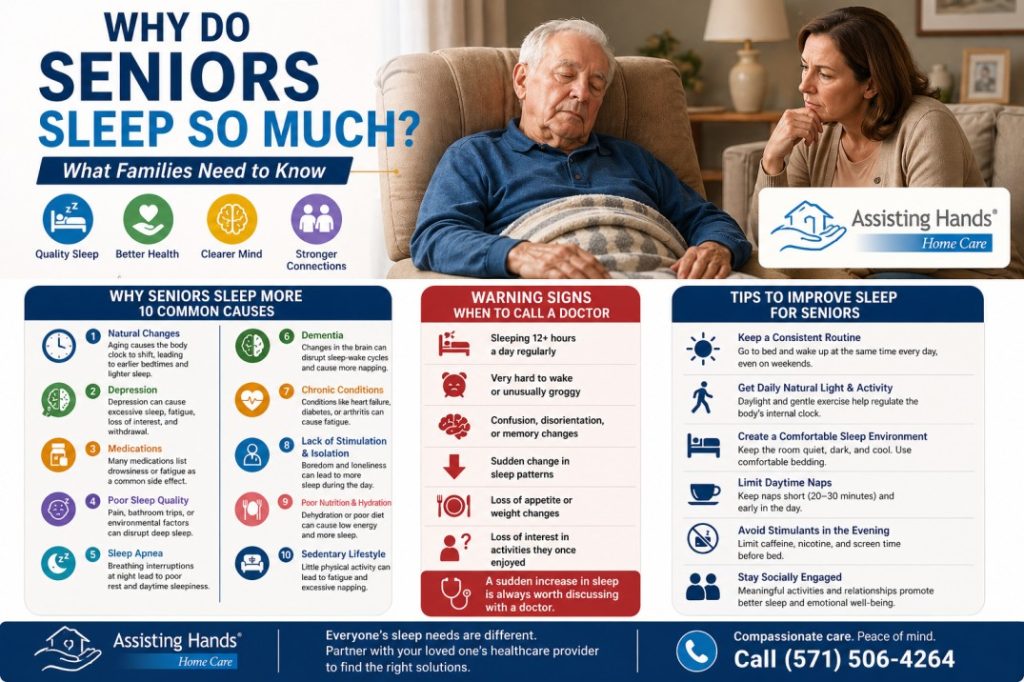
Why Do Seniors Sleep So Much? 10 Common Causes
There is rarely just one reason. In most cases excessive sleep in seniors is caused by a combination of factors. Here are the most common and most important ones to understand.
Natural Changes in the Sleep-Wake Cycle
According to the Sleep Foundation, as people get older their sleep changes due to the effects of an aging internal body clock. Deterioration in the function of this system can disrupt circadian rhythms, directly influencing when people feel tired and alert. Changes in the production of hormones such as melatonin and cortisol may also play a role in disrupted sleep in older adults.
This is one of the most common and least serious causes of increased sleep in older adults.
Depression
This is one of the most overlooked — and most important — causes of excessive sleep in seniors.
According to the Centers for Disease Control and Prevention (CDC), about 5% of older adults in community living experience depression. However the actual numbers may be higher because depression in seniors frequently goes undiagnosed.
According to NIH research on sleep disorders in older adults, older adults with insomnia symptoms have a 23% increase in their risk of developing depression symptoms. Studies have also found that sleep disturbance has a higher association with depression than prior depression or disability itself.
A depressed senior may sleep excessively as a way of withdrawing from the world. Other signs to watch for:
- Loss of interest in activities they once enjoyed
- Social withdrawal and isolation
- Changes in appetite or weight
- Fatigue and low energy even after sleeping
- Increased irritability or anxiety
If you suspect depression in a loved one speak with their physician. Depression in seniors is very treatable — and getting help can dramatically improve quality of life.
Medications
This is a major and frequently overlooked cause.
According to the Sleep Foundation, almost 40% of adults over the age of 65 take five or more medications — many of which list drowsiness or sedation as a side effect.
Common culprits include:
- Blood pressure medications
- Antidepressants
- Sleep aids and sedatives
- Antihistamines
- Pain medications including opioids
- Anti-anxiety medications
- Some diabetes medications
If your loved one began sleeping noticeably more around the same time a new medication was introduced — or a dosage was changed — speak with their doctor. A simple adjustment can make a significant difference.
Underlying Medical Conditions
Several health conditions common in older adults can cause significant fatigue and excessive sleep:
- Heart disease — the heart works harder and the body tires more easily
- Diabetes — blood sugar fluctuations cause significant fatigue
- Thyroid disorders — an underactive thyroid slows the entire body down
- Anemia — low iron reduces oxygen delivery and causes exhaustion
- Chronic kidney disease — toxin buildup causes fatigue
- COPD — reduced oxygen levels lead to constant tiredness
- Parkinson’s disease — disrupts the sleep cycle and causes daytime fatigue
- Cancer or cancer treatment — causes profound physical and emotional fatigue
If excessive sleep is new or unexplained a medical check-up with bloodwork is always a good starting point.
Sleep Apnea
Sleep apnea is surprisingly common in older adults — and significantly underdiagnosed.
According to NIH research on sleep in the aging population, obstructive sleep apnea prevalence estimates in older adults may be as high as 70% in men and 56% in women — compared to 15% in men and 5% in women in the general adult population.
According to the Mayo Clinic, adults aged 65 and older are at high risk for developing sleep apnea — a serious disorder that can lead to chronic fatigue, heart disease, and Type 2 diabetes.
With sleep apnea the airway becomes partially blocked during sleep. The brain wakes the person just enough to restore breathing — often dozens or hundreds of times per night. The person almost never fully wakes up but their sleep is severely disrupted throughout.
The result? Your loved one sleeps 8 or 9 hours and wakes up exhausted. A sleep study can diagnose it and treatment — usually a CPAP machine — can dramatically improve sleep quality and daytime energy.
Boredom and Lack of Social Stimulation
This one surprises many families. But it is very real — and very common.
According to National Institutes of Health (NIH), changes in sleep patterns are common in people with Alzheimer’s disease and other dementias. These sleep problems are thought to result from brain changes caused by the disease that affect the sleep-wake cycle.
Importantly, the relationship runs in both directions. According to a 10-year longitudinal study published in NIH PubMed in 2025, excessive daytime sleepiness was significantly associated with incident dementia in community-dwelling older adults.
If your loved one is sleeping excessively and also showing signs of memory loss, confusion, or personality changes — speak with their doctor about cognitive screening as soon as possible.
Chronic Pain
According to the National Council on Aging, at least half of people with insomnia also suffer from chronic pain — and sleep disturbances are present in 67 to 88% of chronic pain disorders.
Conditions like arthritis, back pain, and joint problems are very common in seniors and disrupt nighttime sleep significantly — leaving your loved one needing far more rest than before.
Grief and Major Life Changes
Significant life events — the loss of a spouse, moving out of a longtime home, the death of a close friend — trigger grief that is genuinely physically exhausting. Sleeping more is a natural response — but it can develop into depression if it persists without support.
End of Life Changes
In the final weeks and months of life the body naturally begins to slow down. Sleeping more is a normal and expected part of this process. It is not painful or distressing for the individual.
If your loved one is in declining health and sleeping significantly more — especially if receiving hospice care — this is likely a natural progression. Speaking with their hospice care team can provide important guidance and reassurance for your whole family.
The Link Between Excessive Sleep and Cognitive Decline
This is an important area of growing research that families should be aware of.
According to a large Mayo Clinic Study of Aging involving 892 people aged 70 to 89, 59% had signs of at least one sleep disorder.
According to NIH research on sleep disorders and treatment options in older adults, a prospective observational study found that women with sleep apnea had a striking 85% increase in the risk of developing mild cognitive impairment or dementia, even after adjusting for other risk factors.
According to the National Institutes of Health, both insufficient sleep and sleeping longer than average have been linked to a greater likelihood of developing dementia.
This does not mean excessive sleep causes dementia. But it does mean that significant or sudden changes in a loved one’s sleep patterns deserve prompt attention and discussion with their physician.
When Should You Be Worried?
Call their doctor if you notice any of the following:
- A sudden and significant increase in sleep with no obvious explanation
- Sleeping more than 12 hours per day on a regular basis
- Being very difficult or impossible to wake
- Confusion or disorientation upon waking
- Sleeping through meals consistently
- New symptoms alongside increased sleep — pain, shortness of breath, or behavioral changes
- Signs of depression, withdrawal, or loss of interest in daily life
Trust your instincts. You know your loved one better than anyone. If something feels off — act on it.
What You Can Do to Help Right Now
If excessive sleep appears related to boredom, isolation, or lack of stimulation there is a great deal you can do:
Encourage a consistent daily routine Regular wake times, mealtimes, and scheduled activities signal to the body when to be awake and when to rest.
Increase social contact Regular visits, phone calls, video calls, or a professional companion caregiver can make a profound difference in engagement and energy levels.
Encourage gentle daily exercise Even short daily walks improve sleep quality, boost mood, and increase daytime energy. Always check with their doctor first.
Limit long naps A short 20 to 30 minute nap is refreshing. A 2 to 3 hour nap significantly disrupts nighttime sleep.
Get them outside daily According to the Sleep Foundation, research shows that many older people have insufficient exposure to daylight, averaging around one hour each day — and light is one of the most powerful cues for maintaining healthy circadian rhythms.
Engage their interests Hobbies, puzzles, music, reading, and games keep the mind active and reduce excessive sleep driven by disengagement.
How a Professional Caregiver Can Help
One of the most effective things families can do for a senior sleeping excessively due to isolation or boredom is arrange regular in-home companion care.
A professional caregiver provides:
- A consistent daily routine that naturally regulates sleep patterns
- Meaningful social engagement and conversation every day
- Encouragement for gentle activity and movement
- Nutritious meals that support energy and alertness
- Careful monitoring for changes in condition that families might miss
- Peace of mind for family members who cannot be present every day
At Assisting Hands Home Care in Manassas, VA our trained caregivers help seniors stay engaged, active, and connected — which naturally improves both sleep quality and overall well-being.
Frequently Asked Questions
Is it normal for a senior to sleep 12 hours a day?
Sleeping 12 hours a day consistently is generally considered excessive for seniors. While occasional long sleep after illness is normal, regular 12-hour sleep days may indicate depression, an underlying medical condition, medication side effects, or early cognitive decline. Speak with their doctor if this is a regular pattern.
Why does my elderly parent sleep all day and stay up at night?
This reversed sleep pattern — called sundowning when associated with dementia — is common in seniors with Alzheimer’s or other cognitive decline. It can also result from lack of daytime stimulation or disrupted circadian rhythms. A consistent daily routine, increased daytime activity, and light exposure can help. Speak with their physician for a proper evaluation.
Can too much sleep cause health problems in seniors?
Yes. According to the American Heart Association, research shows that sleeping too much or too little both may raise the risk for cardiovascular disease. Excessive sleep has also been linked to increased cognitive decline risk. The goal is consistent, quality sleep of 7 to 9 hours per night.
Should I wake my elderly parent from a long nap?
If a nap extends beyond 30 to 45 minutes — especially in the late afternoon — gently waking them can help protect nighttime sleep quality. Long late-day naps make it much harder to fall and stay asleep at night, creating a cycle of poor rest.
When should I call a doctor about my parent sleeping too much?
Call their doctor if the increased sleep is sudden and unexplained, they are sleeping more than 12 hours daily consistently, they are very difficult to wake, they seem confused when awake, or the increased sleep is accompanied by other new symptoms. Always trust your instincts.

