

If you have ever sat in a kitchen in Lakeland or Winter Haven with a folder of discharge papers, three pharmacy bags, and a voicemail from a case manager you have not had a chance to return, you already understand why care coordination matters.
Most families do not run into trouble because they lack care. They run into trouble because the care is scattered. A cardiologist in one office, a primary care doctor in another, a physical therapist twice a week, a new prescription that may or may not interact with the old one, and a follow-up appointment nobody wrote on the calendar. Somewhere in the middle of all of it is your mom or dad, who just wants to be home.
Care coordination is how those pieces get pulled into one plan. And for families across Polk County, it is often the difference between a loved one managing well at home and a loved one back in the emergency room three weeks later.
What Care Coordination Means for Your Family
Care coordination is the work of organizing everyone and everything involved in your loved one's care so the pieces line up instead of pulling in different directions.
In practice, that includes keeping doctors, specialists, therapists, and discharge planners working from the same set of information. One written plan is created that spells out what help is needed, how often, who provides it, and what it costs. There should also be someone tracking whether the plan is still a good fit as your loved one's needs change, because they almost always do.
For family caregivers, it also means not being the only person holding all of it in their head.
Why This Is Especially Hard in Polk County
Polk County is home to roughly 164,000 residents age 65 and older, nearly one in five people in the county. That means a lot of families are juggling appointments, medications, follow-up care, and recovery at home, often while trying to keep up with everything else life demands.
The county itself adds another layer of complexity. Covering nearly 1,800 square miles, Polk is one of Florida’s largest counties. A family in Davenport might have a specialist in Lakeland, an imaging appointment in Winter Haven, and a pharmacy in Haines City. Coordinating all of that involves more than phone calls. You may be driving across the county, sitting in waiting rooms, and taking hours away from work and other responsibilities.
Care can also come from a long list of hospitals and providers. Polk County families may be discharged home from Lakeland Regional Health Medical Center, Winter Haven Hospital, Bartow Regional Medical Center, AdventHealth Heart of Florida in Davenport, AdventHealth Lake Wales, or Encompass Health Rehabilitation Hospital of Lakeland, along with dozens of clinics and surgery centers. Each provider sends patients home with instructions, medications, appointments, and recommendations. The challenge is turning all of those pieces into one manageable plan a family can follow.
For many adult children, coordination happens from a distance. Seniors often retire to Florida while their children remain in states such as Ohio, Michigan, New Jersey, or Illinois. Trying to manage a parent’s care by phone from hundreds of miles away can quickly become exhausting, especially when every appointment, prescription, and change in condition requires another call.
What Care Coordination Looks Like Day to Day

Good care shows up in the small things that make daily life easier and safer. A caregiver knows your father has a nephrology appointment Thursday at 10, has him dressed and ready by 9:15, and gets him there on time. Medication reminders happen at the same time each day, helping prevent missed doses and keeping refill schedules on track. Someone notices that your mother’s ankles are more swollen than they were last week and calls you before that change becomes an emergency.
The support extends beyond hands-on care, too. Questions about benefits get answered. A grab bar is installed before a fall rather than after one. A medical alert system gets set up. Someone follows up to make sure the walker that was ordered arrived.
None of this is dramatic, and that is what makes it valuable. These are the ordinary details that can make the difference between a senior struggling to manage at home and a senior who feels safe, comfortable, and supported there.
How Coordination of Care Works with Assisting Hands Polk County
Our Coordination of Care service is built around four practical steps, beginning with a conversation rather than a contract.
A Visit and an Honest Assessment
A Care Coordinator comes to your loved one’s home to understand what is really happening, not just what can be described over the phone. That means looking at the layout of the home, stairs, bathroom, daily routines, and the challenges your loved one is facing, while also listening to what they want for themselves.
Sorting Out What Help is Available
Paying for care is often where families get stuck. We help identify programs and benefits that may be available, including Medicare and Medicaid services, private health insurance, long-term care insurance, and VA pensions. Families are sometimes eligible for more assistance than they realize.
A Written Plan of Care
We bring together the orders and recommendations from physicians, case managers, and other healthcare providers with what we learn during our own assessment. The resulting plan spells out which services are needed, how often they should be provided, what they will cost, what equipment or supplies may be required, and which payment sources may apply. Planning can begin before your loved one leaves a hospital, rehabilitation facility, or other care setting. We work with the attending physician, discharge planner, your family, and your loved one to establish practical goals that support a safe transition home and continued recovery.
Ongoing Care Management
Care needs rarely stay the same, so coordination does not end once services begin. In addition to providing non-medical home care, we can help arrange or refer families to other resources as needs arise, including durable medical equipment, home modifications, medical alert systems, community-based programs, transportation, and help scheduling doctor's appointments. When circumstances change, we adjust the plan, so the care continues to fit your loved one’s needs.
Local Resources That Benefit Seniors in Polk County
Care coordination works best when families know where to turn for help. A few local resources are good places to start:
- Senior Connection Center serves as the Area Agency on Aging and Aging & Disability Resource Center for Polk, Hillsborough, Manatee, Highlands, and Hardee counties. Its Elder Helpline (1-800-96-ELDER, or 1-800-963-5337) connects older adults and their families with local programs and services at no cost.
- SHINE, a program of the Florida Department of Elder Affairs offered through Senior Connection Center, helps families navigate Medicare, Medicaid, and prescription drug questions. Trained volunteers provide free, unbiased assistance, which can be especially helpful during Medicare open enrollment.
- Polk County hospital case managers and discharge planners can also be valuable resources, particularly when brought into the conversation early. If you know a hospital stay or procedure is coming, ask to speak with the case manager or discharge planner before discharge day. The earlier you start discussing what your loved one will need at home, the more time there is to arrange services, equipment, transportation, and follow-up care.
Signs Your Family Could Use Help Coordinating Care
Families often wait longer than they need to before asking for help. Usually, there is not one dramatic event that signals the need for care coordination. Instead, the warning signs tend to show up in the accumulation of everyday problems:
- Appointments are becoming difficult to manage: Appointments are missed, dates get forgotten, or no one is quite sure when the next visit is scheduled.
- Medications are getting harder to keep track of: Prescriptions run out too early or too late, doses are missed, or bottles begin piling up unused.
- Something feels different after a hospital stay: Your loved one comes home, but the new medications, instructions, limitations, or follow-up appointments leave you feeling that something is not quite right.
- Caregiving is taking over your life: You are the primary family caregiver, and you have reached the point where you are losing sleep, missing work, or struggling to keep up with your own responsibilities.
- Distance is making everything harder: You live out of state, and every phone call with your loved one leaves you more worried because you cannot see what is actually happening at home.
None of these signs means you have failed your loved one. They simply mean the situation may have grown beyond what one or two family members can reasonably manage on their own. Getting help with coordination is not giving up control; it is bringing another person into the process so the details do not all have to rest on your shoulders.
Let's Build the Plan Together
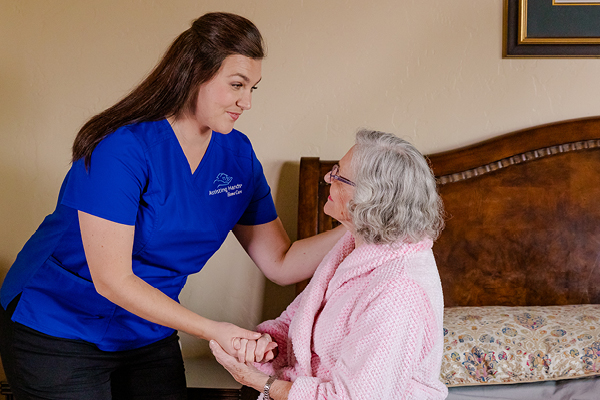
You do not have to wait for a crisis before asking for help. If appointments are getting missed, medications are becoming difficult to manage, or you are spending more time coordinating care than spending time with your loved one, it may be time to bring someone else into the process.
Assisting Hands Home Care Polk County can help bring those moving pieces together. Our Coordination of Care service helps families assess what their loved one needs, develop a practical plan, identify available resources, and stay involved as those needs change. We also provide personalized non-medical home care to help with the everyday tasks that allow seniors to remain safe and comfortable at home.
We serve families throughout Polk County and surrounding communities, including Lakeland, Davenport, Lake Wales, Haines City, Auburndale, Sebring, Avon Park, Bartow, Winter Haven, FL and the surrounding areas.
The goal is not to take over your family's decisions. It is to make sure someone is helping hold the pieces together. If your loved one wants to remain at home and you are not sure how to make that work, contact Assisting Hands Polk County or call at (863) 250-2359 to schedule a free consultation and talk through what comes next.
Care Coordination FAQs
What is the difference between care coordination and home care?
Home care is the hands-on help itself: bathing, dressing, meals, companionship, medication reminders, light housekeeping. Care coordination is the organizing layer around it, making sure that help fits with what your loved one's doctors have ordered and that nothing falls through the cracks between providers.
Do you provide medical care?
No. Assisting Hands Polk County provides non-medical home care. We do not perform skilled nursing tasks, but we do work alongside your loved one's physicians, home health providers, and therapists so that everyone's instructions are being followed at home.
Can care coordination start while my loved one is still in the hospital?
Yes, and it often should. Beginning before discharge lets us work with the attending physician and discharge planner so the home is ready and the plan is in place the day your loved one comes home.
How is care paid for?
Options may include private pay, long-term care insurance, and VA benefits, and some families qualify for Medicare, Medicaid, or community programs. During your free consultation we walk through what applies to your situation and what each service costs, with no surprises.
We live out of state. Can you keep us updated?
Yes. Staying in touch with families who live elsewhere is a regular part of what we do. We will let you know how things are going and reach out when something changes.

