

Key Takeaways
- A real diagnosis matters, because types of dementia progress differently and some memory problems have treatable causes.
- Predictable daily rhythms ease anxiety more reliably than any single technique.
- Central Florida’s heat and hurricane season deserve a place in your care plan.
- Wandering is common enough that you should prepare before it happens.
- Legal paperwork gets harder as the disease progresses, so early is the only good time.
- Respite isn’t a luxury. Burnout is a common reason a loved one ends up leaving home.
Most families don’t plan to become dementia caregivers. It starts with small things such as Mom asking the same question three times at Sunday dinner, or your wife taking the long way home from Publix without realizing it. Then the diagnosis comes, and suddenly you’re not just a spouse, daughter, or son, you’re also trying to keep someone you love safe, manage new challenges, and figure out what to do next.
If you’re caring for a loved one with dementia, you don’t need to have all the answers right away. A few practical changes can make daily life safer, calmer, and more manageable for both of you. Here are 10 dementia care tips for families in Polk County, based on the questions our caregivers hear most often from families in Winter Haven, Lakeland, Bartow, and the surrounding communities.
1. Get an Actual Diagnosis, Not Just a Label
Dementia is an umbrella term, not a single disease. Alzheimer’s disease is the most common cause, but Lewy body, vascular, and frontotemporal dementia can look very different and progress at different rates. Some conditions that cause dementia-like symptoms, including thyroid problems, vitamin B12 deficiency, medication interactions, and depression, may be treatable. That’s why getting an accurate diagnosis matters.
Start with your loved one’s primary care physician and ask whether a referral to a neurologist or memory-disorder clinic is appropriate. Before the appointment, write down the changes you’ve noticed, when they started, and how often they occur. Your loved one may not recognize or accurately describe the symptoms themselves, so your observations can give the doctor important information.
2. Build a Rhythm, Not a Schedule
A rigid schedule can create frustration while a familiar rhythm can create comfort. Breakfast in the same chair, the morning coffee ritual, a walk after lunch, and a favorite show before bed are predictable sequences that reduce the mental effort of figuring out what comes next. Less uncertainty can mean less anxiety.
Keep the important parts of the day consistent but stay flexible about the details. If a 9 a.m. bath becomes a battle every morning, try moving it to mid-afternoon. The goal isn’t to control every hour; it’s to create enough familiarity that your loved one knows what to expect.
3. Treat Florida’s Heat as a Care Issue
People with dementia may not recognize that they’re thirsty, may have trouble communicating that they’re too warm, or may put on a cardigan in August simply because that’s what they’ve always worn to church. Dehydration can also cause confusion, which may look like dementia suddenly getting worse. Families can understandably panic before realizing that their loved one simply hasn’t had enough to drink.
Offer fluids throughout the day instead of waiting for your loved one to ask. Water is great, but popsicles, watermelon, and decaffeinated iced tea can help, too. In hot weather, schedule walks and errands for the cooler morning hours, and make sure the air conditioning is running. Someone living alone may turn it off and forget to turn it back on.
4. Prepare for Wandering Before it Happens

Wandering doesn’t always mean walking out the front door in the middle of the night. It might look like getting behind the wheel to drive to a job they retired from 20 years ago or heading out to find a house they haven’t lived in since the 1970s. To a person with dementia, a familiar destination can still feel like somewhere they need to go.
Make it harder for your loved one to leave unnoticed. Put a chime or alarm on exterior doors, consider placing locks above or below eye level, and keep a current photo somewhere you can grab it quickly. Let nearby neighbors know what’s happening and ask them to call if they see your loved one out alone. A medical ID bracelet, GPS device, or MedicAlert service can provide another layer of protection.
Florida’s Silver Alert program can help law enforcement locate a missing adult with a qualifying cognitive impairment. The Polk County Sheriff’s Office can also tell you about local resources and response programs. It’s worth learning how these systems work before you need them, ideally on a calm Tuesday, not in the middle of an emergency.
5. Make a Hurricane Plan that Accounts for Dementia
Every Polk County household needs a storm plan, but dementia changes what that plan needs to account for. Evacuations, crowded shelters, unfamiliar surroundings, loud noises, and disrupted routines can be especially frightening for someone who depends on familiar places and routines to stay oriented.
Start by looking into Florida’s Special Needs Registry through Polk County Emergency Management. The registry helps identify residents who may need a special needs shelter or additional assistance during an evacuation. Then prepare a go-bag with at least a two-week supply of medications, copies of important medical and legal documents, and familiar comfort items. A favorite blanket, snacks, music, or other familiar objects may seem small, but during a stressful evacuation, they can provide an important sense of security.
6. Stop Correcting and Start Redirecting
When your father insists that his mother is coming to visit, correcting him means making him experience her death all over again. It’s a painful choice, and you may find yourself facing it several times a day.
Instead of correcting the facts, respond to the feeling underneath them. Try, “Tell me about your mom,” or, “She was a wonderful cook, wasn’t she?” You’re not trying to deceive him. You’re meeting him where he is, offering reassurance, and then gently redirecting the conversation. The same principle applies to repeated questions: the tenth time he asks, he isn’t remembering the first nine. For him, each question may feel like the first time.
7. Watch the Late Afternoon
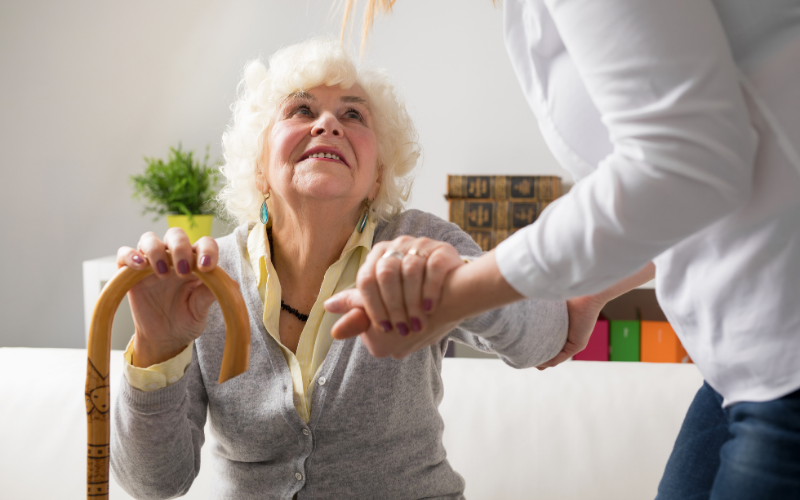
Many families notice that confusion, agitation, and restlessness increase as the day winds down. This pattern, often called sundowning, can be especially difficult for caregivers. The exact causes aren’t fully understood, but fatigue, hunger, low light, and too much stimulation may all play a role.
If you notice this pattern, adjust the evening routine before the confusion sets in. Turn on lamps before dusk, close the blinds so reflections in dark windows don’t become frightening, and schedule demanding activities for the morning when your loved one is more alert. A small snack around 4 p.m. can help, too and sometimes a simple change in timing makes a surprisingly big difference.
8. Keep the Places That Matter in the Routine
Familiar outings can do a lot of good, and Polk County offers plenty of places that lend themselves to a slower, predictable day. Walk through the gardens at Bok Tower Gardens in Lake Wales, follow the path around Lake Mirror, explore the boardwalks at Circle B Bar Reserve, or spend a quiet weekday morning downtown in Winter Haven. Long-term memories often remain accessible longer than recent ones, so places connected to a lifetime of experiences may feel more comfortable than somewhere completely new.
Church can be just as meaningful for many families here. Someone who can’t remember what they had for breakfast may still know every word to a favorite hymn. Keep attending as long as it remains comfortable, even if that means sitting near the back, choosing a quieter service, or leaving before it’s over. The goal isn’t to make the outing look the way it used to. It’s to preserve the connection and familiarity that still bring joy.
9. Handle the Legal and Financial Paperwork Now
This is an uncomfortable conversation, and it’s the one many families later wish they had started sooner. Documents such as a durable power of attorney, health care surrogate designation, and living will generally need to be completed while your loved one still has the legal capacity to make and communicate those decisions. Beneficiary information should also be reviewed and updated while they can participate in the process.
An elder law attorney can help your family understand these documents and discuss issues such as long-term care insurance, VA benefits, and Medicaid planning. Don’t wait for a crisis to have a conversation. Talk about what your loved one wants while they can still tell you in their own words.
10. Accept Help Before You Think You Need It
Family caregivers in Florida provide an extraordinary amount of unpaid care, and the toll can show up as exhaustion, isolation, and health problems of their own. Burnout is one of the reasons a loved one may eventually need to leave home, which means taking care of yourself is part of taking care of them.
There is more support available than many families realize. The Alzheimer’s Association Florida Gulf Coast Chapter offers a free 24/7 helpline at 800-272-3900 and caregiver support groups across the region, including the Lakeland area. Senior Connection Center, the Area Agency on Aging serving Polk County, can be reached at 1-800-96-ELDER and may be able to connect families with respite funding through Florida’s Alzheimer’s Disease Initiative. And the Walk to End Alzheimer’s at Bonnet Springs Park in Lakeland is worth attending simply to stand among thousands of people who understand what this year has looked like for your family.
Professional in-home care belongs on that list, too. Even a few hours of help each week can give you time to catch up on sleep, make your own doctor’s appointment, run errands, or sit through a movie without keeping your phone in your hand. You don’t have to carry every part of dementia care alone.
Compassionate Dementia Care at Home in Polk County

Dementia care changes as the disease progresses, and what works today may not work six months from now. You may be able to manage mornings on your own but need help with evenings, or you may reach a point where your loved one needs someone there throughout the day. That doesn’t mean you’ve failed, it means their needs have changed.
The goal is to keep your loved one safe, comfortable, and connected while preserving as much independence as possible. You shouldn’t have to sacrifice your own health to make that happen.
Assisting Hands Home Care provides personalized dementia care to help families care for loved ones affected by Alzheimer’s disease and other forms of dementia. Our caregivers can help with personal care, meals, medication reminders, companionship, daily routines, safety, and other needs that become more difficult as dementia progresses. Care begins with an in-home assessment so we can understand your loved one’s needs and create a plan that works for your family.
If you’re caring for someone with dementia in Lakeland, Davenport, Lake Wales, Haines City, Auburndale, Sebring, Avon Park, Bartow, Winter Haven, FL and the surrounding areas, you don’t have to figure everything out alone.
Call Assisting Hands Home Care at (863) 250-2359 to schedule a complimentary in-home consultation and talk through what support could look like for your family.
Dementia Care Tips in Polk County FAQs
How do I know when it’s time to bring in professional dementia care at home?
There’s rarely a single moment. Most families reach out when safety becomes a concern, such as wandering, falls, missed medications, or leaving the stove on, or when the primary caregiver is running on empty. Many start with a few hours a week and add support as needs change.
Can someone with dementia stay at home, or do they need a memory care facility?
Many people with Alzheimer’s and other forms of dementia live safely at home well into the later stages with the right support, and familiar surroundings often reduce confusion and agitation. Whether home stays the right setting depends on safety, the level of care required, and what the family can manage.
What’s the difference between Alzheimer’s and dementia?
Dementia is an umbrella term for a decline in memory, reasoning, and thinking that interferes with daily life. Alzheimer’s disease is its most common cause. Other causes include vascular dementia, Lewy body dementia, and frontotemporal dementia, each progressing differently.
How do I handle it when my loved one doesn’t recognize me?
Avoid quizzing them or insisting on who you are. Greet them warmly, use your name naturally in conversation, and focus on the connection rather than the recognition. Emotional memory often outlasts factual memory, so even when your name is gone, the feeling of safety around you usually isn’t.
What dementia caregiver support is available in Polk County?
The Alzheimer’s Association Florida Gulf Coast Chapter offers a free 24/7 helpline at 800-272-3900, caregiver support groups, and education programs serving Polk County. Senior Connection Center, the Area Agency on Aging for the region, can be reached at 1-800-96-ELDER. In-home respite care from an agency like Assisting Hands can also give family caregivers dependable breaks.

