
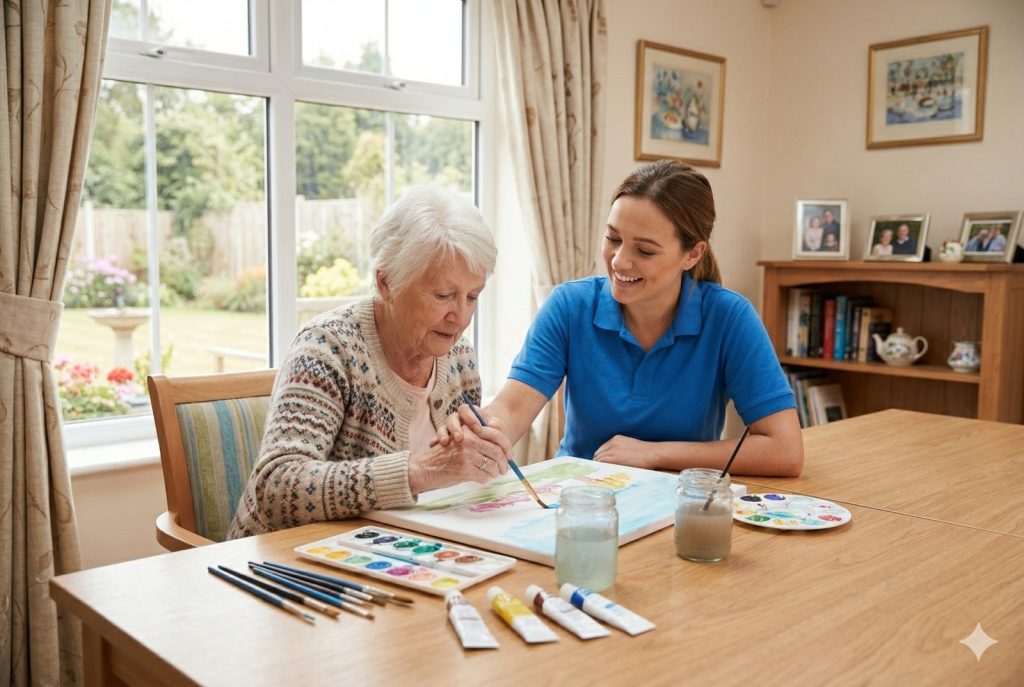
For many older adults, activities like painting, gardening, knitting, or playing music are far more than simple hobbies. They are deeply tied to identity, purpose, and personal history. These creative outlets often represent decades of experience, self-expression, and joy. However, as aging brings physical and cognitive changes, continuing these activities can become more difficult. When that happens, seniors may feel like they are losing an important part of themselves. Fortunately, home care providers play a meaningful role in helping seniors maintain these connections.
Through personalized support, encouragement, and adaptation, caregivers help older adults continue engaging in creative activities—or discover new ones—so they can remain connected to what brings them fulfillment.
Why Creativity and Dexterity Matter in Later Life
Creative expression is not just about passing time. It plays a significant role in overall health and well-being. Studies have shown that engaging in creative and hands-on activities can support brain function, improve mood, and even slow cognitive decline.
When seniors participate in activities that require focus and fine motor skills, they are actively stimulating the brain. Painting, crafting, playing instruments, or even arranging flowers can strengthen neural connections and support memory retention. These activities also provide a sense of accomplishment, which contributes to emotional well-being.
Dexterity, or the ability to use hands and fingers with precision, is equally important. It supports everyday tasks such as buttoning clothing, writing, खाना preparation, and using tools. Maintaining dexterity helps seniors preserve independence and confidence in their daily lives.
However, dexterity often declines with age. Conditions like arthritis, reduced grip strength, and decreased coordination can make once-simple tasks feel frustrating or even impossible. Without intentional effort to maintain these skills, the decline can accelerate.
The Emotional Impact of Losing Creative Abilities
When seniors begin to struggle with activities they once loved, the impact goes beyond physical limitations. There is often an emotional component that can be just as challenging.
A former artist who can no longer hold a brush steadily or a lifelong gardener who struggles to kneel may feel a loss of identity. These changes can lead to frustration, sadness, or withdrawal from activities altogether.
This is where the support of a caregiver becomes especially valuable. By recognizing the emotional significance of these activities, caregivers can help seniors find ways to stay engaged rather than giving up something meaningful.
Personalized Support in a Familiar Environment
One of the greatest advantages of home care is that it takes place in a familiar and comfortable environment. Seniors are surrounded by their own belongings, tools, and memories—elements that naturally support creative expression.
Caregivers are able to observe daily routines, preferences, and interests. This allows them to tailor activities to each individual rather than taking a one-size-fits-all approach.
For example, a caregiver might notice that a senior enjoys working with their hands and introduce simple craft projects that match their current ability level. For someone who once loved cooking, the caregiver might involve them in safe, manageable parts of meal preparation. This personalized approach ensures that activities remain meaningful and enjoyable.
Adapting Activities to Match Changing Abilities
As physical abilities change, it is important to adapt activities so they remain accessible. This allows seniors to continue participating without becoming discouraged.
Caregivers often introduce modifications such as:
- Using tools with larger, easier-to-grip handles
- Simplifying steps in a creative process
- Providing stable work surfaces or proper lighting
- Breaking activities into shorter, manageable sessions
These adjustments make it possible for seniors to continue engaging in familiar activities while reducing strain and frustration.
In some cases, caregivers may also introduce new forms of creativity that align better with current abilities. For example, a senior who can no longer knit may enjoy collage-making or simple painting instead.
Incorporating Gentle Exercises to Support Dexterity
Maintaining hand strength and flexibility is an important part of preserving dexterity. Caregivers often incorporate simple exercises into daily routines to support this goal.
These exercises might include:
- stretching fingers
- squeezing soft objects
- practicing coordinated movements
Over time, these small efforts can improve circulation, reduce stiffness, and support better hand function.
By pairing these exercises with enjoyable activities, caregivers help seniors maintain both physical ability and motivation.
Creating Routine and Consistency
Consistency plays a key role in maintaining both creativity and dexterity. When activities are part of a regular routine, seniors are more likely to stay engaged and continue practicing their skills.
Caregivers often help establish structured times for creative activities, whether it’s a morning painting session or an afternoon craft project. This routine provides something to look forward to and helps reinforce muscle memory. Regular engagement also helps prevent skills from declining further, as the hands and mind remain active.
Providing Encouragement and Emotional Support
Trying to engage in creative activities with physical limitations can be discouraging. Seniors may feel frustrated if they cannot perform tasks the way they once did.
Caregivers provide essential emotional support during these moments. They offer patience, reassurance, and encouragement, helping seniors focus on enjoyment rather than perfection.
Celebrating small successes—like completing a project or trying something new—can boost confidence and motivation. This positive reinforcement helps seniors stay engaged and maintain a sense of accomplishment.
Strengthening Connection and Purpose
Creative activities often provide more than personal satisfaction—they can also foster connection. Sharing a finished project, working on something together, or discussing past experiences tied to a hobby can strengthen relationships.
Caregivers can facilitate these moments by engaging alongside seniors or encouraging them to share their work with family members. This sense of connection reinforces the importance of the activity and helps seniors feel valued.
Maintaining a sense of purpose is especially important in later life. Creative expression allows seniors to continue contributing, expressing themselves, and finding meaning in their daily routines.
Supporting Independence Through Skill Preservation
Preserving dexterity is not only about hobbies—it directly impacts independence. The same skills used in creative activities are often needed for everyday tasks.
By helping seniors maintain hand strength and coordination, caregivers support their ability to perform daily activities such as dressing, meal preparation, and personal care.
This connection between creativity and independence highlights the broader value of these efforts.
A Holistic Approach to Senior Well-Being
Home care providers support more than physical needs—they take a holistic approach that includes emotional, cognitive, and social well-being.
Encouraging creativity and maintaining dexterity are key components of this approach. These efforts help seniors stay engaged, confident, and connected to who they are.
Rather than focusing solely on limitations, caregivers help seniors focus on what is still possible. This shift in perspective can have a powerful impact on overall quality of life.
Helping Seniors Stay Connected to What Matters
Aging may bring changes, but it does not have to mean losing the activities that bring joy and meaning. With thoughtful support and adaptation, seniors can continue to express themselves and stay connected to their passions.
Home care providers play a vital role in making this possible. Through personalized care, creative problem-solving, and compassionate encouragement, they help seniors maintain both dexterity and creativity.
In doing so, they support not just physical ability, but identity, confidence, and a lasting sense of purpose.
If you or an aging loved one are considering home care in Durham, NH, please contact the caring staff at Assisting Hands Home Care – Seacoast NH today! 603-824-8200
Assisting Hands Home Care – Seacoast NH provides exceptional home care in Portsmouth, Rye, New Castle, North Hampton, Hampton, Stratham, Exeter, Durham, Dover, Seabrook, Greenland, Rochester, Hampton Falls and surrounding areas.


