
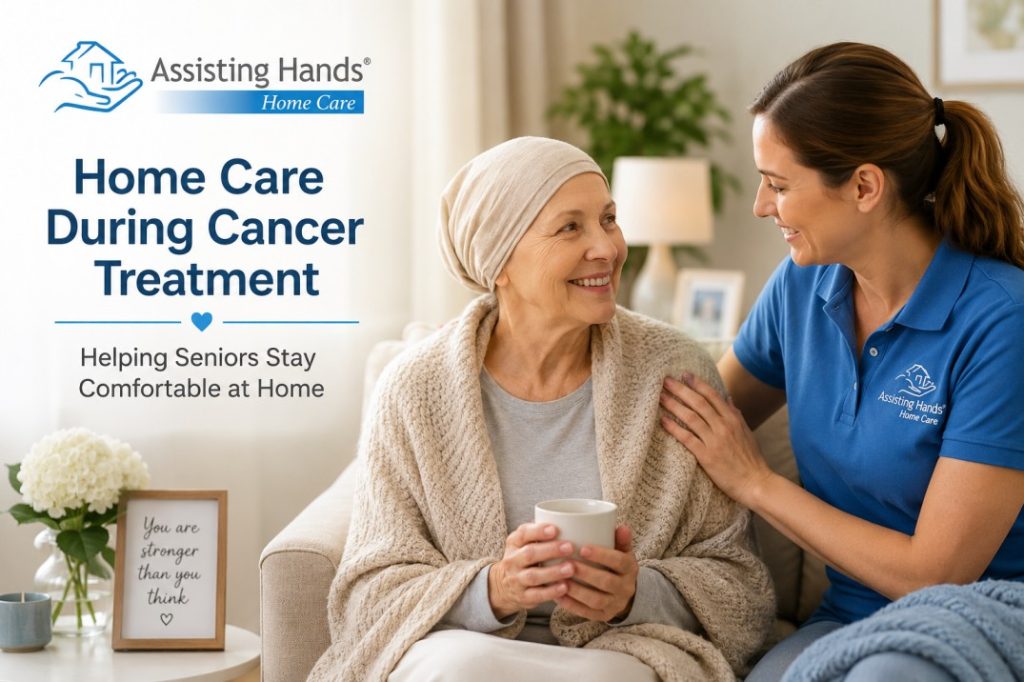
A cancer diagnosis changes life for the entire family. Along with doctor appointments, treatments, medications, and emotional stress, many seniors begin finding everyday activities much more difficult than before. Tasks that once seemed simple — getting dressed, preparing meals, walking safely through the house, or driving to appointments — can suddenly become overwhelming.
For many older adults, remaining in the comfort of home is important during cancer treatment. Familiar surroundings can reduce stress, improve emotional well-being, and provide a greater sense of independence. However, staying at home often requires additional support, especially as treatment progresses.
Professional in-home caregivers can bridge that gap by helping seniors manage daily routines while allowing family members to focus on spending meaningful time together instead of becoming overwhelmed by caregiving responsibilities.
At Assisting Hands – Fort Mill, we work with families across Fort Mill, Rock Hill, and Indian Land to provide exactly this kind of support — helping seniors stay safely at home during cancer treatment while giving family members room to just be family again.
Whether your loved one has recently been diagnosed, is receiving chemotherapy or radiation, recovering from surgery, or living with advanced cancer, compassionate home care can make each day safer, easier, and more comfortable.
Why Is Cancer More Challenging for Older Adults?
While cancer can affect people of any age, older adults often face additional health challenges that make treatment more difficult.
As we age, the body naturally heals more slowly. Seniors are also more likely to have other medical conditions such as:
- Heart disease
- Diabetes
- Arthritis
- COPD
- Parkinson’s disease
- Dementia
- Osteoporosis
Managing cancer while also living with one or more chronic health conditions can make recovery more physically and emotionally demanding.
Cancer treatments themselves may also cause side effects that significantly impact a senior’s ability to live independently.
These may include:
- Extreme fatigue
- Weakness
- Nausea
- Appetite loss
- Weight loss
- Difficulty walking
- Increased fall risk
- Memory problems (“chemo brain”)
- Depression or anxiety
- Reduced immune function
Even seniors who were previously independent may temporarily need assistance while undergoing treatment.
Does Every Cancer Patient Need Home Care?
No. Not every senior receiving cancer treatment requires professional home care. Some older adults remain independent throughout treatment with only occasional help from family members.
However, many seniors benefit from additional support when treatment begins affecting their ability to safely complete everyday tasks.
Home care is especially valuable when a senior:
- Lives alone
- Has limited family nearby
- Experiences frequent fatigue
- Has balance or mobility issues
- Is recovering from cancer surgery
- Requires transportation to treatments
- Has difficulty preparing meals
- Is missing medications
- Needs help bathing or dressing
- Is at risk of falling
- Has multiple chronic health conditions
The goal of home care isn’t to take away independence-it’s to help seniors maintain it for as long as possible.
At What Age Should Someone with Cancer Consider Home Care?
There isn’t a specific age when someone with cancer should begin receiving home care.
Instead, the decision should be based on the individual’s health, treatment plan, and ability to safely manage everyday activities.
Some people in their early seventies remain completely independent throughout treatment, while others in their sixties may require daily assistance due to the type of cancer, side effects, or other medical conditions.
Rather than asking:
“How old is my loved one?”
Families should ask:
- Can they safely bathe alone?
- Are they eating regular meals?
- Are they taking medications correctly?
- Can they safely drive to treatments?
- Have they experienced falls?
- Are they becoming weaker each week?
- Are they sleeping most of the day?
- Is a family caregiver becoming overwhelmed?
If the answer to several of these questions is “yes,” it may be time to consider professional in-home care.
Signs Your Loved One May Need Home Care During Cancer Treatment
Cancer often progresses gradually, and families don’t always recognize when additional support has become necessary.
Some common warning signs include:
Increased Fatigue
Cancer treatments often leave seniors feeling exhausted, making it difficult to complete even basic household tasks.
Difficulty Preparing Meals
Poor nutrition can slow recovery.
If your loved one is skipping meals, eating mostly processed foods, or losing weight, meal preparation assistance can make a significant difference.
Problems with Personal Hygiene
Bathing, dressing, shaving, and grooming may become physically exhausting.
Many seniors avoid asking for help because they don’t want to lose their independence.
Frequent Falls or Balance Problems
Weakness, dizziness, neuropathy, and certain medications can increase fall risk during treatment.
Missed Medications
Keeping track of multiple prescriptions becomes increasingly difficult during cancer treatment
Trouble Driving
Many seniors shouldn’t drive immediately after chemotherapy, surgery, or certain medications.
Transportation becomes one of the biggest challenges for families.
Family Caregiver Burnout
Adult children often try to do everything themselves.
Eventually, balancing work, children, and caregiving becomes overwhelming.
Professional caregivers provide valuable respite while ensuring consistent care for your loved one.
How Assisting Hands – Fort Mill Can Help
Whether your loved one was just diagnosed or is deep into treatment, our caregivers provide non-medical support tailored to what cancer treatment actually demands — help with bathing and dressing, meal preparation, medication reminders, transportation to appointments, and companionship on the hard days. We proudly serve families throughout Fort Mill, Rock Hill, and Indian Land.
Call 803-859-5854 for a Free, No-Obligation Consultation

