

When a loved one begins seeing people who are not there, saying things that do not make sense, or losing the ability to walk and care for themselves, families can feel frightened and completely unprepared.
Many people expect dementia to look like forgetfulness. They imagine misplaced keys, repeated questions, or difficulty remembering names. Lewy body dementia can be very different. It may affect memory, but it can also cause vivid hallucinations, changes in awareness, sleep problems, movement difficulties, delusions, and a growing need for help with everyday activities.
Families often ask a painful but understandable question:
Is Lewy body dementia always this bad?
Lewy body dementia is a serious and progressive condition, but every person experiences it differently. Some people decline quickly, while others live with changing symptoms for several years. The order, intensity, and pace of symptoms can vary, and even within the same day, a person may seem clear and engaged at one moment and deeply confused later.
Conversations among family caregivers show how unpredictable and emotionally exhausting Lewy body dementia can be. Families often describe hallucinations, mobility changes, disturbed sleep, delusions, incontinence, agitation, and unexpected moments of clarity. These experiences are personal and vary widely, but they reveal how difficult it can be to know whether a change is part of the disease or something else.
Lewy Body Dementia Is About More Than Memory Loss
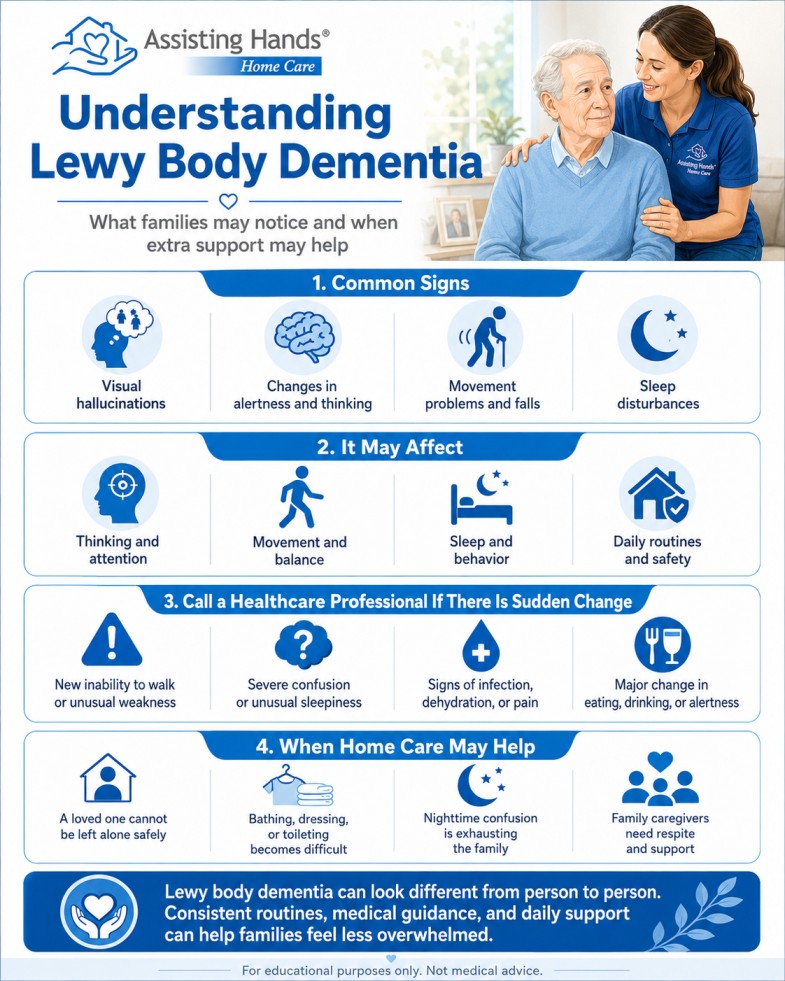
Lewy body dementia affects several areas of the brain. As a result, it may change how a person thinks, moves, sleeps, behaves, and responds to the world around them.
A person may still remember family members or talk clearly at times while struggling with:
- Planning and decision-making
- Following conversations
- Understanding what is real
- Walking safely
- Dressing or bathing
- Managing medications
- Sleeping through the night
- Controlling bladder or bowel function
- Staying calm during hallucinations or delusions
This is one reason families are sometimes surprised by the diagnosis. The person may not seem especially forgetful at first, yet they may already be having serious problems with judgment, movement, or perception.
Why Are Hallucinations Common With Lewy Body Dementia?
One of the most recognizable signs of Lewy body dementia is seeing people, animals, objects, or events that are not actually there.
A loved one might say:
- “There is someone standing in the hallway.”
- “Children are playing in the house.”
- “Someone came into my room last night.”
- “I need to leave because people are waiting for me.”
These experiences can feel completely real to the person.
Some hallucinations are harmless or even comforting. Others can be frightening and may lead to fear, suspicion, agitation, or attempts to leave the home.
Arguing usually does not make the hallucination disappear. In many situations, it is more helpful to respond to the person’s feelings.
You might say:
“That sounds frightening. You are safe, and I am here with you.”
Then gently redirect them toward a familiar activity, another room, a snack, music, or a calming conversation.
Can Lewy Body Dementia Symptoms Change From Day to Day?
Yes. Lewy body dementia symptoms can change from day to day, and sometimes even from hour to hour.
A person may be alert, talkative, and able to follow their normal routine one morning, then seem confused, sleepy, withdrawn, or unsteady later that day. Their ability to focus, communicate, walk, or complete everyday tasks may also vary.
These changes are a common part of Lewy body dementia and are not something the person is doing on purpose. Still, a sudden or unusually severe decline should be discussed with a healthcare professional, as an infection, dehydration, pain, medication side effects, or another medical issue may be making symptoms worse.
Does Lewy Body Dementia Affect Walking and Balance?
Yes. Lewy body dementia can cause movement changes similar to those seen in Parkinson’s disease.
A person may develop:
- Slow or shuffling steps
- Muscle stiffness
- Tremors
- Poor balance
- A stooped posture
- Difficulty getting out of a chair
- Freezing while walking
- Frequent falls
Over time, they may need help walking, transferring, bathing, toileting, and getting dressed.
Mobility can also fluctuate. Someone may walk with assistance one day and be unable to stand safely the next. This uncertainty can be especially difficult for family caregivers because the amount of help needed may change without warning.
Why Can Lewy Body Dementia Cause Difficult Behaviors?
Lewy body dementia can change the way a person understands what is happening around them. Hallucinations, fear, confusion, anxiety, poor judgment, or difficulty expressing discomfort may lead to behavior that feels sudden or out of character.
A loved one may believe someone is stealing from them, that strangers are in the house, that a family member has been replaced, or that they need to leave for work. Because these beliefs feel real, they may pace, yell, refuse help, try to leave, or make unsafe decisions.
It is important to remember that they are not choosing to be difficult. Their brain is processing the situation differently.
Try to respond calmly, offer reassurance, and avoid arguing about what is real. A familiar routine, quieter surroundings, good lighting, and gentle redirection may also help. Sudden or severe behavior changes should be discussed with a healthcare professional, as pain, infection, medication side effects, or another medical issue may be contributing.
Are Sleep Problems Common With Lewy Body Dementia?
Yes. Sleep problems are common in people with Lewy body dementia and may appear before or alongside changes in memory, movement, and behavior.
A person may act out dreams by talking, shouting, kicking, or moving their arms while asleep. They may also wake frequently, become confused at night, sleep for long periods during the day, or experience a reversed sleep schedule.
Poor sleep can make daytime confusion, hallucinations, irritability, and balance problems more difficult to manage. Families should discuss significant sleep changes with the person’s healthcare provider, especially when symptoms are new, worsening, or creating a safety concern.
Can Lewy Body Dementia Cause Rapid Decline?
Lewy body dementia may appear to progress quickly, but the pace of decline varies from person to person. A sudden or severe change should always be discussed with a healthcare professional because an illness, injury, medication reaction, dehydration, or delirium may be contributing.
Lewy body dementia is progressive, but the pace is different for every person. Some families notice a gradual change over several years. Others feel as though the person’s condition worsened rapidly after an illness, hospitalization, fall, medication change, or move to a new environment.
A sudden change should not automatically be dismissed as dementia progression.
Contact the medical team promptly when a loved one suddenly:
- Cannot walk when they could previously
- Becomes much more confused
- Stops eating or drinking
- Sleeps almost constantly
- Develops new agitation
- Has a major change in speech
- Falls
- Shows signs of infection or pain
- Becomes unusually weak
There may be a treatable medical problem contributing to the decline.
Can Medication Help With Lewy Body Dementia Symptoms?
There is currently no cure for Lewy body dementia, but medication may help manage certain cognitive, movement, sleep, mood, or behavioral symptoms.
Treatment requires special care because people with Lewy body dementia may be unusually sensitive to certain medications. In particular, some antipsychotic medications used for hallucinations, delusions, or agitation may cause serious reactions in people with Lewy body dementia, including increased confusion, heavy sedation, worsening movement problems, or other complications.
Not every hallucination requires medication. When a hallucination is not frightening or creating a safety concern, the healthcare team may recommend reassurance, environmental changes, and observation instead. New or worsening behavior should also be evaluated for possible causes such as infection, pain, constipation, injury, or medication effects before medication is added.
Families should never start, stop, or adjust medication without guidance from a healthcare professional familiar with Lewy body dementia.
Can Someone With Lewy Body Dementia Stay at Home?
Some people can remain at home when the right support is available. Others eventually need a higher level of care.
The decision depends on:
- Mobility and fall risk
- Hallucinations and delusions
- Wandering
- Ability to complete daily activities
- Overnight care needs
- Medication management
- Home safety
- Family caregiver availability
- Financial resources
- The amount of professional support available
The care plan may need to change over time.
A few hours of companionship may be enough early on. Later, the person may need daily personal care, overnight supervision, or 24-hour support.
How Can In-Home Care Support Someone With Lewy Body Dementia?
In-home care can help someone with Lewy body dementia remain safer and more comfortable by providing assistance with personal care, mobility, meals, supervision, familiar routines, and family respite.
An in-home caregiver may help with:
- Bathing, dressing, and grooming
- Toileting and incontinence care
- Walking and transfer assistance
- Fall-prevention routines
- Meal preparation
- Hydration reminders
- Medication reminders
- Companionship
- Reassurance during confusing moments
- Gentle redirection
- Maintaining familiar routines
- Light housekeeping
- Laundry
- Overnight supervision
- Respite for family caregivers
Consistency can be especially valuable. A familiar caregiver who understands the person’s routine, personality, and triggers may be able to reduce stress and help the day feel more predictable.
How Can Families Protect Their Own Well-Being?
Caring for someone with Lewy body dementia can feel like living in a constant state of uncertainty.
Family caregivers may experience grief, guilt, frustration, fear, exhaustion, and isolation. These feelings are normal.
Try to:
- Accept help when it is offered
- Divide responsibilities among family members
- Join a dementia caregiver support group
- Use respite care before reaching a crisis
- Keep medical and medication information organized
- Write down symptoms and changes
- Maintain regular medical appointments for yourself
- Speak honestly about what you can and cannot manage
You do not have to handle every part of the disease alone.
Support for Families Living With Lewy Body Dementia
Lewy body dementia can be difficult to understand because symptoms may change from one day—or even one hour—to the next. Families may be managing hallucinations, movement problems, disturbed sleep, changing behavior, and increasing personal-care needs while still seeing moments when their loved one seems clear and familiar.
You do not have to manage every part of the condition alone.
Assisting Hands Home Care in Manassas provides compassionate, nonmedical in-home support for seniors and adults living with dementia. Our caregivers can assist with personal care, companionship, mobility, meals, familiar routines, overnight supervision, and respite for family caregivers.
Contact Assisting Hands Home Care Fortmill, SC to discuss your loved one’s needs and learn how personalized dementia care at home may support your family.
Note: This article is for general educational purposes only and is not medical advice. Lewy body dementia symptoms and progression vary. Always consult a qualified healthcare professional about diagnosis, treatment, medications, or sudden changes in your loved one’s condition.

