
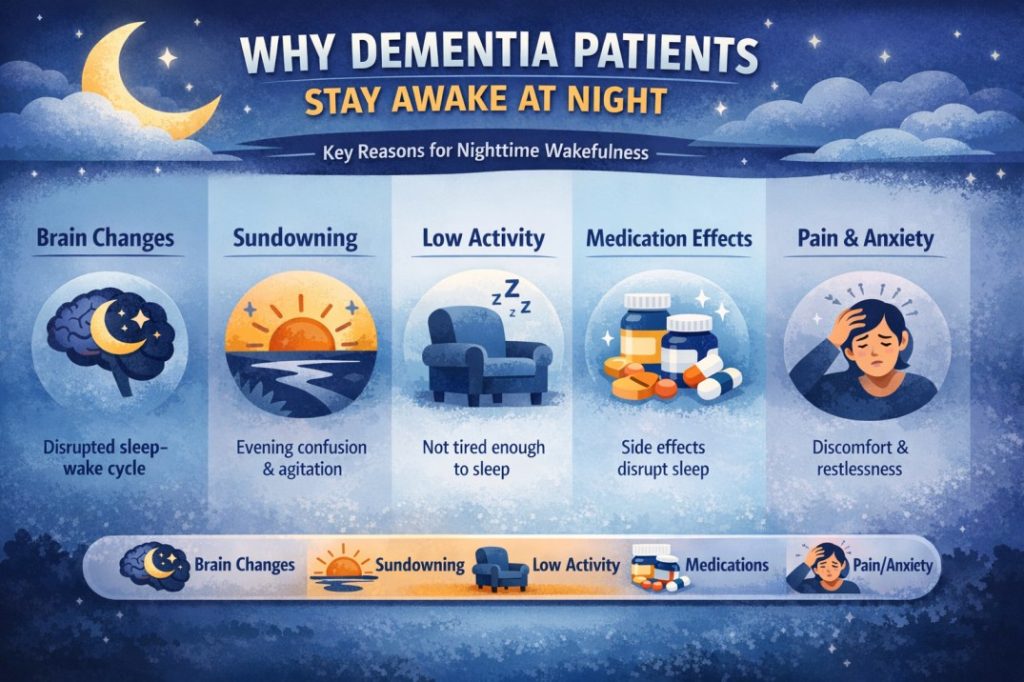
Yes, it is very common for dementia patients to stay awake at night. Changes in the brain, sundowning, reduced activity, and underlying discomfort can all disrupt normal sleep patterns. While common, persistent sleep issues should be addressed to protect both the patient and caregiver.
Understanding Nighttime Wakefulness in Dementia
Sleep disturbances are one of the most challenging aspects of caring for someone with dementia. Many families find themselves awake at all hours, trying to calm a loved one who is restless, confused, or wandering.
If you’re experiencing this, you’re not alone. Nighttime wakefulness is not only common—it’s often a natural result of how dementia affects the brain.
Understanding the root causes can help you respond with patience, reduce stress, and improve overall care.
According to the Alzheimer’s Association, sleep disturbances affect up to 50% of people with dementia, making it one of the most common caregiving challenges.
Why Do Dementia Patients Stay Awake at Night?
Dementia affects the brain in complex ways, especially areas responsible for regulating sleep. As a result, normal sleep patterns often become disrupted.
Changes in the Brain
Dementia gradually damages brain cells, including those responsible for controlling the sleep-wake cycle. This internal system tells the body when it’s time to feel alert and when it’s time to rest.
As this system weakens, the brain may send mixed signals. A person might feel awake at night and sleepy during the day, reversing their natural rhythm. Over time, this can lead to fragmented sleep, frequent waking, or staying up for long periods during the night.
Sundowning Syndrome
Sundowning refers to increased confusion, anxiety, or agitation that typically occurs in the late afternoon or evening. This is a very common symptom in people with dementia.
As the day progresses, fatigue builds up, lighting decreases, and shadows can create confusion or fear. This can make the person more restless and resistant to going to bed. Instead of winding down, they may become more active, pacing, or even attempting to leave the house.
Reduced Physical Activity
Many seniors with dementia have limited movement during the day, especially if they are homebound. Without enough physical activity, the body doesn’t build up the natural need for rest.
Think of it this way: if someone spends most of the day sitting or lying down, their body may not feel tired when bedtime comes. This lack of activity can significantly contribute to nighttime wakefulness.
Medication Side Effects
Certain medications prescribed for dementia or other health conditions can interfere with sleep. Some may cause restlessness, vivid dreams, or increased alertness at night.
Additionally, medications taken late in the day—especially stimulants or certain antidepressants—can make it harder to fall asleep. It’s important to review medications with a healthcare provider if sleep issues become frequent.
Anxiety, Pain, or Discomfort
Dementia patients often struggle to communicate what they’re feeling. They may be experiencing pain, discomfort, hunger, or the need to use the bathroom—but can’t express it clearly.
This can lead to agitation or restlessness at night. Instead of saying what’s wrong, they may pace, call out, or refuse to stay in bed. Identifying and addressing these underlying needs is key to improving sleep.
Is It Normal for Dementia Patients to Sleep Less?
Yes, reduced sleep is common in dementia due to changes in the brain’s sleep-wake cycle.
Some individuals may:
- Sleep very little at night
- Nap frequently during the day
However, sudden or severe changes should always be discussed with a healthcare professional to rule out underlying issues.
How Sleep Changes Across Dementia Stages
Sleep disturbances in dementia don’t stay the same—they often progress as the condition advances. Understanding how sleep changes at each stage can help caregivers set realistic expectations and respond more effectively.
Early Stage: Mild Sleep Disruptions
In the early stages of dementia, sleep issues are usually subtle and may be easy to overlook.
- Occasional difficulty falling asleep
- Mild insomnia or waking during the night
- Slight confusion about time (day vs night)
At this stage, many individuals can still maintain a fairly normal sleep routine, though small changes may begin to appear.
Mid Stage: Increased Sundowning & Nighttime Wakefulness
As dementia progresses, sleep disturbances become more noticeable and disruptive.
Increased sundowning (confusion and agitation in the evening)
- Frequent waking during the night
- Restlessness, pacing, or wandering
- Difficulty returning to sleep
Caregivers often begin to feel the impact at this stage, as nighttime interruptions become more frequent and unpredictable.
Late Stage: Severe Sleep Disruption & Reversed Sleep Cycles
In later stages, the brain’s ability to regulate sleep can become significantly impaired.
- Sleeping more during the day and staying awake at night
- Highly fragmented sleep patterns
- Increased nighttime confusion or disorientation
- Greater risk of wandering and safety concerns
At this point, consistent routines, environmental adjustments, and professional support become especially important to ensure both safety and quality of life.
What This Means for Caregivers
As dementia progresses, sleep challenges often increase—not because of behavior, but because of changes in the brain itself.
Being prepared for these changes can help you:
- Reduce frustration and stress
- Adjust routines more effectively
- Recognize when additional support may be needed
If sleep disruptions are becoming overwhelming, it may be time to explore overnight or respite care options to ensure your loved one stays safe while you get the rest you need.
How Can I Reduce Nighttime Wandering?
Nighttime wandering is a common challenge for dementia patients, but there are ways to reduce it and keep them safe. One of the most effective strategies is creating a secure environment—lock doors that lead outside or to unsafe areas and remove obstacles like loose rugs or cords that could cause falls. Soft lighting, such as motion-sensor nightlights in hallways and bedrooms, helps patients navigate safely if they wake up at night. Establishing a consistent bedtime routine can also make a big difference, as predictable schedules reduce anxiety and restlessness. Finally, offering a light snack or drink before bed can prevent wandering caused by hunger or thirst.
If wandering continues to be a concern, professional in-home care can provide overnight supervision, ensuring safety and giving family caregivers peace of mind.
What to Do When a Dementia Patient Refuses Bedtime
When a dementia patient refuses to go to bed, it can be stressful for both the caregiver and the patient. The key is to remain calm and patient—forcing them to stay in bed often increases agitation and resistance. Instead, try creating a soothing environment by dimming the lights, reducing noise, and offering calming activities like soft music, reading, or gentle conversation. Gradually adjusting bedtime to align with their natural sleep rhythm can also make the transition easier. If bedtime refusal becomes persistent or creates safety concerns, seeking professional guidance or in-home care support can provide supervision and help maintain a consistent nighttime routine, giving both the patient and caregiver greater peace of mind.
Can Diet, Exercise, or Medication Help Sleep?
Yes—lifestyle plays a major role in sleep quality.
Key Factors:
- Diet: Avoid caffeine and heavy meals at night
- Exercise: Encourage daily movement to promote fatigue
- Medication: Only as a last resort and under medical supervision
A combination of healthy habits and structured routines often leads to the best results.
Is it something to Worry About?
While occasional sleep disturbances are normal, ongoing sleep problems should not be ignored. Poor sleep can have serious effects on both the patient and the caregiver.
For the patient, lack of sleep can worsen confusion, increase irritability, and accelerate cognitive decline. It can also raise the risk of falls, especially if they are moving around in the dark.
For caregivers, constant nighttime disruptions can lead to exhaustion, stress, and burnout. If sleep issues are persistent, worsening, or accompanied by aggressive behavior or wandering, it’s important to seek professional guidance.
How to Help a Dementia Patient Sleep Better
Improving sleep often requires a combination of routine, environment, and daily habits. Small changes can lead to noticeable improvements.
Keep a Consistent Routine
A predictable daily schedule helps regulate the body’s internal clock. Try to keep wake-up times, meals, and bedtime consistent every day. Routine creates a sense of stability and reduces confusion. When the body knows what to expect, it becomes easier to transition into sleep naturally.
Encourage Daytime Activity
Physical movement during the day helps the body feel tired at night. This doesn’t have to be intense exercise—simple activities like walking, light stretching, or even helping with small household tasks can help. Engagement also improves mood and reduces restlessness, making it easier for the person to relax in the evening.
Increase Daytime Light Exposure
Exposure to natural light plays a major role in regulating sleep. Sunlight helps signal to the brain that it’s daytime, which strengthens the sleep-wake cycle. Encourage time outdoors or keep curtains open during the day. Bright indoor lighting can also help if going outside isn’t possible.
Limit Stimulants
Caffeine, sugar, and heavy meals late in the day can interfere with sleep. These can increase energy levels or cause discomfort that makes it harder to rest. Try to limit caffeine intake to the morning and provide lighter, easy-to-digest meals in the evening.
Create a Calm Sleep Environment
The bedroom should feel safe, quiet, and comfortable. A dark room with minimal noise can promote better sleep, but complete darkness may increase confusion. Using a soft nightlight can help reduce fear and disorientation. Comfortable bedding and a stable room temperature also make a big difference.
Reduce Evening Naps
While short naps during the day can be helpful, long or late naps can disrupt nighttime sleep. If the person naps too much, they may not feel tired at bedtime. Try to keep naps earlier in the day and limit their duration.
Manage Sundowning
Evenings should be calm and predictable. Reduce noise, avoid overstimulation, and create a relaxing atmosphere. Activities like listening to soft music, reading, or gentle conversation can help ease the transition to bedtime. Avoid stressful or confusing situations in the evening.
When Nighttime Becomes Overwhelming, You’re Not Alone
Caring for a loved one with dementia—especially when sleep becomes unpredictable—can be exhausting both physically and emotionally. If your loved one is staying awake at night, wandering, or experiencing increased confusion, it’s important to know that you don’t have to manage it alone.
At Assisting Hands Home Care in Fort Mill, SC, our compassionate caregivers provide overnight and in-home support designed to keep your loved one safe, comfortable, and cared for—while giving you the rest and peace of mind you deserve.

