
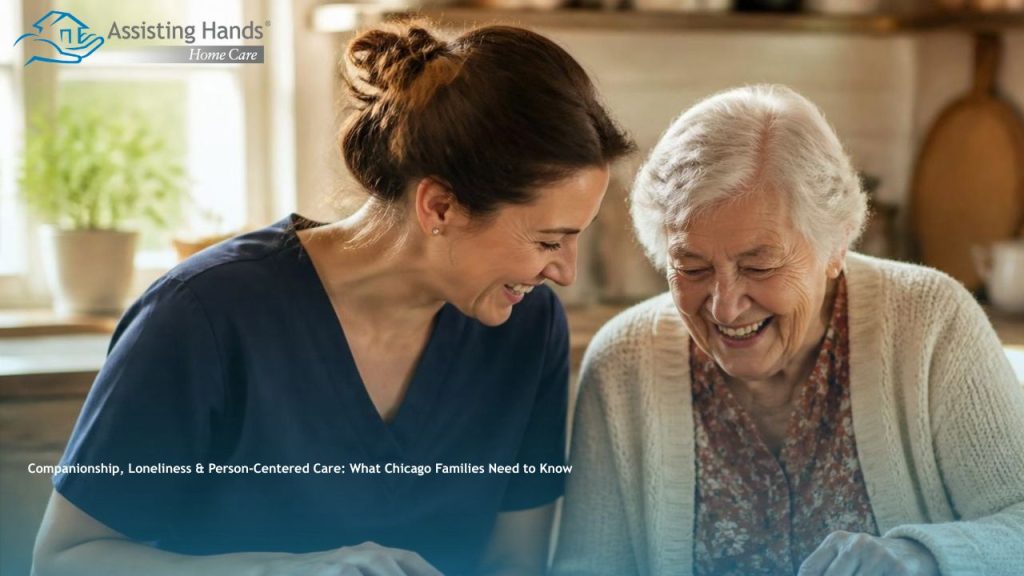
Companionship, Loneliness & Person-Centered Care: What Chicago Families Need to Know
For many older adults, the hardest part of aging isn’t a diagnosis — it’s the quiet. A spouse passes. Friends move away or pass on too. Driving becomes difficult, and the world outside the front door starts to feel farther away. This is the reality of senior loneliness, and it’s more common — and more serious — than most people realize.
The Numbers Tell a Real Story
Loneliness among older adults isn’t a niche concern — it’s a widespread public health issue. Research from the National Academies of Sciences, Engineering, and Medicine found that nearly one in four adults aged 65 and older is considered socially isolated. The health consequences are significant: chronic loneliness has been linked to a 50% increased risk of dementia, a 29% increased risk of heart disease, and a 32% increased risk of stroke. Some researchers have even compared its health impact to smoking 15 cigarettes a day.
It affects more people than you might expect, too. A University of Michigan poll found that roughly one in three older adults report feeling lonely “often” or “sometimes.” And nearly 13.8 million older adults live alone, representing about 28% of people aged 65 and older — a number that climbs with age.
For families in Chicago, where harsh winters and spread-out neighborhoods can make it even harder for seniors to stay connected, these numbers hit close to home.
Why Loneliness and Isolation Aren’t the Same Thing
It helps to know the difference:
- Social isolation is an objective, measurable lack of contact with others — how often someone actually sees or talks to people.
- Loneliness is a subjective feeling — the gap between the connection someone wants and the connection they have.
A senior can live with family and still feel lonely. Another might live alone but feel perfectly content, thanks to strong routines and relationships. This distinction matters because it shapes how caregivers should respond — the goal isn’t just “more visits,” it’s meaningful connection.
What Person-Centered Care Actually Means
Person-centered care is an approach that puts the individual — their history, preferences, personality, and pace — at the center of every caregiving decision, rather than fitting them into a standardized routine. In practice, this looks like:
- Getting to know the person, not just the diagnosis. A caregiver who knows someone was a jazz musician, a nurse, or a lifelong Cubs fan can build conversation and connection around that identity.
- Consistency in caregivers. Seeing the same familiar face regularly — rather than a rotating cast of strangers — builds trust and genuine companionship over time.
- Respecting choice and routine. Letting a senior decide when they eat, what they wear, or how they spend their afternoon preserves dignity and a sense of control.
- Encouraging real engagement Not just supervision: shared meals, conversation, hobbies, walks, or simply being present while doing a crossword together.
Practical Ways Caregivers Can Ease Loneliness
Whether you’re a family caregiver or a home care professional, small, consistent actions make a real difference:
- Build a predictable rhythm. Regular visits or calls at the same time each day give seniors something to look forward to — and reduce anxiety about being forgotten.
- Encourage participation in daily tasks. Cooking together, folding laundry, or tending a plant can turn caregiving time into shared time.
- Connect to community. Chicago has senior centers, faith communities, and neighborhood programs (like those through the Chicago Department of Family and Support Services) that offer group activities tailored for older adults.
- Use technology thoughtfully. Video calls with grandchildren or simple tablet apps can bridge distance, especially during Chicago’s colder months when getting outside is harder.
- Watch for signs of withdrawal. Skipping meals, neglecting hygiene, or a sudden lack of interest in hobbies can signal loneliness is becoming something more serious, like depression.
When Family Alone Isn’t Enough
Many family caregivers are stretched thin — juggling jobs, kids, and long distances — and that’s not a failure, it’s just reality. This is where professional, person-centered home care can fill the gap without replacing family connection. A trained caregiver can provide daily companionship, engage seniors in activities they genuinely enjoy, and give family members peace of mind that their loved one isn’t spending long stretches of the day alone.
How Assisting Hands Home Care Chicago North Can Help
At Assisting Hands Home Care Chicago North, we believe companionship is just as important as physical care. Our caregivers take the time to build real relationships with the seniors they support — learning their stories, respecting their routines, and showing up consistently, so care never feels transactional.
If you’re a caregiver in Chicago looking for support, or a family concerned about a loved one’s isolation, we’re here to help you build a care plan centered on them — not a one-size-fits-all checklist.
Contact Assisting Hands Home Care Chicago North today to learn how our person-centered approach to home care can bring companionship, dignity, and connection back into your loved one’s daily life.
Request your FREE consultation today:
Request a Free In-Home Care Consultation
Let Assisting Hands Chicago North help your family find the right balance between caring for your loved one and taking care of yourself.

