
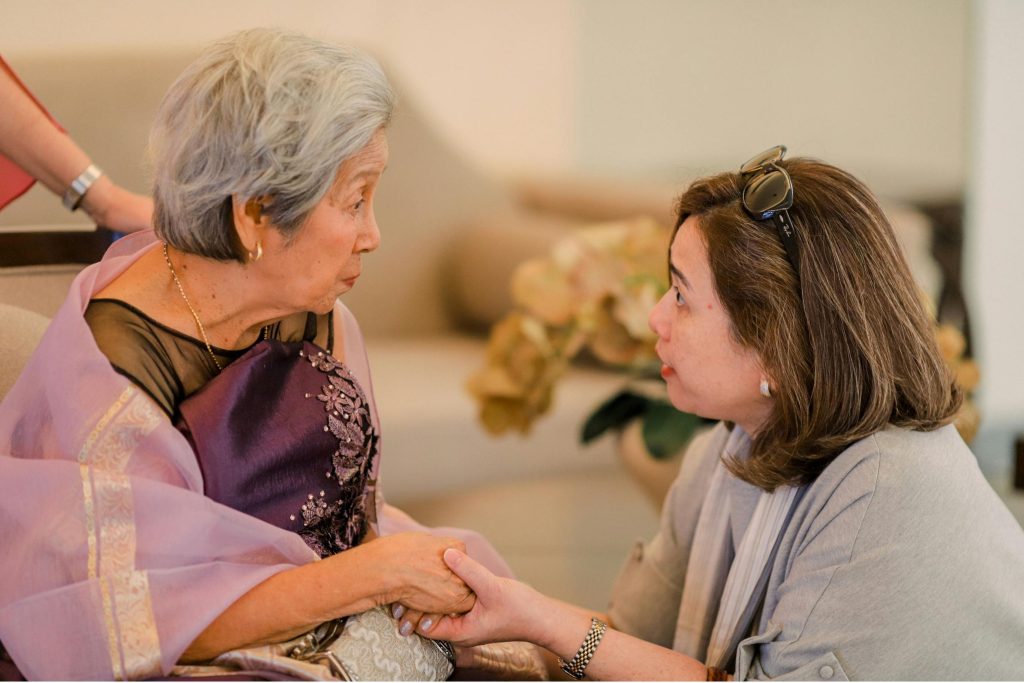
Helping Families Care for Their Loved Ones Without Losing Themselves
Caring for an aging parent or loved one can be one of the most meaningful things a family can do. But when caregiving becomes a daily responsibility without enough support, even the most devoted family caregiver can become physically and emotionally exhausted.
At Assisting Hands Chicago North, we understand that family caregivers often want to do everything themselves. But asking for help does not mean you are doing less for your loved one. Sometimes, bringing in professional in-home care is what allows you to continue being the supportive son, daughter, spouse, or family member your loved one needs.
Our caregivers can assist with daily activities, personal care, meal preparation, medication reminders, companionship, mobility support, and other non-medical needs. Care can also be arranged around the family’s schedule, providing support when family members cannot be there.
Our focus is not just care—but confidence and peace of mind for families.
What Is Caregiver Burnout?
Caregiver burnout is more than simply having a busy or difficult day.
It can develop when the physical, emotional, and mental demands of caregiving continue for a long period without enough rest, support, or time for yourself.
A family caregiver may gradually begin thinking:
- “I don’t have time for anything anymore.”
- “I’m exhausted all the time.”
- “I feel guilty when I take a break.”
- “I’m becoming impatient with my loved one.”
- “I don’t know how much longer I can keep doing this.”
These feelings do not mean you don’t love the person you are caring for. They may mean you need support, too.
Signs of Caregiver Burnout
Burnout doesn’t always happen suddenly. It can build gradually.
Watch for changes such as:
Physical exhaustion
You feel tired even after sleeping or have little energy for normal activities.
Irritability or frustration
Small problems begin to feel overwhelming, and you find yourself becoming short-tempered more often.
Feeling constantly overwhelmed
You feel like there is always another task, appointment, phone call, or responsibility waiting.
Pulling away from others
You stop seeing friends, participating in activities, or making time for family because caregiving takes priority.
Neglecting yourself
You postpone your own appointments, meals, exercise, sleep, or other personal needs.
Guilt about asking for help
You feel that because you are family, you should be able to handle everything yourself.
These are signals worth taking seriously—not signs that you have failed.
Why Burnout Can Affect the Whole Family
Caregiver burnout doesn’t only affect the caregiver.
When someone is exhausted, it becomes harder to remain patient, organized, and attentive. Communication between family members can also become strained.
Over time, one person may end up carrying most of the responsibility while other family members are unsure how to help.
This can create resentment, disagreements, and additional stress at a time when the family needs to work together.
Getting support earlier can help prevent caregiving responsibilities from reaching a breaking point.
You Don’t Have to Do Everything Yourself
One of the biggest misconceptions about family caregiving is that getting professional help means giving up responsibility.
It doesn’t.
Think of professional home care as adding another member to the care team.
A caregiver can handle certain daily responsibilities while the family remains involved in the decisions that matter most.
For example, a professional caregiver may help with:
- Morning routines
- Bathing and dressing
- Meal preparation
- Light housekeeping
- Medication reminders
- Mobility and safety supervision
- Companionship
- Transportation and errands
- Respite for family caregivers
This can give family members time to work, rest, attend appointments, spend time with their children, or simply take a much-needed break.
When Should You Consider Respite or Home Care?
You don’t have to wait until you are completely burned out.
It may be time to consider additional support when:
- You are regularly exhausted.
- You cannot take a break without worrying.
- Your loved one’s needs have increased.
- You are missing work or important family responsibilities.
- You are struggling to keep up with household tasks.
- Your loved one needs supervision when you are unavailable.
- You and your family are arguing about caregiving responsibilities.
- You feel that you are no longer able to safely provide all the care your loved one needs.
Even a few hours of help each week can give a family caregiver room to breathe.
Chicago Families Have Unique Challenges
For families in Chicago, caregiving can become especially complicated when family members live in different neighborhoods or suburbs.
An adult daughter in Lincolnwood may be caring for a parent in Chicago. A son in Evanston may be trying to coordinate care while working downtown. Another family member may live farther away and be unable to provide hands-on help.
Add Chicago winters, transportation, work schedules, medical appointments, and everyday family responsibilities, and caregiving can quickly become difficult to manage alone.
Professional in-home care can provide consistent support when family members cannot physically be there.
Caring for Yourself Is Part of Caring for Your Loved One
Taking care of yourself isn’t selfish.
A caregiver who gets adequate rest and support is better positioned to remain patient, attentive, and emotionally present.
Start by asking yourself:
“What part of caregiving is becoming hardest for me?”
Maybe it’s mornings.
Maybe it’s preparing meals.
Maybe your loved one needs supervision while you’re working.
Maybe you simply need several hours each week to recharge.
Identifying the specific challenge can make it easier to find the right type of support.
How Assisting Hands Chicago North Can Help
At Assisting Hands Chicago North, we work with families to create personalized care plans based on their loved one’s needs and the family’s schedule.
Our caregivers can provide dependable support at home while family members remain involved in their loved one’s care.
Whether you need occasional respite, help during the workday, or more consistent assistance, we can help your family explore options that fit your situation.
We proudly serve Chicago, Evanston, Skokie, Lincolnwood, and surrounding North Shore communities.
Don’t Wait Until You’re Completely Burned Out
Caregiving is an act of love—but you don’t have to prove your love by doing everything alone.
If caregiving is becoming physically or emotionally overwhelming, it may be time to bring someone else into the care team.
A little support today can help prevent a much bigger crisis tomorrow.
Take the First Step
Assisting Hands Chicago North offers a free in-home care consultation to help families understand their loved one’s needs and explore personalized care options.
Request your FREE consultation today:
Request a Free In-Home Care Consultation
Let Assisting Hands Chicago North help your family find the right balance between caring for your loved one and taking care of yourself.

