
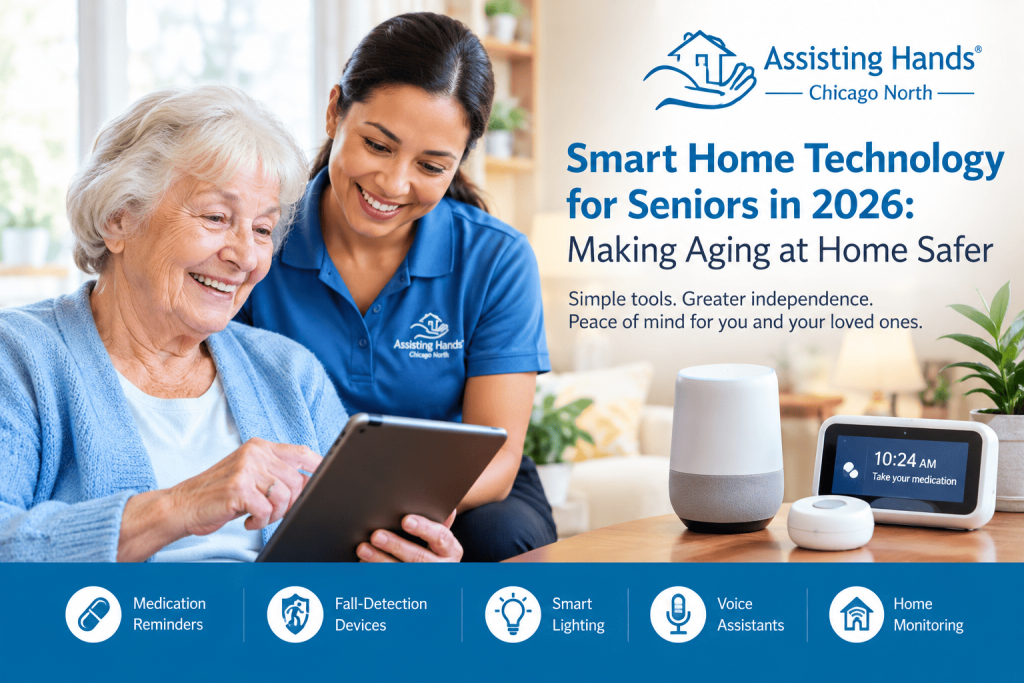
Simple tools. Greater independence. Peace of mind for seniors and their families.
For many older adults, there is no place quite like home. Familiar surroundings, cherished memories, and established routines can make aging at home a meaningful choice. With the right support, seniors can continue enjoying their independence while receiving the assistance they need.
In 2026, smart home technology is creating new opportunities to support older adults and their caregivers. From medication reminders to fall-detection systems and privacy-conscious home monitoring, these tools can help families stay informed and identify potential safety concerns.
At Assisting Hands Chicago North, we believe technology works best when combined with compassionate, personalized in-home care.
5 Smart Home Technologies That Can Support Seniors
- Medication Reminders for Better Daily Routines
Remembering when to take medications can become challenging, especially for seniors who manage several prescriptions. Smart speakers, digital reminders, and automated medication dispensers can help older adults follow their established routines.
Caregivers can also provide reminders and assistance when needed. These tools should support the medication instructions provided by a healthcare professional, not replace professional guidance.
- Fall Detection and Emergency Alerts
Falls are a significant safety concern for older adults, particularly those experiencing mobility challenges or balance difficulties.
Some smart devices and monitoring systems can detect possible falls or unusual movement and send alerts to designated contacts. Depending on the system, these notifications may help family members or care teams respond more quickly when assistance is needed.
However, no device can guarantee that every fall will be detected. Families should consider a senior’s individual needs, the device’s limitations, and an appropriate emergency response plan.
- Smart Lighting for Safer Movement
Poor lighting can make it harder to navigate hallways, stairways, bedrooms, and bathrooms, particularly at night.
Motion-activated lights, smart bulbs, and automated lighting schedules can improve visibility when seniors get up during the evening. These simple adjustments can make frequently used areas easier to navigate.
For additional safety, families should also address loose rugs, cluttered walkways, and other potential tripping hazards.
- Voice Assistants for Everyday Convenience
Voice-controlled assistants allow seniors to set reminders, call approved contacts, check the weather, or control compatible household devices using spoken commands.
For older adults who have difficulty handling small buttons or touchscreens, voice assistants may make certain daily activities more accessible. Families should configure privacy settings, emergency contacts, and voice commands carefully to suit the senior’s preferences.
- Privacy-Conscious Home Monitoring
Families often want to know how a loved one is doing between caregiver visits, but they may also want to preserve the person’s privacy and independence.
Some newer monitoring solutions, such as those described by Pontosense for home care agencies, use room-based sensors to detect presence, movement, and possible safety concerns without relying on cameras, microphones, or wearable devices.
Depending on the system, information and alerts can help families and care teams notice changes in activity, mobility, or nighttime routines. These insights may support more informed conversations about care needs.
Before installing any monitoring device, discuss its purpose with the senior, explain what information it collects, review who can access that information, and obtain appropriate consent.
Why Technology and Human Care Work Better Together
Smart home technology can provide valuable information, but it cannot replace the personal attention and compassion of a caregiver.
A device may alert someone to a possible fall or a change in activity. A caregiver can offer companionship, help with daily routines, prepare meals, assist with mobility, and recognize concerns that require human judgment.
At Assisting Hands Chicago North, we understand that every senior has unique needs and preferences. Combining appropriate technology with dependable in-home care can help families create a more personalized approach to aging at home.
Technology should complement regular check-ins, an individualized care plan, and professional support—not replace them. Devices can malfunction, miss events, or generate false alerts, so families should choose solutions carefully and maintain backup plans.
A Simple Smart Home Safety Checklist
Families and caregivers can start with a few practical steps:
- Review the home for fall hazards and improve lighting in frequently used areas.
- Consider medication reminders that fit the senior’s daily routine.
- Explore appropriate fall-detection or emergency alert options.
- Set up voice assistants with useful reminders and privacy controls.
- Discuss monitoring options and obtain the senior’s consent.
- Confirm who receives alerts and how they will respond.
- Reassess the senior’s needs as health, mobility, and routines change.
Helping Seniors Live Well at Home
A safer home does not necessarily require complicated technology. Often, a thoughtful combination of simple tools, practical home adjustments, family involvement, and professional caregiving can make a meaningful difference.
If you are exploring ways to help an older loved one remain comfortable and supported at home, Assisting Hands Chicago North is here to help you learn about in-home care options that respect independence and dignity.
Assisting Hands Chicago North
Helping seniors and families receive compassionate support at home.
Request your FREE consultation today:
Request a Free In-Home Care Consultation
Let Assisting Hands Chicago North help your family find the right balance between caring for your loved one and taking care of yourself.

