
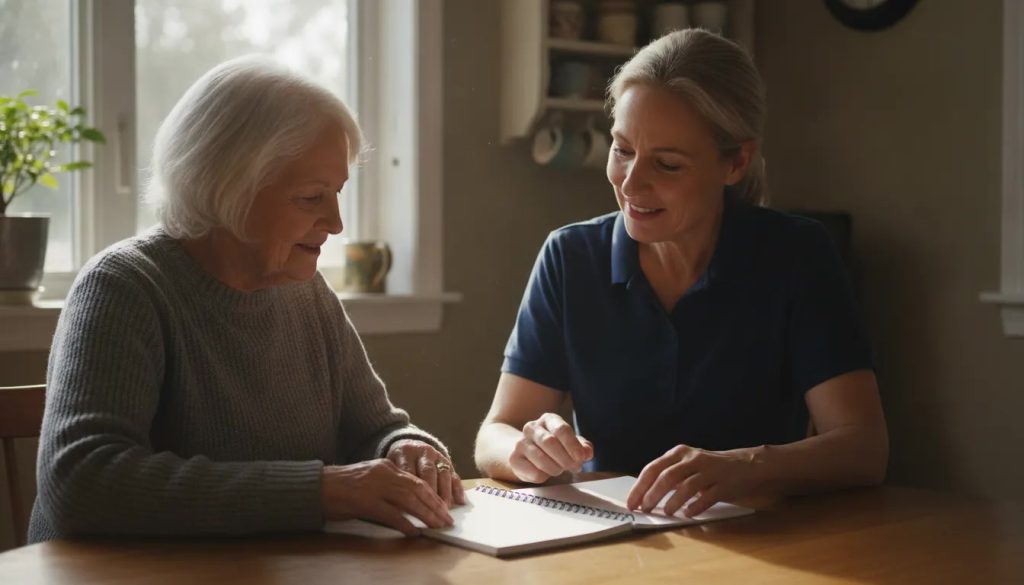
Home care vs palliative care is a practical question, not a vocabulary quiz. One is everyday help at home. The other is specialized medical care for a serious illness. Families in Elgin often meet both at once, and mixing them up leads to the wrong phone call.
Non-medical home care covers bathing, meals, errands, companionship, and a break for the family caregiver. Palliative care is a clinician-led team that treats symptoms and stress while other treatment can continue. Assisting Hands of Elgin provides the first. It does not provide the second. Questions about symptoms, medicines, or prognosis belong with the person’s doctors.
Book a free consultation to talk through daily help at home.
What is the difference between home care and palliative care?
Home care, as Assisting Hands of Elgin provides it, is scheduled non-medical help so someone can live safely at home. A caregiver might help with dressing, meals, light housekeeping, grocery runs, or sitting with the person so a spouse can leave the house. The Illinois home-services license for Flintz Family Home Care, DBA Assisting Hands of Elgin, is 3001194, and it expires December 31, 2026. That license covers home services. It is not a license to practice medicine, nursing, or hospice.
Palliative care is different in kind. The National Institute on Aging describes it as care focused on comfort and quality of life for people with a serious illness, coordinated by doctors, nurses, and other clinicians. The Center to Advance Palliative Care defines it as specialized medical care for symptom relief and stress, appropriate at any age and any stage, and available alongside treatment aimed at the illness itself. A palliative team may include physicians, nurses, social workers, and chaplains. They manage pain, shortness of breath, nausea, anxiety, and the hard conversations about what matters to the person.
A simple test: if the job is a bath, a meal, or company through the afternoon, that is home care. If the job is adjusting pain medicine or explaining treatment choices, that is palliative care. One person can need both on the same day.
| At a glance | Non-medical home care | Palliative care |
|---|---|---|
| Main goal. | Safe daily life at home. | Relief of symptoms and stress from a serious illness. |
| Who provides it. | Trained caregivers from a home-services agency. | Doctors, nurses, and often social workers or chaplains. |
| When it can start. | Whenever daily tasks get hard, with or without a diagnosis. | At diagnosis or later, while other treatment continues. |
| Typical help. | Bathing, meals, housekeeping, errands, companionship, and respite. | Symptom treatment, care coordination, and goals-of-care talks. |
| Medicines. | Reminders only. Not administration. | Clinical management by the licensed team. |
| What it is not. | Not nursing, hospice, or medical treatment. | Not an all-day aide. Not automatically hospice. |
Who provides each kind of care?
A non-medical caregiver is matched to the person after a conversation about routines, mobility, and what the family can already cover. At Assisting Hands of Elgin, that help can be a few hours or around the clock. Caregivers can remind someone it is time for a dose. They do not give the medicine, change a clinical order, or decide whether a symptom is an emergency.
A palliative team is hired through the healthcare system, not through a home-services agency. Home-based palliative care is still medical care delivered in the place the person calls home, whether that is a house, an apartment, or a senior residence. The GetPalliativeCare.org overview of home-based palliative care describes teams that visit to treat symptoms such as pain, anxiety, and shortness of breath, and that stay in contact with the person’s other doctors. Some programs can arrange tests at home. Availability depends on the local health system, not on a home-care agency’s schedule.
Families sometimes hear “home health” in the same sentence. Skilled home health is a third service: intermittent nursing or therapy, often for someone who is homebound, aimed at recovery or a maintenance plan. That comparison is its own topic. This article stays with non-medical home care and palliative care.
When does each one start?
Non-medical home care can start whenever daily life gets hard: after a fall, when a spouse is exhausted, or simply because cooking and bathing are no longer safe to do alone. A serious diagnosis is not required. On the services pages, Assisting Hands of Elgin says help is generally available within 48 hours of the first call. That is a usual pace after matching, not a promise that a caregiver will arrive by a set hour.
Palliative care can start at diagnosis or much later. The National Institute on Aging notes that it can run next to treatment for the disease, and that a person’s own clinician is the usual path to a referral. Families do not have to wait for a six-month prognosis. That timing rule belongs to hospice, which the same institute describes as a form of palliative care used in the final weeks or months of life, when the focus shifts away from curative treatment.
If the question is “Should we ask about palliative care now?”, ask the doctor or nurse who knows the illness. If the question is “Who can help with Tuesday’s shower and Thursday’s groceries?”, that is a home-care conversation.
How do the two work together at home?
The useful picture is a split of jobs, not a ranking of which care is better. The palliative team owns symptoms, medicines, and goals of care. The home caregiver owns the hours between those visits: meals, a steady routine, a safe transfer from bed to chair, and someone who notices that the person ate less today.
That split matters because palliative visits are clinical appointments, not an all-day presence. Between visits, families still face laundry, appointments, and nights when nobody in the house is rested. A caregiver can keep a simple notebook: what was eaten, whether a walk happened, and any new complaint, in the person’s own words. The family then takes that note to the palliative nurse or physician. The caregiver does not interpret it.
Practical help that fits beside a palliative plan is ordinary and specific. Caregivers can help with bathing, dressing, grooming, and the toilet. They can cook, remind someone to drink, and keep up light housekeeping. They can shop for groceries and handle errands the family already planned. They can sit with the person so a spouse or adult child can sleep or go to work. They can also slow down transfers, clear walkways, and watch for footwear that slips.
What does not transfer to the caregiver: pain plans, oxygen changes, wound care, medication administration, or any decision about whether to go to the emergency department. Those stay with the clinicians. If a symptom worsens, the family follows the number the palliative team gave them, not a home-care office line.
How does this differ from hospice at home?
Hospice is related, and families often reach it later. Hospice is palliative care reserved for the last phase of a life-limiting illness, with its own eligibility rules and a comfort-focused plan. Choosing between hospice at home and a hospice facility is a separate decision, covered in our guide to hospice care at home versus a hospice facility.
Non-medical home care can sit beside either stage. During palliative care, it fills the hours the clinical team is not in the house. If care later shifts to hospice, the same kind of help can continue as daily support while the hospice provider handles the medical plan. Our hospice support page explains that boundary, and a separate article covers how to hire in-home caregivers for hospice. This post does not repeat those hiring steps.
What should Elgin families sort out first?
Start with two lists. One is clinical: symptoms that are hard to live with, questions about treatment, and who the main doctor is. Take that list to the healthcare team and ask whether palliative care is appropriate. The other list is the week. Note which baths, meals, and errands are slipping. Note which nights a family caregiver is awake. Then decide whether someone needs to be in the house for a few hours or much longer.
Assisting Hands of Elgin serves Elgin and Barrington and nearby towns including Huntley, Crystal Lake, Lake in the Hills, Algonquin, South Elgin, and Dundee, from one office at 920 Davis Road, Suite 209, Elgin. The public phone is (847) 720-5850, and office hours are Monday through Friday, 7:00 a.m. to 4:00 p.m. Bring the weekly list to a free consultation. Bring the clinical list to the doctor. The home care services page shows the kinds of daily help available, including companionship and personal care.
Payment is a separate conversation for each service. Coverage for palliative visits depends on the person’s Medicare, Medicaid, or private plan and on how the clinician bills the visit. The National Institute on Aging says those programs may cover palliative care, and that families should check the specific policy. Non-medical home care is usually a private arrangement. This office does not publish an hourly rate here, and a free long-term-care insurance consultation is a review of a policy, not a promise that a claim will be paid and not free caregiving.
Call us for a free home assessment at (847) 720-5850 if daily help at home is the gap you need to close.
What should you ask before you book help?
A short call saves a mismatched first week. Ask the home-care agency what the caregiver will and will not do. Ask how backup coverage works if someone calls out, and which towns the Elgin office actually schedules. Ask the palliative team how to reach a nurse after hours. Ask which symptoms should trigger that call, and which tasks they expect the family to handle between visits.
Use the same questions on both sides:
- Who is the day-to-day contact, and who covers evenings?
- Which tasks are hands-on help, and which require a clinician?
- How will notes get from the house to the medical team?
- What should change if the illness gets harder, including a later look at hospice?
Write the answers down. A caregiver can follow a routine that is already written. They should not invent the medical parts. If the week later includes overnight gaps, say so at the consultation. Around-the-clock help is a schedule question, not a clinical service, and it still leaves symptom decisions with the palliative team.
Families also mix this choice up with housing. Staying at home with a caregiver is not the same as moving to assisted living, a nursing home, or memory care. Those are different buildings and different contracts. This article stays on the care that happens in the current home.
A week when both are in the house
Picture a household in South Elgin. A parent has heart failure. The cardiologist has already referred them to palliative care, and a nurse visits to work on breathlessness and swelling. Curative treatment is still in place. Nothing about that visit cooks lunch or helps with a shower on the days the adult child is at work.
On those days a caregiver arrives for a set block of hours. They help with dressing, set out the meal the family planned, and write down whether the person was more tired than yesterday. They do not change a diuretic dose. If breathing suddenly worsens, they call the family, and the family uses the palliative team’s number. The office at 920 Davis Road can schedule the caregiver. It cannot take the nurse’s role.
That pattern is the whole point of the comparison. Home care vs palliative care is not a contest over which phone number is better. It is a split of jobs so the person can stay home without asking a caregiver to practice medicine or asking a palliative nurse to do the laundry.
Frequently asked questions
Is palliative care the same as home care?
No. Home care from a home-services agency is non-medical help with daily tasks. Palliative care is specialized medical care for the symptoms and stress of a serious illness, delivered by clinicians. A person can receive both.
Can someone receive palliative care and still treat the illness?
Yes. The Center to Advance Palliative Care says palliative care can be provided along with curative treatment, at any stage of a serious illness. Hospice is the branch that usually begins when the plan shifts to comfort near the end of life. Confirm timing with the person’s own clinicians.
Will a home caregiver follow the palliative team’s instructions?
A caregiver can follow the household routine the family and clinicians have already set: meal timing, safe transfers, and a written note of changes. The caregiver does not carry out medical orders, administer medication, or change the care plan. New symptoms go to the palliative team.
Who do we call in Elgin?
Call the doctor’s office to ask about a palliative care referral. Call Assisting Hands of Elgin at (847) 720-5850 to talk about non-medical help with bathing, meals, errands, companionship, or respite. The office cannot enroll anyone in a palliative program.