
By Assisting Hands Home Care Davis
Why this matters
Missed showers, wearing the same clothes for days, or changes in hair and oral care are among the first clues a loved one needs support. This guide shows how to make bathing and grooming safer, easier, and more dignified—and when short professional shifts can help.
1) Early signs your loved one needs help
-
Skipping showers or needing much longer to bathe
-
Greasy hair, body odor, untrimmed nails, or dry/irritated skin
-
Same outfit multiple days; laundry piling up
-
Anxiety about the bathroom (slips, cold, fatigue)
-
Dizziness or unsteadiness getting in/out of the tub or on/off the toilet
Rule of thumb: If you’re consistently seeing 2–3 of these, it’s time to add gentle support.
2) Bathroom safety upgrades you can do this weekend
-
Grab bars (not towel bars): inside the shower and next to the toilet
-
Non-slip surfaces: adhesive treads or a high-quality textured mat
-
Shower chair/bench: with back and armrests for stability
-
Handheld showerhead: easier rinsing while seated
-
Raised toilet seat + safety frame: reduces strain and fall risk
-
Lighting & contrast: bright, glare-free light; dark-on-light color contrast for edges
-
Declutter: remove trip hazards, old rugs, wobbly hampers
-
Warmth: pre-warm the bathroom and towels to reduce rushing
3) A calm, dignity-first shower routine
-
Prep the space: towels, clothes, non-slip mat, shower chair, favorite soap
-
Set the temperature: test water on the inside of your wrist
-
Explain each step: “I’ll hand you the washcloth, then help your back.”
-
Let them lead: offer prompts rather than doing each task for them
-
Seated washing: begin with face/hair, then torso, then legs/feet
-
Dry and rest: pat dry while seated; moisturize to protect skin
-
Finish with grooming: oral care, hair, deodorant, lotion, clean clothes
Tip: Pair showers with something pleasant—tea, favorite music, or a call with a grandchild.
4) Gentle grooming that preserves independence
-
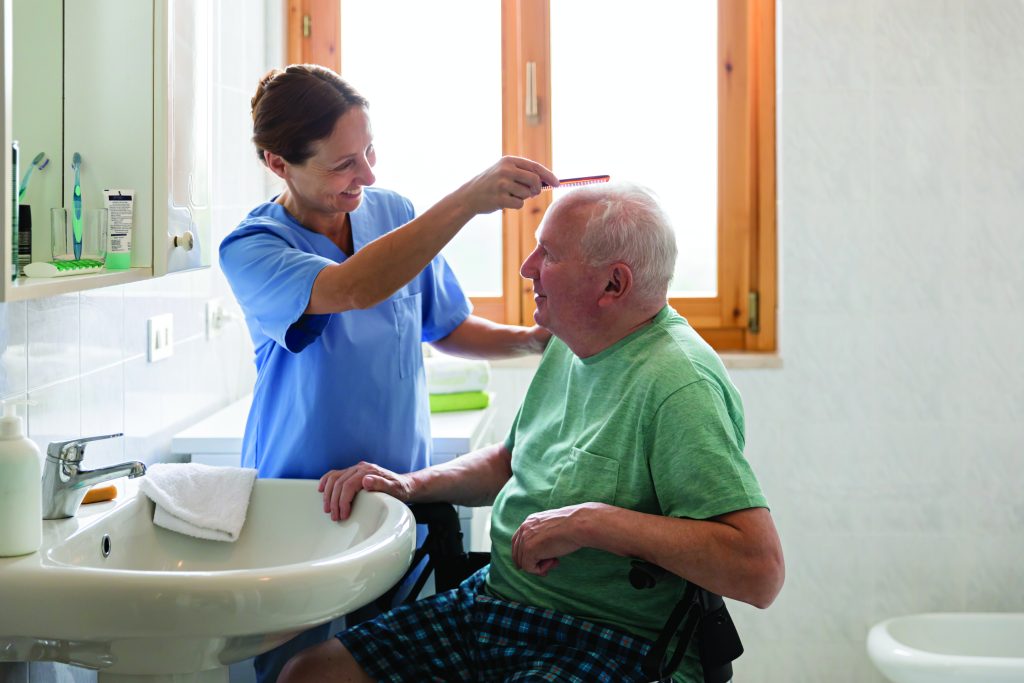
Hair care: lightweight brush/comb; dry shampoo between washes
-
Oral care: electric toothbrush, floss picks, a small rinse cup
-
Skin care: fragrance-free lotion; check skin folds and heels
-
Nail care: weekly trim while seated at a table with good light
-
Clothing system: label drawers; prepare 3 pre-matched outfits per week
5) Why families fight less when a neutral caregiver helps
Caring for a parent can flip family roles and stir up big feelings—embarrassment, protectiveness, even stubbornness. That’s why bathing and grooming often trigger arguments at home. We regularly hear, “My mom/dad just won’t shower for me.” Yet after starting services, those same families report that a caregiver can guide a calm, complete shower with little to no resistance.
Why it works:
-
Neutral third party: A professional isn’t tangled in the parent-child dynamic, so there’s less push-pull and power struggle.
-
Dignity, not dependency: Privacy-first techniques (towel draping, step-by-step cues) reduce embarrassment.
-
Predictable routine: Consistent days/times and the same friendly face build trust, reducing refusal over time.
-
Safety confidence: Proper setup, safe transfers, and steady pacing help your loved one feel secure—less fear, less friction.
-
You stay the “good guy”: Let us be the coach in the bathroom so you can go back to being the son, daughter, or spouse.
Family feedback we hear all the time: “Dad fought me on every shower. Two visits in, he’s showering for your caregiver without arguing.”
How we start: We typically begin with short personal-care shifts focused on one goal—a safe shower and gentle grooming. Once the routine sticks, we add light laundry/linens and a tidy-up so the bathroom feels fresh and welcoming.
6) How often should someone shower?
-
Most older adults do well with 2–3 full showers per week, plus daily “top and tail” (face, hands, underarms, groin).
-
For fragile skin or dementia, short, warm-towel sponge baths can be more comfortable.
7) When to bring in professional help
-
You’re worried about falls transferring in/out of the tub or shower
-
You can’t be there consistently for morning care
-
Bathing triggers conflict, embarrassment, or resistance
-
Post-surgery or during a rehab period when energy is low
Our short shifts are perfect for safe shower supervision and grooming—right-sized help without long minimums.
8) Sample weekly plan (easy to customize)
-
Mon & Thu: Short personal-care visit (safe shower, hair, fresh linens)
-
Tue: Companion check-in (light tidy, laundry, lunch, oral care)
-
Sat: Errands (groceries, pharmacy), plus prep for Sunday
9) Quick checklist: bathing & grooming safety
-
Grab bars securely installed (not suction)
-
Non-slip mat/treads inside and outside the shower
-
Shower chair/bench fits height and space
-
Handheld showerhead reachable while seated
-
Raised toilet seat and sturdy frame
-
Bright, glare-free lighting; clear floor
-
Towels, clothes, and toiletries set up before starting
-
Post-shower rest chair with lotion and hair tools nearby
10) Why families in Davis & Weber Counties choose us
-
Locally & veteran-owned; owners directly involved in care
-
Certified Dementia Practitioner on staff
-
Hospice-trained caregivers; strong coordination with hospice/home health
-
No weekly minimums, no weekend/evening surcharges
-
Short, affordable shifts designed for personal care and showers
Serving Layton, Kaysville, Bountiful, Farmington, Centerville, Syracuse, Roy, North Ogden, Ogden, Washington Terrace, and nearby communities.
Friendly next step
Let’s make bathing safe, relaxed, and routine. Call 801-628-4204 or 801-499-9993 for a no-pressure consult.

