
(202) 848-5260
main-ah-logo-horz-w_gradbox
 
  • About Us
    • Areas We Serve
      • Cottonwood Heights
      • Holladay
      • Kearns
      • Millcreek
      • Murray
      • Taylorsville
    • Meet the Team
    • GUIDE Partner for Alzheimer’s and Dementia Care
    • Industry Statistics
    • Our Caregivers
    • Hospital Readmission Penalties
  • Careers
    • Caregiver Login
  • Services
    • Alzheimer’s and Dementia Care
    • Companionship
    • Fall Prevention
    • Grocery Shopping & Errands
    • Hiring an Agency vs. Direct Caregiver
    • Hospice Support Services at Assisting Hands® Home Care
    • Light Housekeeping
    • Meal Preparation
    • Orthopedic Home Care Services
    • Medicare’s GUIDE Program
    • Parkinson’s Home Care
    • Personal Care & Grooming
    • Simplifying Long Term Care Insurance
    • Stroke Recovery Home Care
    • Transitional Care
    • Veterans Aid & Assistance
    • Full List of Services
  • Blog
    • National Blog
  • Ask a Question

Blog

Home Alzheimer's Disease Is It Normal Forgetting — or Something More? What Families Need to Know About Alzheimer’s and Brain Health
A young man sits with his elderly grandparents on an outdoor bench, engaged in a warm and caring conversation — the kind of moment that motivates families to seek Alzheimer's care in Murray, UT before memory loss progresses. Having the support of a trusted senior caregiver in Murray, UT can help families like this one navigate the journey together without facing it alone.

Is It Normal Forgetting — or Something More? What Families Need to Know About Alzheimer’s and Brain Health

June 6, 2026jclayton
There’s a moment many families recognize. Maybe it was when Mom called the same friend three times in one afternoon, not remembering the earlier calls. Or when Dad got lost driving home from a store he’d visited for thirty years. It’s the moment when worry quietly takes hold. A question begins to form: Is this just getting older — or is something wrong?
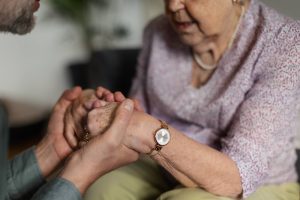
A caregiver gently holds the hands of a smiling elderly woman, capturing the tenderness and trust at the heart of quality dementia care near me Murray, UT. This kind of compassionate presence — whether through family or a professional senior caregiver in Murray, UT — can make an enormous difference for those navigating the Medicare GUIDE program Murray, UT and seeking structured, coordinated support. Maybe this hits close to home: today, more than 7 million Americans age 65 and older are living with Alzheimer’s disease. And two-thirds of Americans have at least one major risk factor for dementia. If you are concerned about yourself or someone you love, that concern matters. The good news is that asking the question early — and knowing where to turn — can make a real difference.

The Month of Brain Awareness and Alzheimer’s is a perfect time to revisit these questions and start with good ideas.

The Difference Between Normal Aging and Alzheimer’s

It is completely normal to occasionally forget a name or misplace your keys. What is not normal is when memory loss begins to interfere with daily life — things like forgetting how to cook a familiar recipe, getting confused about the month or the year, or struggling to follow a conversation. These are the kinds of signs that deserve a conversation with a doctor.

One of the most important things researchers now know is that the brain changes linked to Alzheimer’s can begin 20 years or more before any symptoms appear. That window of time is not something to fear — it is actually an opportunity. The earlier changes are caught, and support is put in place, the better the outcomes tend to be.

If you are concerned, you should contact your doctor. Although there is not a single, definite test for Alzheimer’s, doctors can use a combination of cognitive exams, blood tests, brain imaging (MRI or PET scans), and spinal taps to evaluate memory, rule out other conditions, and identify specific disease markers.

“Will I Get It Too?” Between destiny and action: Understanding Risk

Risk is shaped by a combination of genetics, lifestyle, and environment — and lifestyle is something we have real control over.

Family history does play a role, but to a point. Many people with relatives who had Alzheimer’s never develop it themselves. Healthy behaviors have a powerful impact on brain health.  Check out the Alzheimer’s Association’s new (re)think your brain™ 6-Step Challenge, which translates the latest science into simple, everyday actions anyone can start right now. Things like moving your body, staying socially connected, eating well, getting quality sleep, and keeping your mind engaged are not just good for your heart — they are good for your brain. Text BRAIN to 20654 for weekly tips from the Alzheimer’s Association.

New Treatments Are Bringing Hope

An older woman in a white dress walks freely through a golden wheat field with her arms outstretched, evoking the independence and quality of life that compassionate dementia care near me Murray, UT is designed to protect. Staying active and engaged outdoors is one of the many ways families and caregivers support brain health alongside professional Alzheimer's care in Murray, UT. You may also talk with your doctor about potential treatments. The FDA has approved treatments that may slow the progression of Alzheimer’s in some people by targeting the underlying disease process in the brain. 

Your Brain Is a Muscle: Let’s Review 10 Healthy Habits for Your Brain

The Alzheimer’s Association is focusing on all areas of Alzheimer’s, including prevention. Click here to access their top 10 habits to keep our brain healthy and start applying these in your life.

You Cannot Pour from an Empty Cup: The Reality of Caregiver Burnout

Anyone who has cared for a loved one with Alzheimer’s will tell you: caring for a loved one with Alzheimer’s is one of the most demanding things a person can do….and one of the most loving. But loving someone does not make you immune to exhaustion, grief, or burnout.

Asking for help is not giving up. It is one of the wisest, most loving things you can do — for your family member, and for yourself.

Family caregivers often give everything they have — and then quietly fall apart. The stress is real, and it affects physical health, mental health, and the quality of care their loved one receives. This is not a personal failure. It is simply what happens when one person tries to carry too much for too long.

This is where professional home care can make a life-changing difference. A trusted home care team does not replace you — it supports you. Whether it’s a few hours of relief during the week, help with personal care and daily routines, or simply a kind and trained presence so you can sleep, a home care partner helps keep the whole family healthier. When caregivers are supported, people living with Alzheimer’s do better, too.

A Program Designed Exactly for This Moment, and maybe for you: Medicare GUIDE

If your loved one has a confirmed dementia diagnosis and is enrolled in traditional Medicare Parts A and B, there is a remarkable program you may not know about: Medicare GUIDE, which stands for Guiding an Improved Dementia Experience.

GUIDE is a free Medicare program that provides families with a dedicated care navigator who helps coordinate medical and community services, caregiver training and education, 24/7 access to support, and even respite care benefits — giving family caregivers a real, structured break. The goal is simple: help people with dementia live safely at home for longer, while making sure their caregivers don’t have to face this journey alone.

Medicare GUIDE partner, our home care team works directly within this program to bring professional, compassionate care right to your door — at no cost to eligible families. 

To learn more about how we can support your family through Medicare GUIDE contact us today.

FAQs

What is the difference between Alzheimer’s and Dementia?

A caregiver places a reassuring hand on the knee of an elderly person seated on a couch, representing the steady, in-home presence that helps prevent caregiver burnout in Murray, UT. Professional Alzheimer's care in Murray, UT gives family members the relief and support they need, while ensuring their loved one receives consistent, dignified care at home.Dementia is defined as a decline in mental ability severe enough to interfere with daily life. It is the umbrella term that encompasses Alzheimer’s and other conditions. There are large differences between the various types of dementia; each has specific symptoms. 
  • Alzheimer’s is one of the most common forms of dementia, accounting for 60 to 80% of the cases. You can recognize Alzheimer’s by the abnormal protein deposits (amyloid plaques and tau tangles) in the brain. At first, people with Alzheimer’s will exhibit memory loss symptoms (remembering conversations, events) and unusual confusion.
  • Vascular dementia is caused by a reduced blood flow to the brain, whether caused by a stroke or other conditions (sleep apnea, etc.). People with vascular dementia may think more slowly and have decreased problem-solving, planning, and organizing skills.
  • Lewy Body Dementia (LBD) is caused by specific protein deposits (Lewy bodies) in the brain. Muscle issues (tremors, rigid muscles), visual hallucinations, and changes in alertness characterize Lewy Body dementia.
  • Frontotemporal Dementia (FTD) is characterized by a progressive loss of nerve cells in the brain’s frontal and temporal lobes, which in turn affects behavior, language, and personality.

Besides these 4 types, other types affect people.

Mixed Dementia is which the condition of more than one type of dementia, Parkinson’s disease, and Creutzfeldt-Jakob Disease (CJD).

If you suspect that you have dementia, please contact your doctor to be evaluated. 

What are the 5 warning signs of Alzheimer’s disease?

  • Short-term Memory Loss: Forgetting recently learned information, important dates, or asking for the same information repeatedly.
  • Difficulty Planning or Problem-Solving: Struggling to follow a familiar recipe, keep track of monthly bills, or manage a budget.
  • Confusion with Time or Place: Losing track of dates, the seasons, or the passage of time. The person may also forget where they are or how they got there.
  • Struggling with Familiar Tasks: Having trouble completing everyday activities, such as driving to a familiar location or remembering the rules of a favorite game.
  • Changes in Mood or Personality: Becoming unusually confused, suspicious, depressed, anxious, or easily upset when outside their comfort zone.

You can read more about symptoms with these two excellent resources from the NIH and John Hopkins Medicine.

How can you tell if a person has Alzheimer’s or dementia?

Early signs of Alzheimer’s or dementia can be subtle, so it’s important to observe changes over time rather than isolated incidents.

Common symptoms to watch for:

  • Frequent memory lapses, especially forgetting recent events or conversations
  • Difficulty finding words or following conversations
  • Getting lost in familiar places
  • Trouble with problem-solving, planning, or handling finances
  • Confusion about dates, times, or people
  • Noticeable personality or mood shifts — increased anxiety, withdrawal, or irritability
  • Neglecting personal hygiene or household responsibilities
  • Repeating questions or stories within the same conversation

Your observations may be imperfect, but they will likely be the base for further investigation.

The key distinction from normal aging is frequency and progression — these symptoms worsen over time and begin interfering with daily life. 

See a doctor if you notice these signs. A physician can conduct cognitive assessments, rule out other causes (like vitamin deficiencies or thyroid issues), and refer to a specialist. Early diagnosis leads to better care planning and treatment options.

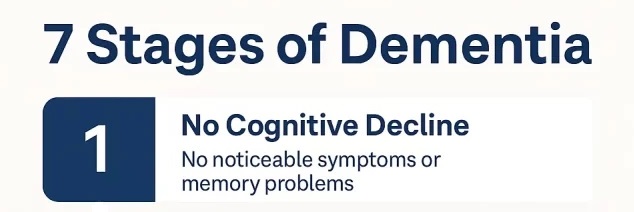
What Are the Seven Stages of Alzheimer's?

The seven stages follow a progression framework developed by Dr. Barry Reisberg known as the Global Deterioration Scale (GDS), illustrated in the chart shown to the left.

What to Know About These Stages

The progression from stage to stage is not strictly linear. While the stages generally move in one direction—from mild to severe—the rate of progression varies greatly from person to person.

Some individuals decline rapidly over a few years, while others remain stable for extended periods before experiencing further changes. Infections, medication adjustments, hospitalization, or emotional stress can sometimes cause temporary declines that may partially improve.

Can Someone Skip a Stage?

Not exactly. The stages often overlap, and a person may display characteristics of two stages simultaneously. What appears to be “skipping” a stage is usually a rapid transition through a stage that wasn’t recognized by caregivers or healthcare providers.

Will Everyone Progress Through All Seven Stages?

No. Some individuals, particularly those diagnosed later in life or living with other serious health conditions, may pass away from unrelated causes before reaching the final stages.

Others may remain in the early stages for many years, especially when supported by quality care, healthy lifestyle habits, and ongoing medical management.

When Do Most People Pass Away?

Most deaths associated with Alzheimer’s disease occur during Stages 6 and 7…

You Don’t Have to Figure This Out Alone. Seek Alzheimer’s Care in Murray, UT

Whether you are in the early stages of concern or deep in the caregiving journey, there are people and resources ready to walk alongside you. Contact our Utah chapter of the Alzheimer’s Association for help, access to local support groups, education programs, and their new brain health resources. You can receive the support that you and your family deserve with Assisting Hands Home Care of Greater Murray by following these steps:

  1. Reach out for a free consultation.
  2. Meet with a member of our caring team
  3. Learn how our Alzheimer’s care in Murray, UT can bring relief, dignity, and peace of mind!

Other Services Offered with Assisting Hands Home Care

Assisting Hands Home Care in Greater Murray, we offer other forms of support in addition to Alzheimer’s and Dementia care. We also provide a full range of professional, compassionate in-home care services designed to help seniors live with greater comfort, safety, and peace of mind in the place they call home.

Services we offer include respite care services, Parkinson’s Home Care, Stroke Recovery Home Care, and Orthopedic Home Care Services. We also provide Personal Care & Grooming, Meal Preparation, Light Housekeeping, and Grocery Shopping & Errands to support the day-to-day needs of seniors.

Additionally, we also offer Transitional Care, Hospice Support Services, and Coordination of Care services, which can also provide support. We also proudly serve Veterans through our Veterans Aid & Assistance program, and offer Companionship and Fall Prevention services. Whatever your family’s needs look like, Assisting Hands is here to help. Explore our full list of services or contact us today for more helpful information!

Previous post The Real Cost of Family Caregiving, and How Respite Care Can Help Next post Make your Dream of Aging at Home a Reality: Leveraging AgeTech to Make it Happen
chat-icon

Read Our Newsletter

Read More
Facebook
apache_pb

Download Our Brochure

Download
Home Care

assisting hands

Assisting Hands Home Care provides elder care services and senior in home care services for families across the country.

  • Call us at (801) 457-5710
  • 310 E. 4500 S. Suite 350 Murray UT 84107

COMPANY

  • Home
  • Services
  • About Us
  • Contact Us

Services

  • Aging In Place
  • Alzheimer’s and Dementia Care
  • Companionship
  • Full List of Services

legal

  • Hospital Readmission Penalties
  • Privacy Policy
  • Terms & Conditions
  • Accessibility Statement

© Assisting Hands® Home Care, LLC. All rights reserved.