

Older adults are increasingly at risk for falls at home. It’s where they spend most of their time and when the home is not senior-friendly, it can turn into a treacherous environment. Below are fall prevention strategies families in Schaumburg, IL, and the surrounding suburbs can implement in each room of the home.
The Centers for Disease Control and Prevention (CDC) reports one in four adults 65 and older falls each year, more than 14 million people. Falls are the leading cause of fatal and nonfatal injuries among seniors. Not all falls cause injuries, but about 37% of seniors who fall report an injury that requires medical treatment or restricts their activities for at least one day.
The home is often thought of as a safe environment. As a result, the elderly move about freely without considering their safety. But bedrooms filled with clutter, darkened hallways, and slick bathrooms are hazardous spaces in which older adults are vulnerable to falls, injuries, and even fatalities.
Each room in the home, from the kitchen to the bathroom, is designed for unique purposes. Modifying these spaces to become senior-friendly requires specific approaches. The following are changes families can make to each room to reduce seniors’ fall risks.
How Do You Prevent Falls in the Bathroom?
The most effective bathroom fall prevention measures are professionally installed grab bars, nonskid mats on every surface that gets wet, and lighting the senior never has to fumble for at night.
The bathroom sends more older adults to the emergency room for falls than any other room in the house. CDC injury data shows that roughly four out of five bathroom injuries are caused by falls, and research on older adults has found a fall in the bathroom is more than twice as likely to cause an injury as a fall in the living room. Wet floors and slippery surfaces combined with high tub walls are precursors to falls when prevention methods are not implemented. It’s important to provide stable support that gives the elderly extra confidence in this hazardous part of the home.
Install screw-mounted grab bars above the toilet as well as in and near the shower to give seniors structured support to grab if they are overcome by dizziness or loss of balance. Avoid suction cup grab bars, as they fail to support full bodyweight. Opt for professional installation over DIY attempts.
Cover floors that can get wet with nonskid mats. Apply anti-slip floor tape to give older people’s feet extra grip as they navigate the space. Add motion-sensor lighting in the bathroom or leave the light on at night so that seniors don’t have to fumble with the light switch.
How Can You Make the Kitchen Safer for Seniors?
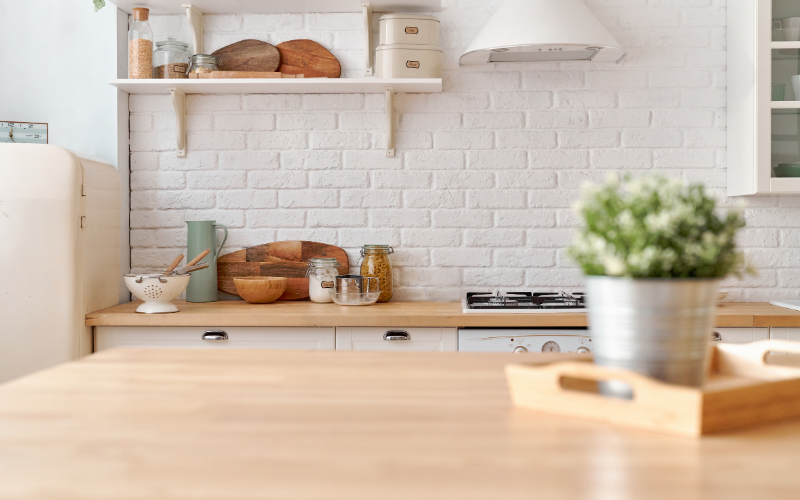
Store frequently used items within easy reach, clean up spills right away, and give the senior a place to sit while preparing food.
Enhance the senior’s kitchen safety by storing frequently used pots, pans, and dishware at eye level and within easy reach. Install pull-down shelves to further make the kitchen accessible. Provide access to rolling carts the senior can use to bring heavy items from the counter to the table.
Spills are dangerous and should be cleaned up promptly to prevent the senior from slipping and falling. If the older person still cooks, provide them with a stool on which to sit while cutting or otherwise preparing food; this helps prevent fatigue and accidental falls.
How Do You Prevent Falls in the Bedroom?
Clear the clutter, get rid of throw rugs, and make sure light is always within arm’s reach of the bed.
An excessive amount of décor, furniture, and miscellaneous items creates a space that is difficult to navigate. Reduce the number of furniture pieces and organize open spaces in the bedroom to allow the older person to move about freely and safely.
Eliminate throw rugs, which are trip hazards that contribute to falls. Wall-to-wall carpeting or non-slip rugs are recommended instead. Add a bedside lamp to the senior’s nightstand; if they get up at night, it illuminates their walking path and helps prevent stumbles. The National Institute on Aging also recommends keeping a flashlight and a charged phone within reach of the bed.
Nighttime trips to the bathroom are one of the most common fall scenarios. For seniors who are unsteady at night, overnight caregivers can provide standby assistance during these high-risk hours.
What Living Room Changes Reduce Fall Risk?
Choose seating the senior can get out of easily, keep walking paths clear, and route electrical cords along the walls.
Choose sofas and chairs with heights the senior can get into and out of easily. Eliminate coffee tables and other furniture with sharp corners. Arrange furniture and other objects so they do not obstruct walking paths. Keep electrical cords against walls and ensure they do not cross walking paths.
What About Stairs and Hallways?
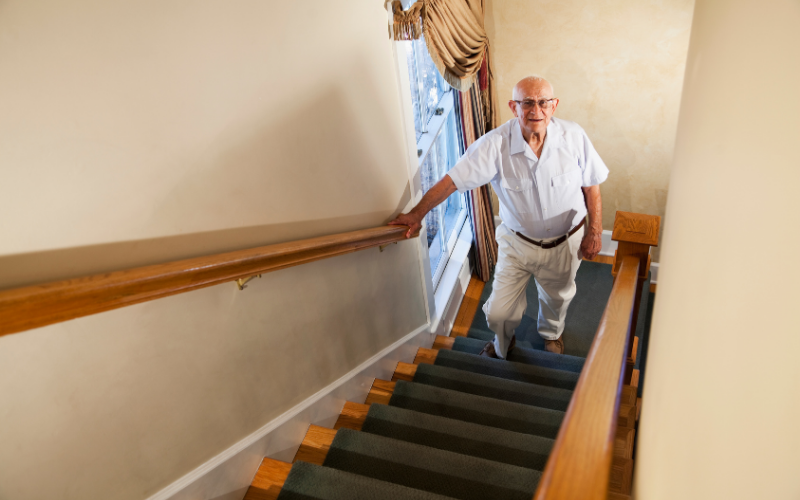
Stairs and hallways need secure handrails, good lighting at both ends, and completely clear steps.
Ensure handrails are mounted on both sides of any staircase and check that they are secure. Light switches belong at the top and bottom of stairs and at each end of long hallways; motion-activated plug-in lights are an inexpensive fix for dark passages. Never leave shoes, books, laundry, or other items on steps, and confirm that any carpeting on stairs is firmly fixed so it cannot slip underfoot.
How Do You Make Outdoor Areas Safer for Seniors?
Repair uneven steps, add handrails and non-slip surfaces, and keep walkways clear year-round.
Fix broken and uneven steps leading up to the home’s front entrance. Add non-slip material and handrails to outdoor stairs. Clear fallen debris, such as branches and leaves, from the lawn, deck, and porch. Keep the porch light on when the senior is expected to return home after dark. During Chicago-area winters, treat walkways and steps with ice melt or sand before the senior heads outside.
What Should Seniors Do If They Fall?
Every senior should have a way to call for help from anywhere in the home, even if they cannot reach a phone.
Hang a list of emergency contact names and phone numbers in large print near each landline phone in the home. Program these numbers into the senior’s mobile phone so they can call for help immediately if they fall or injure themselves.
Provide the senior with access to a medical alert system. These systems allow the elderly to call for emergency help 24/7, and many models with automatic fall detection connect with emergency dispatch personnel even when the senior is unable to physically press the call button. Note that these services charge a monthly fee and are usually not covered by insurance.
How Can a Home Caregiver Help Prevent Falls?
A professional caregiver provides steady physical support and daily hazard awareness that home modifications alone cannot.
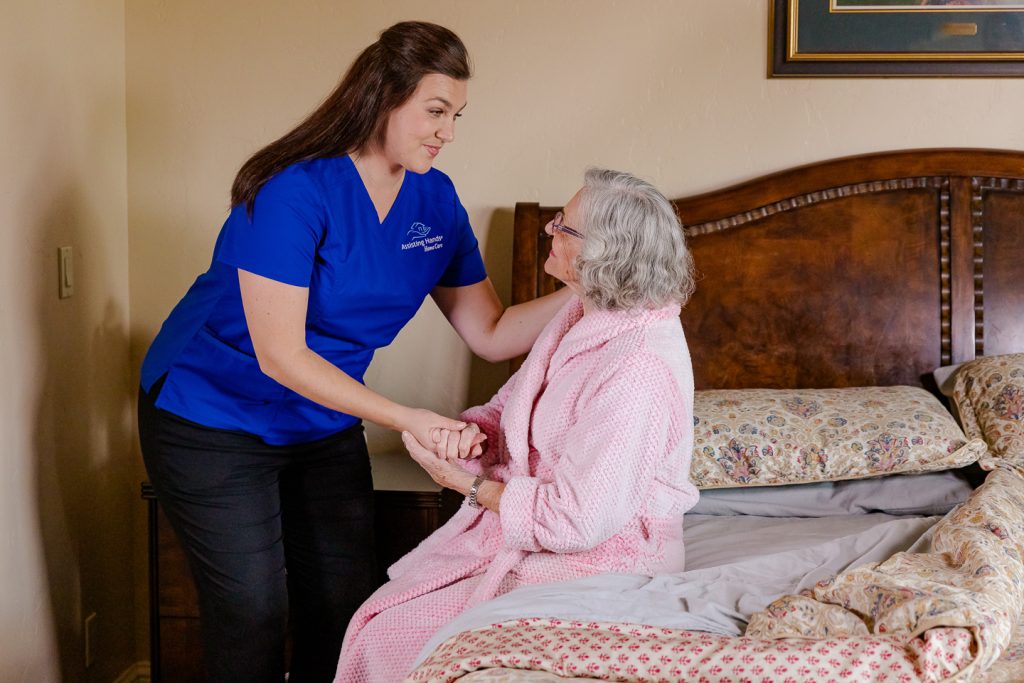
Professional in-home caregivers provide mobility assistance to older adults who feel unstable on their feet. By gently grasping their arms as they walk, caregivers help them navigate the home safely and confidently.
Fall prevention is part of the comprehensive, non-medical care services from Assisting Hands Home Care. Caregivers regularly remove clutter, ensure furniture does not interfere with walking paths, and assess the home for fall hazards. They are trained to provide safe transfer assistance, such as moving the senior from a bed to a chair, so seniors challenged by mobility issues do not struggle to move on their own and risk a fall or injury.
In addition, caregivers provide respectful assistance with hygiene tasks, such as bathing, toileting, and grooming and ensure dependable physical support in the bathroom where fall risk is highest. Senior Home Care plans also include transportation to medical appointments, medication reminders, light housekeeping, and healthy meal preparation.
Fall Prevention Home Care in Schaumburg, IL
When safety at home is a priority for your elderly loved one, choose Assisting Hands Home Care for fall prevention services and general home care. We serve seniors in Schaumburg, Hoffman Estates, Palatine, Elk Grove Village, Rolling Meadows, Des Plaines, Inverness, and the surrounding Chicago suburbs. Call (847) 448-0844 to schedule a free in-home consultation today to learn more about quality home care.


