A bone-healthy diet is important for seniors diagnosed with osteoporosis. Essential nutrients, like calcium, vitamin D, and protein, can potentially protect these individuals from further issues and help them maintain strong bones as they age. Here’s the best diet for seniors with osteoporosis.
What is osteoporosis?
Osteoporosis is a disease that affects the bones. It weakens bones and makes them denser, which can lead to fractures. The natural aging process leads to less bone density, but osteoporosis causes the bones to be significantly more fragile than they should be.
This silent disease is common in people over the age of 50. In fact, over 50 million Americans live with osteoporosis. Many of them don’t know they suffer from the disease until it causes them to break a bone after a minor accident that normally wouldn’t injure them.
What factors influence bone health?
Certain lifestyle factors can affect bone health. Drinking excessively, such as two or more alcoholic beverages a day, or not getting enough physical exercise can increase the risk of osteoporosis. Failing to consume sufficient amounts of vitamin D and calcium are additional risk factors.
How does diet impact bone health?
Bone is a living tissue that continuously breaks down and rebuilds. While bone loss occurs due to menopause, aging, and some medications, eating a diet rich in nutrients can keep bones healthy. These foods include those with calcium, vitamin D, and protein as well as fruits and vegetables.
1. Calcium-rich Foods
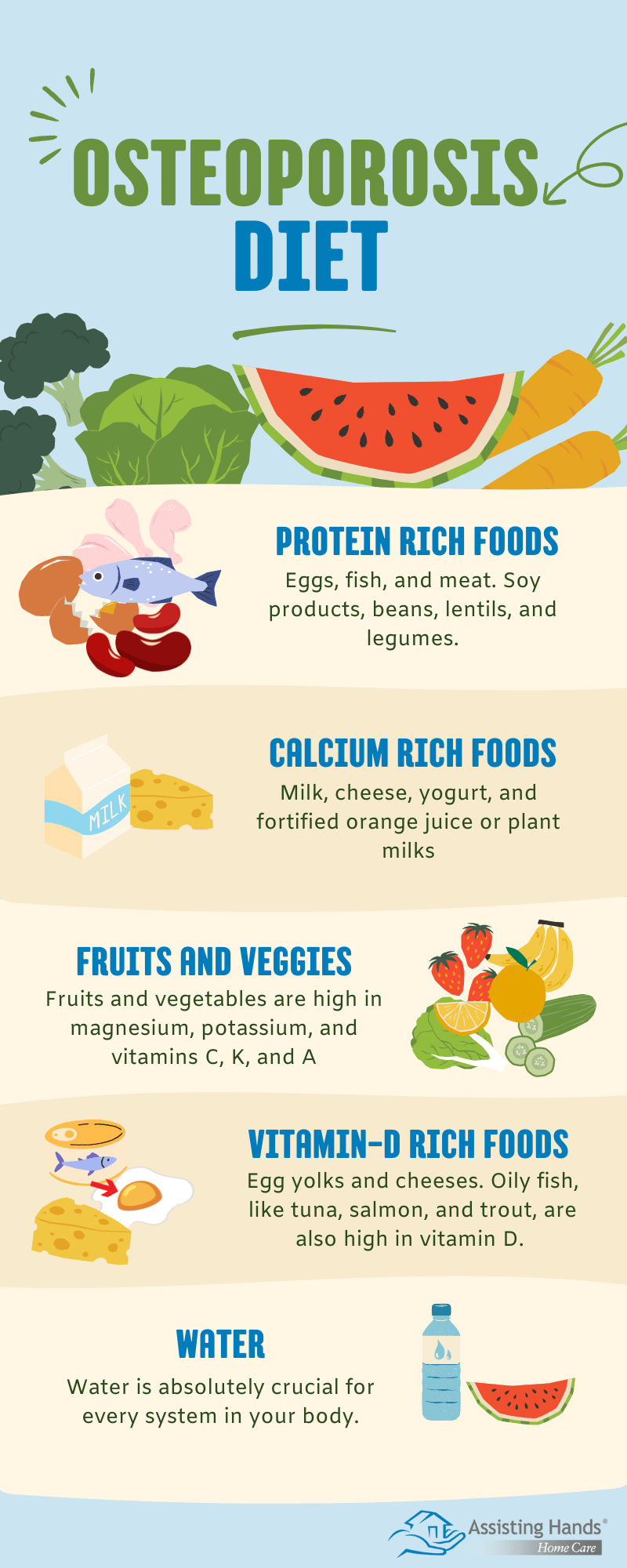
A low-calcium intake is associated with an increased risk of bone fractures. Women over age 50 require 1,200 mg of calcium daily and men 1,000 mg. Eat foods high in calcium, such as fortified oatmeal, sardines, cheddar cheese, baked beans, and tofu. Drink orange juice fortified with calcium.
For instance, seniors should strive to eat and drink four servings of milk, cheese, yogurt, and fortified orange juice or plant milks per day to get their recommended calcium intake. Supplements may be an option for older adults who can’t get their calcium from foods.
2. Vitamin D-rich Foods
Without adequate amounts of vitamin D, the aging body is unable to absorb calcium. A vitamin D deficiency causes weak bones. Seniors up to age 70 are advised to consume 600 IU of vitamin D daily. People over age 70 should increase the amount to 800 IU daily.
Foods loaded with vitamin D include egg yolks and cheeses. Oily fish, like tuna, salmon, and trout, are also high in vitamin D. Cereals, milk, and orange juice offer healthy doses of vitamin D, provided they are fortified with this important nutrient. Seniors also get vitamin D from sunlight.
3. Protein-rich Foods
A diet low in protein can result in greater bone loss and hip fractures in seniors. But consuming enough protein and calcium seems to benefit bone mineral density. Plant proteins, like nuts and beans, are highly recommended, as they are most effective in preserving bone.
Seniors should ensure that 25 to 35 percent of their daily calories consist of protein. Consume protein-rich foods, like eggs, fish, and meat. Soy products, beans, lentils, and legumes are excellent sources of protein. Dairy products, nuts, and seeds are also high in protein.
4. Fruits and Vegetables
Less bone loss is associated with a high intake of fruits and vegetables. These nutritious foods contain phytochemicals—substances that protect against osteoporosis and other diseases. Older adults should aim to eat four or more servings of fruits and vegetables each day.
Fruits and vegetables are high in magnesium, potassium, and vitamins C, K, and A—all of which play an important role in bone health. Include tomatoes, prunes, bananas, and papaya in a daily diet. Also consume vegetables, like spinach, broccoli, artichokes, kale, and red peppers.
What foods should seniors with osteoporosis avoid?
1. Excessive Salt
Older people with osteoporosis should avoid eating foods with a high sodium (salt) content. Too much salt causes the body to lose calcium, which can lead to bone loss. In fact, consuming an excessive amount of salt causes the kidneys to excrete calcium.
2. Too Much Alcohol
Drinking too much alcohol is also not advised for seniors living with osteoporosis, as it interferes with the absorption of calcium and vitamin D. Heavy drinking increases the risk of osteoporosis, as it decreases testosterone production in males and reduces estrogen levels in females.
3. Caffeine in Coffee and Soda
Older adults should not drink more than three cups of coffee per day. Caffeine significantly increases the kidney’s clearance of calcium. Coffee likewise increases the amount of calcium the body releases in urine. The caffeine in sodas has a similar adverse effect.
Eating a healthy diet rich in calcium, vitamin D, protein, and fruits and vegetables can protect seniors’ bone health. The professional caregivers at Assisting Hands Home Care grocery shop and prepare healthy meals to ensure the elderly consume important nutrients and maintain strong bones.
In addition to preparing balanced dishes in accordance with a senior’s dietary restrictions, we help with the activities of daily living. Caregivers perform light housekeeping, provide timely medication reminders, and assist older adults with personal hygiene tasks, like bathing, dressing, grooming, and toileting.
Our senior companionship is vital to keeping the elderly socialized and stimulated and prevents loneliness and isolation. We play board games, take seniors on outings, and hold pleasant conversations. By fostering meaningful connections, we enhance their social and emotional health.
Elder home care options are flexible and varied. Our reputable home care agency offers compassionate Alzheimer’s and dementia care, respite care, 24-hour and live-in care, and post-surgical care. All our care options come with fall prevention services to keep the elderly safe.
Support your aging loved one’s bone health and overall physical and emotional health by choosing Assisting Hands Home Care in Las Vegas, Nevada. We are privileged to serve the elderly community.
Schedule a free in-home consult today at (725) 696-9942 and learn how senior care can elevate their quality of life.


