

Thanksgiving brings family together around familiar traditions: the turkey in the oven, the football game in the background, and stories everyone has heard a dozen times. But when a parent is living with dementia, a holiday that once felt effortless can bring new challenges.
Maybe Dad used to carve the turkey but now struggles to follow the conversation. Maybe Mom always loved a house full of family but becomes overwhelmed by the noise and activity. You want your parents to feel included and enjoy the day, but you also know that too much change, stimulation, or activity can make the holiday stressful for everyone.
The good news is that Thanksgiving doesn’t have to look exactly as it did in years past to be meaningful. With some thoughtful planning, a few adjustments to familiar traditions, and realistic expectations, you can create a celebration that feels comfortable and enjoyable for the whole family. These tips can help families in Mansfield and the surrounding communities plan a Thanksgiving gathering that helps your loved ones with dementia feel connected.
Plan the Day Around Their Best Hours
Most people with dementia have certain times of day when they feel more alert and comfortable. For many, that’s late morning or early afternoon. As the day progresses, some experience sundowning, a period of increased confusion, restlessness, or irritability that often begins as daylight fades. In North Texas, the sun sets a little after 5:20 p.m. in late November, which means a traditional 6 p.m. Thanksgiving dinner could fall right during this more difficult time.
Consider moving the main meal to midday instead. A Thanksgiving lunch around 12:30 or 1 p.m. gives your loved one a better chance to enjoy the food, conversation, and family time when they’re feeling their best. It also leaves plenty of time to relax before evening.
Just as important, try to keep your parent’s regular routine intact. If Mom usually has coffee at 8 a.m. and rests after lunch, make room for those familiar habits. Maintaining a predictable rhythm can provide comfort and reassurance when the holiday brings unfamiliar activity, extra noise, and changes to the usual surroundings.
Keep the Crowd and the Noise Manageable
A house full of 25 relatives, several conversations happening at once, kids running through the kitchen, and the Cowboys game blaring in the background can be overwhelming for anyone. For someone living with dementia, all that activity and noise can quickly lead to confusion, anxiety, or agitation.
You don’t have to leave family members off the guest list to make the day easier. A few simple adjustments can help your parents feel more comfortable while still allowing everyone to enjoy the celebration:
- Stagger arrivals so people come in small waves instead of all at once.
- Turn the TV down or move the game to a different room.
- Play soft music your parents know, like the hymns or old standards they’ve always loved.
- Set up a quiet room with a comfy chair, a blanket, and a photo album, where your parents can rest whenever they need a break.
If your family is big, consider splitting the celebration. A small meal with close family on Thursday and a larger get-together over the weekend can be much easier on your parents, and on you.
Set Up Your Home for Comfort and Safety
Holiday decorations, extra furniture, and changes to the usual layout can make even a familiar home feel unfamiliar to someone with dementia. A few simple safety checks can help your loved ones navigate the space more comfortably.
Start by clearing walkways of extra chairs, coats, bags, and electrical cords to reduce tripping hazards. Add night lights or brighter bulbs in hallways and bathrooms, where dim lighting and shadows can sometimes cause confusion. A simple sign or picture on the bathroom door can also help your loved ones find their way.
Wandering is another concern during a busy gathering, especially when guests are coming and going through the front door. Ask one family member to keep an eye on the entrance or place a bell or door chime nearby so you know when it opens. Keep car keys, medications, sharp knives, and alcohol somewhere your loved ones can’t easily access them.
If you’re celebrating at your home rather than your parent’s, bring a few familiar items from their house, such as a favorite blanket, sweater, or family photo. Having something recognizable nearby can provide comfort and help an unfamiliar setting feel a little more like home.
Give Them a Role and Lean on Old Traditions
People living with dementia still want to feel needed, valued, and included in family activities. Giving your loved one a simple job can help them feel like an active part of the celebration rather than someone everyone is watching over.
Look for tasks they can comfortably handle, such as folding napkins, setting out the rolls, snapping green beans, arranging the centerpiece, or stirring the gravy with someone nearby. Choose activities they can complete successfully, and don’t worry about getting every detail right. If the napkins aren’t perfectly folded, that’s fine. The goal is to give them a sense of purpose and a chance to participate.
Familiar traditions can be just as meaningful. Long-term memories often remain more accessible than recent ones, so lean on the customs your loved one has enjoyed for years. Bring out old family recipes, use the serving dish Grandma always used, or invite Dad to say the blessing if that’s something he’s done for decades. You can also play music from their younger years or look through old family photos together. These familiar sights, sounds, and routines can spark memories, encourage conversation, and create moments of connection, even on a difficult day.
Make Mealtime Easier
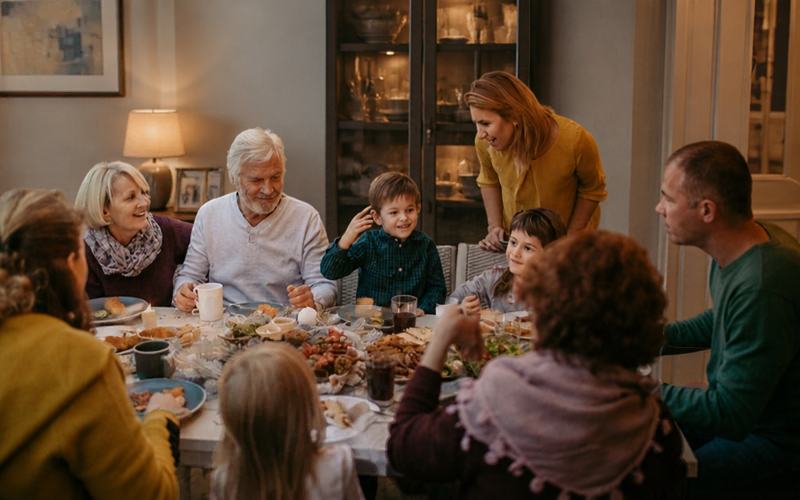
A full Thanksgiving spread may look inviting, but too many choices on one plate can be confusing or overwhelming for someone with dementia. Consider serving smaller portions with just a few foods at a time. Plain, solid-colored plates that contrast with the food can also make it easier for your loved one to identify what’s in front of them.
Make eating as comfortable as possible. Cut turkey into bite-size pieces before serving, and if using utensils has become difficult, offer easy-to-handle alternatives such as rolls, cubed sweet potatoes, or cheese and crackers, provided they’re appropriate for your parent’s dietary needs. Be mindful of hot foods and drinks since your parent may not recognize when something is too hot.
Where they sit can make a difference as well. Choose a quieter spot at the end of the table or in a corner, next to someone they know and feel comfortable with. Fewer people nearby can mean fewer distractions and less background noise. Most importantly, don’t rush the meal. Give your loved one plenty of time to eat and enjoy the experience at their own pace.
If your parent has difficulty chewing or swallowing or follows a special diet, talk with their doctor ahead of time about appropriate foods and any necessary precautions.
Prepare Your Guests and Have a Backup Plan
Relatives who haven’t seen your parents in a while may be caught off guard by the changes. A quick call or group text before Thanksgiving can make the day smoother for everyone. Share a few simple tips:
- Say your name when you greet them instead of asking, “Do you remember me?”
- Speak slowly, keep questions simple, and give them time to answer.
- Don’t correct or argue if a story comes out mixed up. Just go along with it.
- Talk about the old days. Older memories are often easier to reach than recent ones.
Even with great planning, some moments won’t go the way you hoped. Your loved one may get tired or upset, or ask to go home even when they already are home. That’s okay, and it doesn’t mean the day failed. Have a plan ready, like a short walk outside, a favorite snack, or some downtime in that quiet room. Decide ahead of time who will step away with them, so you’re not scrambling in the middle of dinner.
Take Care of Yourself
If you are your parent’s primary caregiver, adding Thanksgiving hosting to your usual responsibilities can quickly become exhausting. Give yourself permission to let go of perfection. The goal isn’t to pull off an elaborate holiday dinner; it’s to spend meaningful time together.
Accept help when family members offer it. Let your sister bring the pies, ask your cousin to handle the dishes, or have someone else make a last-minute trip for ice. There’s nothing wrong with ordering a few side dishes or simplifying the menu if it makes the day easier. Your time and energy are better spent enjoying the holiday with your parents than trying to manage every detail in the kitchen.
You don’t have to handle everything on your own, either. If you could use some extra support from a trained caregiver this holiday season, our team is here to help.
Holiday Support from Assisting Hands Home Care in Mansfield

Thanksgiving should be about spending time with the people you love, not trying to manage every detail or worrying about whether your parent is safe and comfortable. You don’t have to do it all yourself.
At Assisting Hands Home Care, our caregivers are trained to support people living with Alzheimer’s disease and other forms of dementia. A caregiver can stay with your loved one during the busiest parts of the day, assist with personal care, provide reassurance when things get overwhelming, and help maintain a comfortable routine. That extra support gives you more freedom to sit down, enjoy the meal, and make memories with your family. We also offer respite care to give family caregivers a much-needed break, during the holidays and throughout the year.
To learn more about our Alzheimer’s and dementia care in Mansfield, TX, call us at (817) 592-8843 to schedule a free in-home assessment. We’d be glad to help you find the right support for a calmer, more enjoyable holiday season.
We proudly serve families in Mansfield, Arlington, Burleson, Cleburne, DeSoto, Duncanville, Glenn Heights, Granbury, Midlothian, Red Oak, Ovilla, Waxahachie, TX and the surrounding areas.
Hosting Thanksgiving for Seniors with Dementia FAQs
Should a parent with dementia go to a big Thanksgiving gathering?
It depends on your parent and how they handle crowds right now. Many people with dementia do well at a smaller, quieter gathering, or at a big one if they have a calm room to retreat to. If large groups tend to upset them, a short visit or a separate small meal may be the kinder choice.
What time of day is best for Thanksgiving dinner with someone who has dementia?
Midday usually works best. Many people with dementia feel clearest in the late morning and early afternoon, and some become more confused or restless later in the day. A lunchtime meal around 12:30 or 1 p.m. gives them time to enjoy the day and rest before evening.
How can I keep my parents from getting overwhelmed on Thanksgiving?
Keep the noise low, stagger guest arrivals, and set up a quiet room where they can take breaks. Serve smaller plates, seat them near someone familiar, and stick to their normal routine as much as possible.
What should I tell relatives before they visit a loved one with dementia?
Let them know about recent changes so they aren’t surprised. Encourage them to introduce themselves by name, speak slowly, avoid correcting mixed-up stories, and talk about older memories, which are often easier for someone with dementia to recall.
Can a home caregiver help on Thanksgiving Day?
Yes. Assisting Hands Home Care in Mansfield, TX, provides trained dementia caregivers who can help with personal care, companionship, and keeping your loved one calm and safe during the holiday. Call (817) 592-8843 to schedule a free in-home assessment.


