
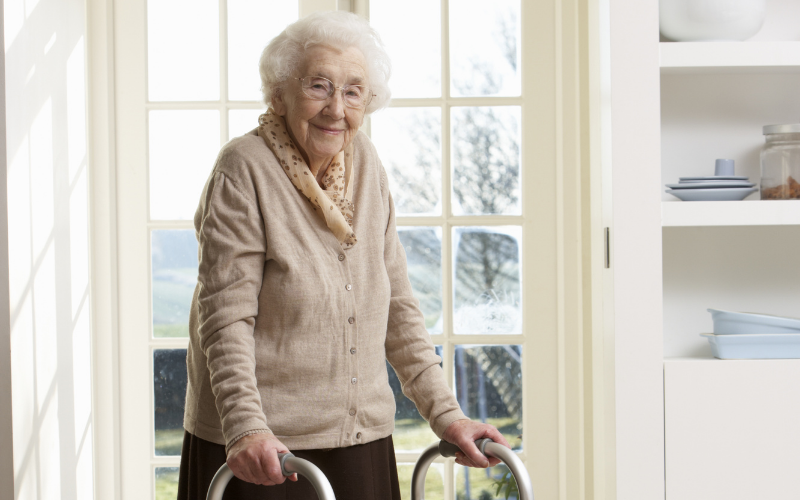
Most falls don’t happen on icy sidewalks or busy streets. They happen at home on a bathroom floor, a garage step, or a hallway that’s too dark at 2 a.m. According to the CDC, about one in four adults over 65 falls each year, and falls remain the leading cause of injury-related death in that age group.
The good news is that most home hazards are fixable, and many fixes are cheap. A home safety assessment is a structured way to find those hazards before they cause an injury. For families in Mansfield and the surrounding North Texas communities, it’s often the first step in helping a parent or spouse stay in their own home safely.
This guide covers what a home safety assessment involves, what an assessor looks for room by room, and practical changes you can make this week.
What Is a Home Safety Assessment for Seniors?
A home safety assessment is a walk-through evaluation of an older adult’s living space, done to identify hazards and recommend changes that reduce the risk of falls and injuries. Assessments can be performed by occupational therapists, home care agencies, or trained family caregivers using a checklist.
A good assessment looks at more than trip hazards. It considers the person, not just the house: how their mobility, vision, balance, and memory interact with the specific layout of their home. A staircase that’s fine for one person is a serious risk for someone recovering from hip surgery. That’s why the recommendations that come out of an assessment are based on individual needs, grab bars for one household, better lighting and a medication system for another.
At Assisting Hands Home Care, a home safety evaluation is part of how we begin working with a new client. It shapes the in-home care plan and tells us where a caregiver’s attention matters most.
What Does a Home Safety Assessment Include?
Assessments work room by room. Here’s what a typical evaluation covers.
- Bathroom: This is the highest-risk room in the house. An assessor checks for grab bars near the toilet and inside the shower or tub (mounted into wall studs, not suction-cupped), non-slip surfaces, adequate lighting, and toilet seat height. A standard toilet sits around 15 inches high; seniors with joint or balance issues often do better with a raised seat at 17 to 19 inches.
- Kitchen: The focus here is reach and burn risk. Are everyday items such as dishes, medications, and pantry staples stored between waist and shoulder height, or does the person climb a step stool to get them? Are stove knobs easy to read? Is there a working fire extinguisher within reach?
- Bedroom: Assessors look at the path from bed to bathroom, since nighttime trips are when many falls happen. A bedside lamp within arm’s reach, a night light along the route, and a phone or alert device next to the bed all matter. Bed height is checked too, feet should rest flat on the floor when sitting on the edge.
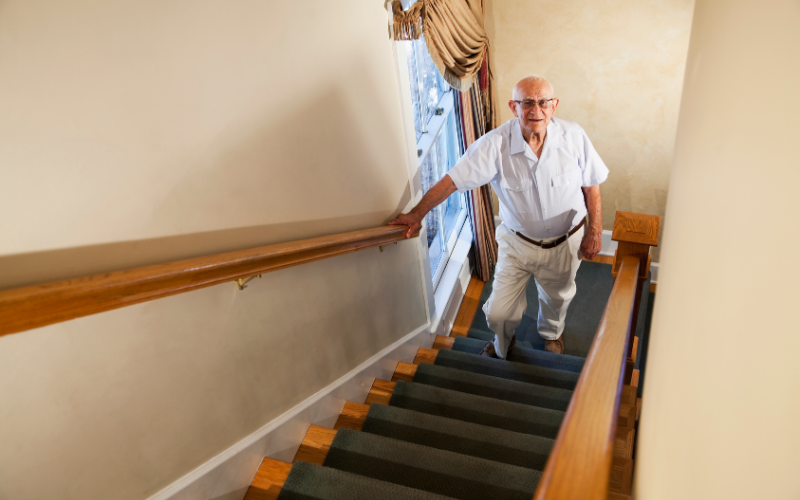
- Stairs and hallways: Handrails on both sides, secure carpet or treads, and light switches at both the top and bottom of the staircase. In hallways: clear pathways, no loose cords, and rugs either removed or secured with non-slip backing.
- Exterior and garage: North Texas clay soil shifts with the seasons, and uneven driveways, cracked walkways, and settled porch steps are common in the Mansfield area. Assessors also check outdoor lighting, the step from the garage into the house (often one of the tallest single steps in a home), and whether house numbers are visible to emergency responders.
- Whole-house systems: Working smoke and carbon monoxide detectors on every level, unblocked exits, and a plan for extreme heat which is a real concern during Texas summers, especially for seniors on medications that affect heat tolerance or those hesitant to run the air conditioning.
- Medication and daily routines: Beyond the physical space, an assessment reviews how medications are stored and organized, whether expired prescriptions have accumulated, and whether memory changes are affecting safe routines like turning off the stove. For families managing cognitive decline, our Alzheimer’s and dementia care addresses these risks specifically.
Why Home Safety Assessments Matter
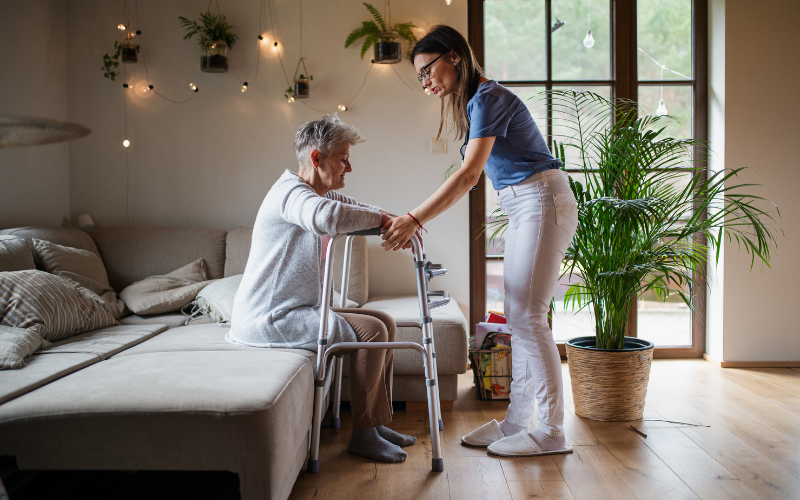
The case for an assessment comes down to three outcomes.
First, fewer injuries. Falls are the most common reason seniors end up in the ER, and a single serious fall often starts a cycle of hospitalization, reduced mobility, and loss of confidence that’s hard to reverse. Removing hazards interrupts that cycle before it starts. Our fall prevention services build on assessment findings with ongoing caregiver support.
Second, longer independence. Most older adults want to stay in their own homes, and small modifications are usually what make aging in place realistic. A $40 grab bar and better lighting can delay or eliminate the need for a move to assisted living.
Third, lower costs. The average cost of a fall-related hospitalization runs into the tens of thousands of dollars. Compare that to the price of the most common assessment recommendations and the math is straightforward.
There’s also something harder to quantify; family members worry less when they know the home has been evaluated by someone who does this professionally.
How Can You Make a Senior’s Home Safer Right Now?
A professional assessment gives you a personalized plan, but you don’t have to wait for one to act. These changes address the most common hazards:
- Remove or secure rugs: Loose throw rugs cause more falls than almost anything else in the home. Remove them or secure them with non-slip backing or double-sided carpet tape.
- Add lighting where it’s dark: Plug-in motion-sensor night lights along the bedroom-to-bathroom route cost a few dollars each. Check stairways and entryways too.
- Install grab bars: Near the toilet and in the shower, anchored into studs, at roughly 33 to 36 inches above the floor. Towel bars are not grab bars, they pull out of the wall under body weight.
- Clear the walkways: Cords along the wall, clutter off the floor, furniture arranged so main paths are at least 32 inches wide (enough for a walker).
- Move daily items to waist height: No step stools, no deep bending for things used every day.
- Test smoke and CO detectors: Replace batteries yearly and replace detectors older than ten years.
- Check footwear: Non-slip soles, closed backs. Loose slippers and socks on hard floors are a frequent culprit in falls.
- Post emergency information: Phone numbers, medication list, and medical conditions on the refrigerator, where EMS crews are trained to look.
- Inspect assistive devices: Walker and cane tips wear down. Worn rubber tips slide on tile and hardwood. Our durable medical equipment checklist covers what to look for.
- Fix maintenance issues promptly: Loose floorboards, wobbly railings, leaky faucets that leave floors wet should be fixed. Small repairs prevent big injuries.
How Often Should a Home Safety Assessment Be Repeated?
A home safety assessment isn’t one-and-done. Reassess whenever something changes such as after a hospitalization or surgery, after a fall (even one without injury), after a new diagnosis that affects mobility or memory, or after any change in medications that cause dizziness. If nothing has changed, set up another review as needed at 78 are rarely the same as they were at 75.
Call Assisting Hands for a Free Home Safety Evaluation in Mansfield, TX

If you’re not sure whether your loved one’s home is as safe as it could be, don’t wait for a fall to find out. Assisting Hands Home Care provides home safety evaluations as part of a free in-home consultation, along with professional in-home care services including personal care, companionship, mobility support, and household assistance.
Give us a call at (817) 592-8843 to set up a free consultation for our home care services in Mansfield, as well as Burleson, Cleburne, DeSoto, Duncanville, Granbury, Glenn Heights, Midlothian, Red Oak, Ovilla, Waxahachie, TX and the surrounding areas.


