
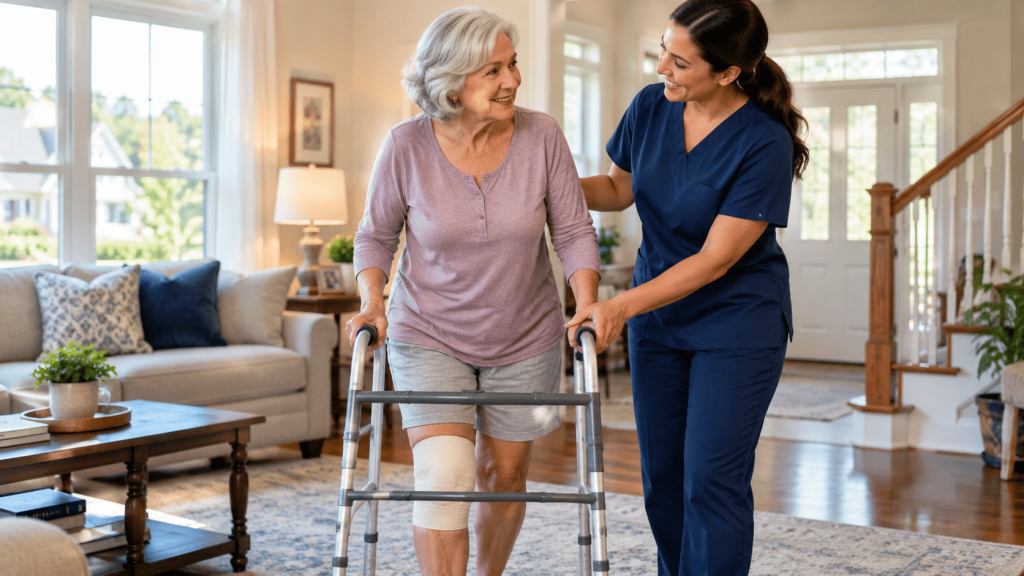
Knee replacement surgery can improve mobility and reduce pain, but the first few weeks at home can still be challenging. Many people need help with walking, bathing, dressing, meal preparation, transportation, household tasks, and simply moving safely from one room to another.
For families in Manassas, VA, home care can help bridge the gap between medical treatment and everyday recovery. A professional caregiver does not replace a surgeon, nurse, or physical therapist. Instead, the caregiver helps with the daily tasks that become harder after surgery so the person can focus on healing and following their recovery plan.
MedlinePlus notes that people recovering from knee replacement may need help with bathing, toileting, cooking, errands, shopping, medical appointments, and exercise during the early recovery period. It also recommends having trained help at home when family support is limited.
What Type of Assistance Are You Going to Require Following Knee Joint Replacement?
Following knee joint replacement, most individuals require some kind of assistance to perform everyday activities related to personal care, movement, feeding, running errands, traveling and chores within their homes.
This assistance requirement is going to vary among individuals depending upon their situation following surgery. Some people may go back home and be quite independent for movement with a walker or crutches while some individuals might require more assistance due to age, inability to move, another health problem or even the home setting.
Even simple activities such as getting up from the bed, taking a shower, picking up a dish from the kitchen or going to the bathroom will require more efforts following this operation.
That is where non-medical home care can be especially helpful.
How Can a Home Caregiver Help After Knee Replacement?
A home caregiver can support recovery by helping with everyday activities that are difficult or unsafe after surgery, including bathing, dressing, meals, walking, errands, and transportation.
For someone recovering from knee replacement in Manassas, a caregiver may help with:
| Recovery Need | How a Caregiver Can Help |
|---|---|
| Bathing and Dressing | Provide assistance while protecting privacy and dignity. |
| Walking and Transfers | Offer steadying support according to the care plan. |
| Meals | Prepare simple meals and keep food within easy reach. |
| Medication Routines | Provide reminders according to the established schedule. |
| Light Housekeeping | Keep walkways clear and reduce household clutter. |
| Laundry | Handle lifting and bending that may be difficult after surgery. |
| Errands | Pick up groceries or other essentials. |
| Transportation | Help with appointments when driving is not yet appropriate. |
| Companionship | Provide reassurance and a consistent presence during recovery. |
Assisting Hands Home Care Manassas specifically provides orthopedic and transitional care for people recovering from knee replacement, hip replacement, back surgery, and other procedures.
Why Is Home Safety So Important After Knee Replacement?
Home safety is crucial because falling during recovery may lead to a setback as well as may cause an injury to the new knee.
Before the individual returns back, the family should identify the areas where they will spend a lot of time. According to MedlinePlus, removal of loose rugs and cords, better lighting, leveling of the floors, and installation of sturdy grab bars in the bathroom should be done.
A caregiver can help maintain that safer environment by keeping pathways clear, cleaning up spills, moving frequently used items closer, and making sure the person is not trying to carry too much while using a walker or crutches.
How Can Caregivers Help With Walking and Mobility?
The caregivers could assist patients in moving in a safe manner through being close to the patient, clearing paths, and ensuring the mobility protocol is followed as suggested by the surgeon or the physical therapist. A caregiver should not decide how much weight someone can place on the surgical leg or when they should stop using a walker. Those decisions belong to the surgeon and physical therapist.
What a caregiver can do is help the person follow those instructions in everyday living.
This can be done by making sure that the walker is always available before standing up, putting everything within easy access, clearing out clutter, and supervising walking in areas which feel unstable.
How Long Might Someone Require Help at Home?
People may require only temporary help during the initial days or weeks after their surgery, whereas some individuals will require assistance for a longer time based on their level of mobility, age, health condition, and recovery.
There is no single schedule that applies to everyone.
According to MedlinePlus, there may be situations where a person requires help at home during his or her recovery period, and the process of recovery occurs slowly over time. A family may begin with a more extensive help schedule immediately after being discharged from the hospital and then decrease the schedule with improvement in recovery.
For example, someone might initially need help every day with bathing, meal preparation, and errands, but later only need assistance a few times a week.
When Is Home Care Especially Helpful After Knee Replacement?
Home care may be especially useful when someone lives alone, has limited family support, has mobility problems, or cannot safely manage daily activities after returning home.
Families should consider extra support when the person:
- Lives alone
- Has stairs or a difficult home layout
- Has had previous falls
- Uses a walker or other mobility device
- Needs help bathing or dressing
- Cannot prepare meals safely
- Cannot drive to appointments
- Has another condition that affects mobility or memory
- Has a spouse or family caregiver who cannot provide all the needed help
Home care can also be helpful for adult children who live nearby but cannot be at the home throughout the workday.
What Should Families Prepare Before the Person Comes Home?
Families should prepare the home before discharge so the person can move through the most important areas safely and with less effort.
A useful pre-discharge checklist includes:
- Clear walking paths
- Remove loose rugs and cords
- Improve lighting
- Place frequently used items within easy reach
- Prepare simple meals
- Set up a firm chair with arms
- Make the bathroom safer
- Confirm the medication plan
- Keep emergency and medical contact information accessible
- Arrange transportation for follow-up appointments
- Decide who will help with personal care and household tasks
MedlinePlus recommends making these changes before surgery whenever possible rather than waiting until the patient returns home.
How Does Assisting Hands Home Care Manassas Support Knee Replacement Recovery?
Assisting Hands Home Care Manassas provides non-medical orthopedic and transitional care for seniors and adults recovering from knee replacement and other surgeries.
Care can be personalized around the person’s needs and may include help with personal care, mobility, meals, medication reminders, light housekeeping, errands, transportation, and companionship.
The Manassas office serves families throughout Manassas, Manassas Park, Centreville, Gainesville, Haymarket, Chantilly, Clifton, Bristow, Broad Run, Catharpin, and nearby Prince William and Fairfax County communities.
The local team offers flexible care ranging from a few hours a week to more extensive support, depending on the family’s needs.

