
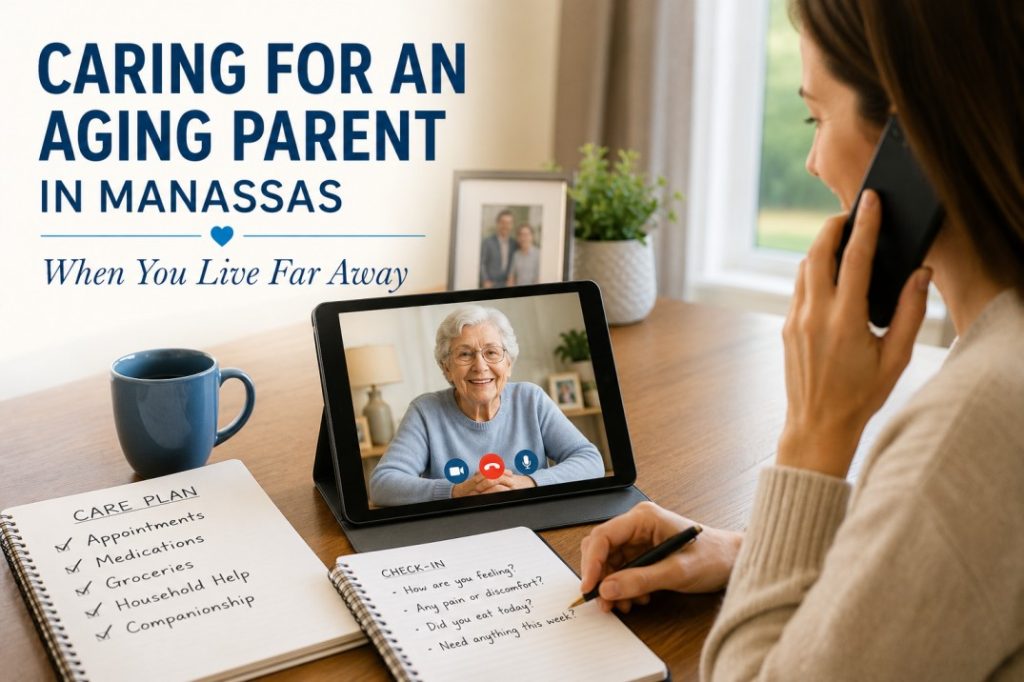
Caring for an aging parent can be challenging when you live in another city or state. You may worry about whether your parent is eating regularly, taking medications as directed, attending appointments, or moving safely around the home.
Distance does not prevent you from being involved in your parent’s care. Long-distance caregivers can coordinate appointments, organize local support, manage important documents, help with finances, communicate with healthcare providers, and arrange dependable in-home assistance.
The key is to create a local care network before a crisis occurs. With a clear plan, regular communication, and support from trusted people in Manassas, you can help your parent remain safe while respecting their independence.
Start With an Honest Conversation
Begin by asking your parent how daily life is going instead of immediately telling them that they need help.
Ask whether certain household tasks have become difficult, how they are getting to appointments, and whether they feel safe living alone. Listen carefully without dismissing their concerns or making them feel that they are losing control.
Explain that accepting some help may make it possible for them to remain in their home longer. Starting with a few hours of assistance each week may feel less overwhelming than proposing a major change all at once.
Warning Signs an Aging Parent May Need Help
One difficult day does not necessarily mean that your parent can no longer live independently. Look for patterns or changes from their normal habits.
Changes in Personal Hygiene
Unwashed clothing, body odor, wearing the same outfit repeatedly, or avoiding bathing may indicate pain, limited mobility, memory changes, or fear of falling.
Missed Meals or Weight Loss
An empty refrigerator, spoiled food, frequent snacks instead of meals, or unexplained weight loss may mean that grocery shopping and cooking have become difficult.
Medication Confusion
Missed doses, duplicate doses, expired prescriptions, or unopened medication bottles may indicate that your parent needs more support with their routine.
A nonmedical caregiver can provide medication reminders. Questions about dosages, side effects, and medication organization should be directed to a physician, nurse, or pharmacist.
Falls and Mobility Changes
New bruises, difficulty standing, holding onto furniture, or avoiding stairs may point to an increased fall risk.
Some older adults do not mention falls because they are afraid their family will insist that they move. Approach the conversation calmly and focus on preventing another injury.
Household Decline
Unopened mail, unpaid bills, dirty dishes, piles of laundry, or cluttered walkways may show that everyday responsibilities are becoming overwhelming.
Memory or Judgment Changes
Repeated questions, missed appointments, unusual purchases, getting lost, or leaving appliances on should be taken seriously. New or worsening memory concerns should be discussed with a healthcare professional.
Social Isolation
A parent who stops attending activities, visiting friends, or answering calls may be experiencing depression, hearing loss, limited mobility, memory changes, or difficulty driving.
Create a Local Support Network in Manassas
Long-distance caregiving is easier when you have trusted people nearby.
A relative, neighbor, friend, faith-community member, caregiver, or senior community staff member may be able to visit your parent or respond when you cannot reach them.
Choose at least one primary local contact who understands your parent’s needs and knows how to reach you. Avoid placing every responsibility on one person. Sharing responsibilities between several trusted individuals creates a more dependable care plan.
Manage Medical Appointments Remotely
With your parent’s permission, ask medical offices whether you can participate in appointments by phone or video.
Keep one shared calendar containing appointment dates, provider information, transportation plans, medication lists, and follow-up instructions. After each appointment, document the next steps and share them with the people involved in your parent’s care.
Your parent may also need to complete authorization forms before healthcare providers can discuss medical information with you. Families may wish to seek legal guidance about healthcare powers of attorney and other planning documents.
Arrange Transportation in Advance
Driving may become difficult because of vision changes, medication side effects, memory loss, limited mobility, or reduced confidence.
Waiting until the day of an appointment to arrange transportation can lead to missed visits. Create a plan that may include relatives, friends, community transportation, ride services, or an in-home caregiver.
Depending on the care plan and availability, Assisting Hands caregivers may help with transportation to medical appointments, pharmacy visits, grocery stores, and other essential errands.
Prepare for Emergencies
A long-distance caregiver should know what will happen if a parent falls, becomes ill, loses power, or stops answering calls.
Make sure someone nearby has approved access to the home. Keep emergency contacts, medical information, medication lists, insurance details, and preferred hospital information in one secure location.
Your family should also decide who will travel to Manassas during a serious emergency and who will manage communication with healthcare providers, relatives, and home care professionals.
A medical alert system may provide additional reassurance for an older adult who lives alone or has a history of falling.
Use Technology Without Replacing Personal Contact
Video calls, shared calendars, medication reminder devices, medical alert systems, automatic lighting, grocery delivery, and voice-controlled assistants can make long-distance caregiving easier.
Choose tools your parent understands and is comfortable using. Too many devices, passwords, and notifications can create confusion rather than improve safety.
Technology should support human contact, not replace it. Regular visits from trusted local people can reveal concerns that may not be noticeable during a phone or video call.
Establish a Consistent Check-In Routine
A predictable schedule can help you notice changes in your parent’s health, memory, and daily habits.
Instead of asking only, “How are you?” ask more specific questions. Find out what your parent ate, whether prescriptions were picked up, how they are getting to the next appointment, and whether anything in the home has become difficult to manage.
Pay attention to changes in speech, mood, energy, breathing, or memory. A noticeable change may require a local visit or a call to the appropriate healthcare professional.
Share Caregiving Responsibilities
One adult child often becomes responsible for most caregiving tasks, even when several family members are available.
A sibling who lives nearby may handle visits and appointments, while another manages bills or insurance paperwork. Relatives who cannot provide time may be able to contribute toward transportation, home repairs, meal delivery, or professional in-home care.
Document important decisions so everyone understands their responsibilities and your parent receives consistent support.
Arrange In-Home Care in Manassas
Professional in-home care may help when your parent wants to remain at home but has difficulty completing daily activities safely.
Assisting Hands Home Care Manassas provides personalized, nonmedical support for seniors and adults. Care can begin with a few scheduled visits and increase as your parent’s needs change.
Caregivers can provide respectful assistance with bathing, grooming, dressing, toileting, and other personal routines.
A caregiver can prepare simple meals and snacks based on your parent’s preferences and instructions from the family or healthcare team.
Mobility Support
Caregivers can help your parent move more safely through the home and provide approved transfer assistance according to the care plan.
Medication Reminders
Nonmedical caregivers can remind your parent to follow an established medication schedule. They do not prescribe medications or change dosages.
Transportation
Depending on availability, caregivers may help your parent attend appointments, pick up prescriptions, purchase groceries, and complete essential errands.
Companionship
Regular caregiver visits can reduce isolation and provide conversation, reassurance, and meaningful social interaction.
Caregivers can assist with dishes, laundry, changing linens, and light housekeeping to maintain a safer and more comfortable environment.
Home Care for Specific Health Conditions
Long-distance caregiving may become more challenging when an aging parent is recovering from surgery or living with a chronic health condition.
Assisting Hands provides nonmedical support that can be personalized around your parent’s diagnosis, abilities, daily routine, and medical care plan.
Cancer Care and Recovery Support
Cancer treatment and recovery may cause fatigue, weakness, and difficulty managing everyday activities. A caregiver can assist with personal care, meals, transportation, companionship, and household routines while the oncology team manages medical treatment.
Learn more about In-Home Cancer Care and Recovery Support
COPD Home Care
COPD and other chronic respiratory conditions may reduce stamina and make ordinary tasks more tiring. Nonmedical home care can reduce physical strain by helping with personal routines, meals, transportation, and household responsibilities.
Learn more about COPD Home Care for Seniors
Stroke Recovery Home Care
A parent returning home after a stroke may need help with mobility, personal care, meals, transportation to therapy, and maintaining a safer routine.
In-home caregivers provide nonmedical assistance while physicians and rehabilitation professionals remain responsible for clinical recovery.
Learn more about In-Home Stroke Recovery Care.
Explore Senior Living Options Before a Crisis
Home care may allow your parent to remain in familiar surroundings, but it is helpful to understand other local options before an urgent situation develops.
Senior living options may include independent apartments, assisted living, memory care, short-term stays, adult day programs, and skilled nursing care. The right choice depends on your parent’s safety, health, finances, preferences, and level of support.
Senior Communities in and Near Manassas
Commonwealth Senior Living at Manassas offers assisted living, memory care, and short-term stays.
Arbor Terrace Sudley Manor provides assisted living and memory support in Manassas.
Birmingham Green offers assisted living, long-term care, and skilled nursing services.
The Fairmont provides senior apartment living in Manassas.
Park Place Senior Apartments is an independent senior apartment community in Manassas Park.
Services, availability, ownership, and costs may change. Contact each community directly and verify assisted living licensing and inspection information through the Virginia Department of Social Services.
Home Care for Parents Living in Senior Communities
Moving into a senior community does not always eliminate the need for individual assistance.
Some residents benefit from supplemental private care for companionship, personal routines, transportation, mobility support, or one-on-one supervision. Families should confirm the community’s rules for outside caregivers before arranging service.
Professional support can be especially valuable when an adult child lives far away and wants more consistent communication about a parent’s daily well-being.
Get Local Home Care Support in Manassas
Assisting Hands Home Care Manassas provides personalized, nonmedical care for seniors and adults who want to remain safe and comfortable at home.
Our caregivers can support daily routines while helping designated family members stay informed. This can provide valuable reassurance when an adult child lives outside Manassas or beyond Northern Virginia.
Call (571) 506-4264 to schedule a free home care consultation for your parent.

