
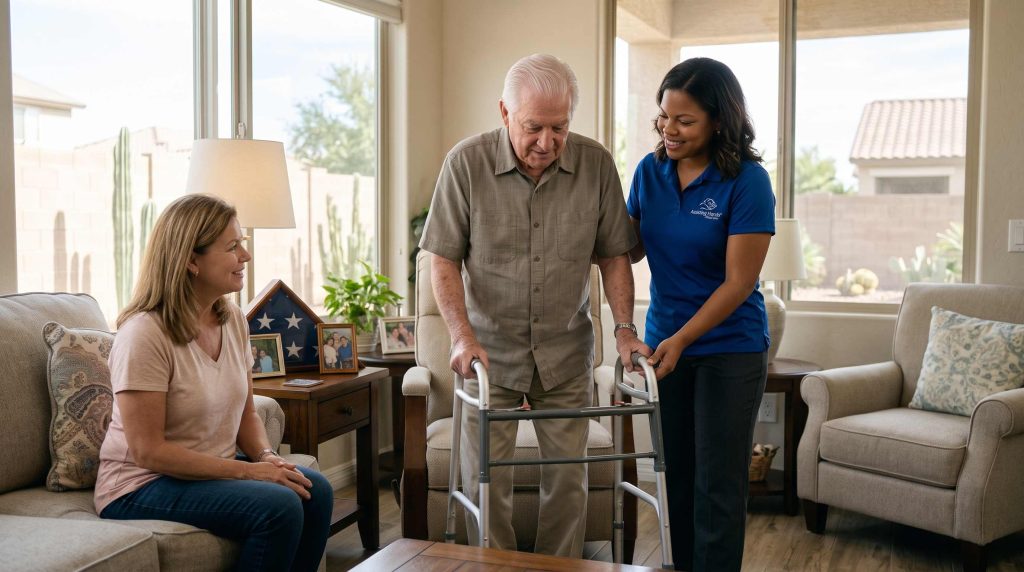
Receiving a diagnosis of Parkinson’s disease or navigating the aftermath of a stroke can feel like the ground beneath your family has shifted. For adult children and spouses in the East Valley, finding dedicated homecare services families can rely on is often the turning point between constant anxiety and sustainable daily life.
These conditions do not just affect physical strength; they change how a person moves, communicates, eats, and experiences the world. A simple task like getting out of an armchair or drinking a glass of water can become an exhausting, high-risk endeavor.
At Assisting Hands Home Care – Gilbert, we understand that condition-specific care requires much more than basic sitting or companion services. It demands trained techniques, immense patience, and an unwavering commitment to preserving your loved one’s dignity. Here is how specialized in-home care empowers seniors to live safely and comfortably at home throughout their recovery and disease management.
Managing Parkinson’s at Home: Beyond Basic Care
Parkinson’s disease is progressive and unpredictable. Good days and challenging days can alternate rapidly depending on medication cycles, sleep quality, and stress levels.
1. Precise Medication Timing
For Parkinson’s patients, receiving dopamine-regulating medications at the exact minute prescribed is critical. A delay of just thirty minutes can lead to sudden motor “off” states, stiffness, or tremors. Our caregivers provide attentive, structured reminders so regimens remain consistent throughout the day.
2. Overcoming “Freezing” Episodes & Gait Challenges
Freezing of gait—where the feet feel suddenly glued to the floor—is a common and frightening symptom that drastically increases fall risk. Specially trained caregivers know never to pull or rush a client during a freeze. Instead, they utilize rhythmic counting, visual cues, and gentle verbal prompts to help the brain reset and resume motion safely.
How Assisting Hands Helps:
Our caregivers are trained in safe, non-strenuous transfer techniques. We support steady ambulation, assist with prescribed home physical therapy exercises, and adapt the home environment so your loved one moves with confidence instead of fear.
Post-Stroke Rehabilitation: Restoring Independence Step by Step
Returning home after treatment at facilities like Banner Gateway Medical Center or Mercy Gilbert is an emotional milestone. The transition from 24/7 hospital supervision to home life can feel vulnerable, especially when managing hemiparesis (one-sided weakness) or expressive aphasia.
1. One-Sided Transfer Support & Fall Prevention
Stroke survivors frequently experience weakness or paralysis on one side of their body. Our caregivers are educated on positioning themselves on the affected side during transfers and walking, providing essential stability without causing strain or shoulder subluxation.
2. Nutrition and Dysphagia Awareness
Difficulty swallowing (dysphagia) is common after a neurological event. Caregivers help prepare meals to the exact consistency recommended by speech-language pathologists (such as soft, minced, or pureed foods) and ensure your loved one remains upright and unhurried during meal times to prevent choking risks.
3. Patience with Communication & Speech Therapy
Relearning words or processing speech takes time. Caregivers offer calm, patient companionship, never finishing sentences prematurely or rushing conversations. We encourage communication practice at your parent’s natural pace, reducing the emotional isolation that often accompanies stroke recovery.
How Assisting Hands Helps:
We collaborate with home health physical, occupational, and speech therapists. Our caregivers ensure that home exercise routines are consistently encouraged between clinical appointments, promoting faster neuroplastic recovery and mobility gains.
Relief for Family Caregivers
Caring for a spouse or parent with complex motor needs takes an enormous physical and emotional toll. Spouses frequently experience chronic back pain from improper lifting, while adult children face overwhelming burnout trying to juggle jobs and bedside care.
Bringing in professional homecare families can count on isn’t about replacing you—it’s about protecting you. By allowing trained caregivers to handle physical transfers, bathing, and nighttime safety supervision, you can return to being a supportive son, daughter, or loving partner.
Specialized Support Tailored to Your Loved One
Whether your parent is beginning a new journey with Parkinson’s or working through stroke rehabilitation in Gilbert, Mesa, Chandler, or Queen Creek, Assisting Hands Home Care is here with experienced, compassionate hands.
Call our Gilbert office today at
(602) 851-8128
to schedule a complimentary, condition-focused in-home assessment.

