
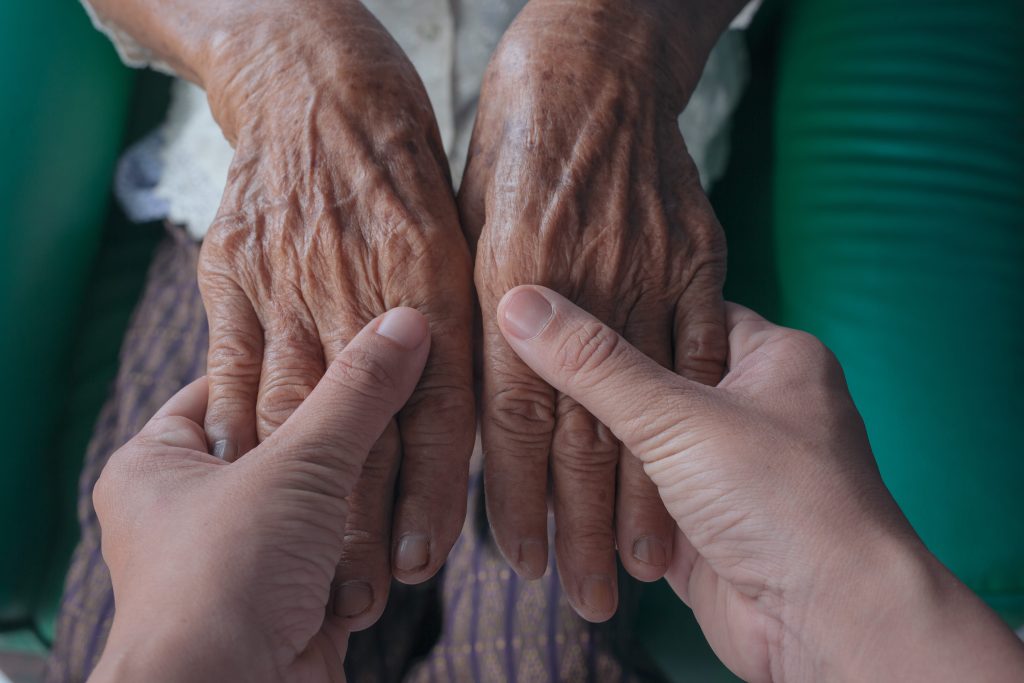
April is Parkinson’s Awareness Month — a time to better understand a condition that affects millions of individuals and families. If you or a loved one is navigating Parkinson’s disease (PD), having clear, reliable information can make a meaningful difference.
At Assisting Hands West Austin, we believe in helping families stay informed, prepared, and supported, especially when the goal is to age safely and comfortably at home. This guide walks you through what PD is, what to expect, and how to manage it with confidence.
What Is Parkinson’s Disease?
Parkinson’s disease is a progressive neurological condition that affects how the body moves. It develops when certain nerve cells in the brain, specifically in an area called the substantia nigra, become damaged or stop working.
These cells are responsible for producing dopamine, a chemical that helps control smooth, coordinated muscle movement. As dopamine levels decrease, movement becomes more difficult to regulate, leading to the symptoms commonly associated with PD.
Recognizing the Signs and Symptoms
Parkinson’s looks different for everyone, but there are several common symptoms that families notice early on:
- Tremors, especially in the hands and fingers
- Slowed movement (bradykinesia), making everyday activities take longer
- Muscle stiffness or rigidity
- Balance challenges and posture changes
- Softer or more monotone speech
- Reduced facial expression (masked face)
- Difficulty chewing or swallowing
- Non-motor symptoms, such as sleep issues, depression, fatigue, or cognitive changes
Who Does Parkinson’s Affect?
Parkinson’s disease is most commonly diagnosed in adults over the age of 60. But younger individuals can develop it as well (known as young-onset Parkinson’s).
While the exact cause isn’t fully understood, researchers believe it results from a combination of genetic and environmental factors.
How Parkinson’s Disease Is Diagnosed
Early diagnosis is key to beginning treatment and building an effective care plan. There isn’t a single test that confirms PD. Instead, diagnosis typically involves a combination of clinical evaluation and observation over time.
A neurologist, often one specializing in movement disorders, may use:
- Physical and neurological exams to assess movement and coordination
- A detailed medical and family history
- Ongoing symptom observation
- Imaging tests, such as MRI or DaTscan (dopamine transporter scan), to rule out other conditions
- Specialized biomarker testing in some cases
Treatment Options and Symptom Management
Although there is currently no cure for Parkinson’s, many treatment approaches can help manage symptoms and improve quality of life. Treatment plans are highly individualized and often include a combination of medication, physical therapy, and lifestyle adjustments.
Medications
Medications are often the first line of treatment and are designed to increase dopamine levels or mimic its effects. Common options include:
- Levodopa: A dopamine replacement agent that currently serves as the most effective treatment
- Carbidopa: Often taken with levodopa to prevent or lessen its side effects (nausea, vomiting, low blood pressure, restlessness)
- Dopamine agonists (e.g., amantadine, pramipexole, etc): Stimulate dopamine receptors
- Enzyme inhibitors (e.g., MAO-B inhibitors and COMT inhibitors): Help prevent the breakdown of dopamine
- Amantadine: Helps reduce involuntary movements
- Anticholinergic drugs: Reduce tremors and muscle rigidity
Physical Therapy and Rehabilitation
Rehabilitation plays a major role in maintaining independence. Some rehab therapies that help:
- Physical therapy: Supports mobility, strength, and balance
- Occupational therapy: Helps adapt daily activities and improve home safety
- Speech therapy: Addresses communication and swallowing challenges
Lifestyle Adjustments
Daily habits can have a significant impact on symptom management. Regular exercise (walking, swimming, yoga, etc.) can improve coordination, mood, and overall well-being.
A balanced diet also supports energy levels and helps manage non-motor symptoms.
Advanced Treatment Options
As Parkinson’s progresses, some people may benefit from surgical interventions. The following options are typically considered when medications are no longer providing sufficient relief:
- Deep Brain Stimulation (DBS): Delivers small electrical pulses to disrupt abnormal signaling in cells that cause movement problems
- Focused Ultrasound: Destroys cells that cause movement problems using ultrasound beams
Mental and Emotional Health
PD doesn’t only affect the body — it can also impact your emotional well-being. Depression, anxiety, and cognitive changes are common and should be addressed as part of a comprehensive care plan. Support groups and counseling can be valuable resources for both individuals and caregivers.
Helpful Resources
For more information on Parkinson’s disease, head to:
- Parkinson’s Foundation
- Michael J. Fox Foundation
- National Institute on Aging
- American Parkinson Disease Association (APDA)
- Parkinson’s Resource Organization
- Davis Phinney Foundation
- National Institute of Neurological Disorders and Stroke
- National Institute of Environmental Health Sciences
How Assisting Hands West Austin Can Help
At Assisting Hands West Austin, we understand that Parkinson’s affects every individual differently. That’s why we provide personalized in-home care designed to support both clients and their families.
Our caregivers can assist with:
- Mobility support and fall prevention
- Help with daily activities, such as dressing and grooming
- Medication reminders
- Transportation to appointments and therapy
- Companionship to reduce isolation
- Ongoing care coordination as needs evolve
If your family is navigating Parkinson’s in the Austin area, you don’t have to do it alone. Contact us today by using the chat box on this page or by calling us directly at (512) 999-7379.

