

As the number of people in the United States living with Alzheimer’s is growing by the day, awareness of the disease and its symptoms becomes ever more important.
Knowing the facts and understanding the causes and risk factors of the disease can help prevent or, at least, detect the condition early enough for treatment to be effective.
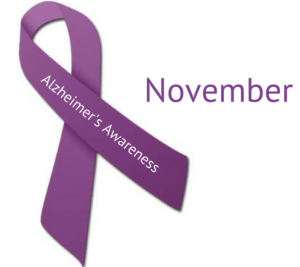
November: National Alzheimer’s Awareness Month
Therefore, November has been established as National Alzheimer’s Disease Awareness Month in an attempt to bring attention and support to the millions of people dealing with the illness, raise better understanding of the problem, and promote prevention efforts.
When President Ronald Reagan declared November as National Alzheimer’s Awareness Month in 1983, fewer than 2 million Americans had the disorder. Today, the number of affected people has soared to over 5 million and is likely to triple by 2050.
As the disease burdens an increasing number of the nation’s elders and their families, Alzheimer’s Awareness Month also reminds of the importance of caregivers who are there to help the people struggling with the disease lead a normal life.
Despite the continuous search for a cure, one has not been found yet and drug treatments remain largely ineffective, unless received in the earliest stages of the disease. So, it is prevention that our society needs to focus on. Successful prevention, however, requires better knowledge and understanding of the causes and symptoms of the brain disorder.
Here is what you need to know in order to be able to contribute to the fight against Alzheimer’s disease.
What Is Alzheimer’s Disease?
Alzheimer’s disease is the most common type of dementia – it starts mild but gets progressively worse, causing a steady decline in memory and mental function.
Alzheimer’s Disease Definition
 Alzheimer’s disease is an irreversible, progressive mental disorder that can occur in middle or old age due to continuous brain cell failure – nerve cells degenerate and die, causing memory loss and cognitive decline.
The disease develops slowly and gets worse over time, progressing from mild forgetfulness to widespread brain impairment. At first, people with the disorder may notice only mild confusion and difficulty remembering.
As critical cells die, however, affected individuals undergo dramatic personality changes, forget important people in their lives and details about themselves, and become unable to carry out simple everyday tasks.
Alzheimer’s Disease Facts
Here are some shocking, yet important facts about Alzheimer’s disease that will give you a better idea of the severity of the problem:
- Alzheimer’s disease accounts for between 60% and 80% of all cases of dementia;
- The brain disorder has 7 stages that vary from mild changes in the affected individual’s memory and social skills to severe deterioration of mental function;
- The disease is usually detected at its later stages when the brain damage is already irreversible;
- Alzheimer’s is the sixth-leading cause of death in the US;
- Every two minutes someone in the country develops the disease;
- About two thirds of Americans with Alzheimer’s disease are women.
What Causes Alzheimer’s Disease
Experts believe that Alzheimer’s disease is caused by a combination of genetic and lifestyle factors that affect the brain over time.
 The primary risk factors for mental disorder are older age and genetics:
- Age – In most people with the disease, symptoms first appear when they’re in their sixties. The risk of Alzheimer’s doubles every five years after age 65;
- Genetics – Carrying the APOE gene puts a person at three to eight times more risk of developing the disease than a person without the gene. Since genes are often hereditary, family history is also considered to be a great risk factor – those who have a parent or a sibling with Alzheimer’s are more likely to develop the disease.
While increasing age and family history are beyond human control, there are other risk factors for Alzheimer’s disease that are preventable or modifiable:
- High cholesterol levels and high blood pressure, as well as other risk factors for cardiovascular disease (obesity, diabetes, etc.), have a negative impact on the cognitive health, as well;
- People who’ve suffered from major head injuries seem to be at a greater risk of developing Alzheimer’s disease;
- A gene contained in the chromosome that causes Down syndrome significantly increases the risk of Alzheimer’s disease. Symptoms of the disorder tend to appear 10 to 20 years earlier than usual in people with Down syndrome;
- Smoking, insufficient sleep, and a diet lacking in fruits and vegetables may also increase the risk of cognitive decline;
- The lack of physical activity is very damaging to the brain health;
- Depression and social isolation have been found to be closely associated with Alzheimer’s.
Although the causes of Alzheimer’s disease aren’t fully understood, its effect is clear – it damages and kills brain cells.
The brain cells of an affected individual usually show two types of abnormalities:
- Beta-amyloid plaques – clumps of proteins that build up between nerve cells and interfere with cell-to-cell communication and other important functions of the brain cells;
- Neurofibrillary tangles – tangled fibers inside the brain neurons that prevent the transportation of nutrients and other important substances from one part of the cell to another.
The damage appears to take place in the hippocampus (the part of the brain that is most essential in memory formation) first. With time, however, plaques and tangles damage the healthy brain cells around them. Neurons die and other parts of the brain get affected as well. By the final stage of Alzheimer’s disease, the damage is widespread and the brain tissue has shrunk significantly.
Symptoms of Alzheimer’s Disease
The early symptoms of Alzheimer’s disease – increasing forgetfulness and mild confusion – are similar to the normal age-related brain changes experienced by seniors over 65. Over time, however, the symptoms worsen (the rate varies from person to person) and the disease results in severe cognitive decline.
Early symptoms:
- Unusual difficulty remembering things and organizing one’s thoughts;
- Repeating questions or statements over and over;
- Forgetting events and appointments;
- Misplacing personal belongings.
The person is still capable of independent living in this initial period of the disease.
Middle symptoms:
- Forgetting details about oneself;
- Getting lost in familiar settings;
- Poor understanding of safety risks;
- Inability to manage finances;
- Inability to plan complex or sequential activities;
- Mood swings, easy agitation, apathy, distrust, social withdrawal, delusions.
The affected individual needs reminders and assistance with some more complicated daily activities.
Later symptoms:
- Forgetting names of family members and common objects;
- Forgetting important people in one’s life;
- Inability to perform simple everyday tasks;
- Hallucinations and delirium.
In this stage, the person needs constant care.
Alzheimer’s Disease Prevention
There’s no cure for Alzheimer’s disease yet but there are risk factors that are preventable or modifiable.
There are some drug therapies that can alleviate the symptoms of Alzheimer’s disease and help improve the quality of life of the affected people, but the death of brain cells cannot be halted or reversed. Therefore, efforts should be focused on boosting mental health and preventing the condition.
You can lower the risk of Alzheimer’s and/or slow the advancement of the disease by:
- Taking proper care of your heart – As already mentioned above, the risks factors for heart diseases have a detrimental effect on mental health as well. Keeping hypertension, high cholesterol, and diabetes under control will help protect not only your heart, but also your brain
- Keeping your mind active – Reading, solving puzzles, playing games that require strategic thinking, learning new things, and other mentally stimulating activities challenge the brain and strengthen cognitive skills
- Eating healthy food – A Mediterranean diet (plenty of fresh fruits and vegetables, olive oil, limited red meat and foods high in saturated fat, etc.) helps protect neurons and promotes better communication between brain cells
- Reducing weight – Recent studies have found that overweight people are more likely to develop Alzheimer’s. Maintaining a healthy weight reduces the risk of both cardiovascular problems and dementia
- Exercising – Physical fitness and regular exercise have a positive effect on health and help prevent conditions that may damage the brain
- Engaging in social activities – Social engagement and staying connected with family and friends helps preserve memory and fight depression, thus supporting brain health
- Getting a good night’s sleep – Quality sleep helps flush out brain toxins and prevent the build-up of plaques
- Protecting your head from injuries
- Avoiding smoking and excess alcohol
- Avoiding stress
Even seniors who already have Alzheimer’s can benefit from positive lifestyle interventions, such as improved social contact, physical exercise, and stimulating mental activities.
Proper care, however, is of paramount importance for the affected people, so you’re strongly advised to seek professional assistance when a loved one is struggling with cognitive impairment.
Alzheimer’s and Dementia Care Services
As mentioned above, Alzheimer’s disease is irreversible, at least for now. After the Alzheimer’s sufferers the most affected ones are the people that take care of them. Sure, there are plenty of memory care facilities but they are not the best solution. Alternative solution is dementia care at home, provided by experienced caregivers.
Contact Us
Assisting Hands offers that service to residents of Schaumburg and the surrounding areas. If you want to discuss your situation with an experienced care specialists call (847) 448-0844.


