
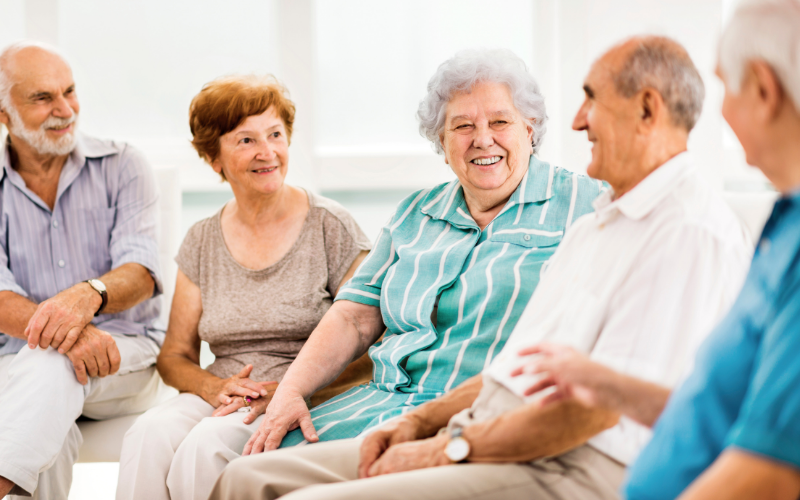
For most of us, a doctor’s visit ends with a prescription for medication or an order for a test. But a growing number of physicians are writing a different kind of prescription, one that sends patients to a gardening club, a walking group, or the coffee shop down the street. It’s called social prescribing, and for older adults in Schaumburg, IL, and the surrounding suburbs, it may be one of the most overlooked tools for protecting mental and physical health as they age.
Loneliness among seniors is more common than many families realize. Adult children move away, spouses and friends pass on, driving becomes harder, and the social world that once filled the calendar quietly shrinks. What starts as fewer phone calls and skipped outings can turn into genuine isolation, and that isolation carries real health consequences. Below, we explain what social prescribing is, why hobbies matter so much for senior mental health, and how families can help an aging loved one stay connected.
What is Social Prescribing?
Social prescribing is when a healthcare professional recommends that a patient take part in more social activities as a way to improve their health.
Rather than reaching only for medication, a doctor or psychiatrist might encourage a patient to call a family member regularly, strike up conversations with neighbors, or set standing coffee dates with friends. Researchers at Stanford Lifestyle Medicine describe it as a collaborative process: the provider explains the health benefits of social activity, then helps the patient choose activities they feel motivated to do. It works best when the recommendation is tailored to the individual rather than handed down as a generic instruction, because a person is far more likely to stick with social activities they had a hand in choosing.
The idea gained traction as healthcare professionals began paying closer attention to how much social isolation affects health. It turns out that being disconnected doesn’t just make people feel bad; it changes health outcomes in measurable ways.
Why is Social Connection So Important for Seniors?
Social connection supports mental health, physical health, and longevity, and the lack of it can be more harmful than many conditions doctors routinely treat.
The research here is striking. One often-cited body of work has found that the absence of social connection can be more detrimental to health than well-known risk factors like obesity and high blood pressure. Other studies point in the same direction; among adults with depression, frequent participation in social activities was linked to better metabolic and brain health. And a large University College London 2023 study of people 65 and older across 16 countries published in Nature Medicine found that those who pursued hobbies in groups reported higher life satisfaction and lower healthcare burden.
There’s a biological reason for this. Positive social interaction triggers the release of “feel-good” brain chemicals like oxytocin and dopamine. Physical activity raises dopamine too, which is why some clinicians recommend activities that combine both, such as joining a walking group or a team sport. A daily walk with a neighbor delivers exercise and companionship at the same time, a two-for-one that’s especially valuable for older adults with limited energy.
What Do Hobbies Have to Do with Mental Health?
Hobbies give seniors a reason to stay engaged, a source of purpose, and, when done with others, a built-in social circle.
A hobby is more than a way to pass the time. It provides structure to the week, a sense of accomplishment, and something to look forward to, all of which push back against the flatness and low mood that can settle in with isolation. When a hobby involves other people, the benefits multiply. A knitting circle, a card game, a church choir, or a book club delivers regular social contact without requiring the senior to organize anything or reach out cold, which many older adults find intimidating.
The group element matters. The Stanford researchers noted that seniors who engaged in hobbies with others, rather than alone, saw the greatest gains in life satisfaction and the biggest reduction in healthcare needs. Shared activity naturally creates conversation, and conversation is where connection happens.
What Are Some Examples of Social Prescriptions for Seniors?
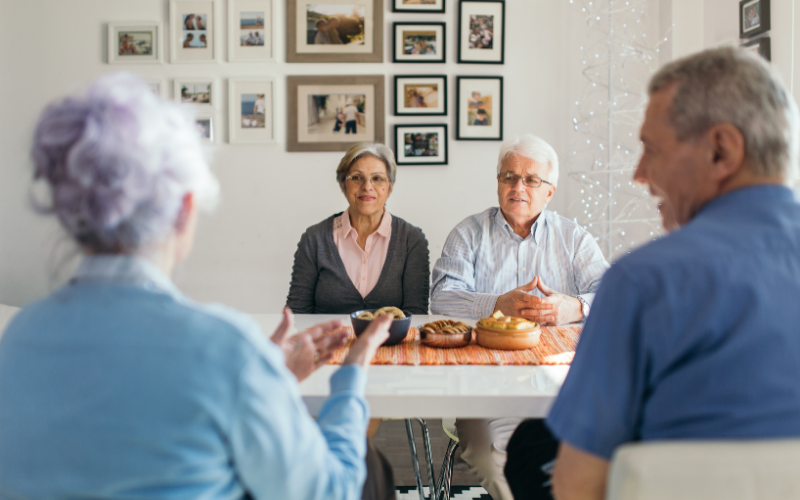
Effective social prescriptions are specific, realistic, and matched to the person’s temperament and interests.
Stanford Lifestyle Medicine offers several illustrations of how this works in practice. A person who feels discouraged or is showing early signs of depression might be encouraged to reach out and spend quality time with family and friends. Someone caring for a spouse at home and cutting themselves off from the community might be advised to visit a coffee shop a few times a week simply to be around other people. A shy individual who struggles with conversation could be pointed toward a hiking group, where talking happens naturally, side by side, while walking.
For seniors in the Chicago suburbs, that could mean:
- Joining a program at the local senior center
- Signing up for a class at the Schaumburg Park District
- Volunteering at a food pantry
- Getting back into a hobby they set aside years ago
The specific activity matters less than the fact that it’s regular, social, and something the person genuinely enjoys.
How Can Families Encourage an Isolated Senior?
Start with the person’s existing interests, remove the practical obstacles, and expect it to take a few tries before something sticks.
Pushing a hesitant parent toward “getting out more” rarely works. What tends to help is anchoring the suggestion to something they already care about. A former teacher might enjoy tutoring or a library program or a lifelong gardener might light up at a community garden plot. Once you’ve identified an interest, look hard at the barriers. Transportation is often the biggest one; many seniors stop attending activities not because they’ve lost interest but because they can no longer drive at night or navigate winter roads.
It also helps to go with them the first time. Walking into a new group alone is daunting at any age, and a familiar face at the first session lowers the hurdle considerably. Be patient, too. Not every activity will be a fit, and a senior who tries a class and doesn’t love it hasn’t failed; they’ve just narrowed the search.
How Can a Companion Caregiver Help?
A professional companion caregiver provides consistent social contact and handles the logistics that keep many seniors from staying active.
One of the most valuable things a companion caregiver does is spend time with seniors as someone to talk to, play cards or board games with, and share hobbies and recreational activities. For a senior who lives alone, that steady human contact is a genuine buffer against the loneliness that erodes mental health.
Companion caregivers also clear away the practical obstacles. They provide transportation to a senior center, a class, a place of worship, or a friend’s house, so a lack of driving no longer means a lack of social life. They can accompany a client to a new group and stay for support, run errands, prepare meals, and keep the household running, which frees up the senior’s energy for the things that bring them joy. At Assisting Hands Home Care, companionship is a core part of our personal care and companion services, and our caregivers get to know each client as an individual, building the kind of familiar, trusting relationship that makes connection possible.
None of this replaces a doctor’s care, and social prescribing works best alongside regular medical treatment, not instead of it. But for many older adults, the difference between a shrinking world and a full one comes down to having the right support in place.
Companion Care in Schaumburg, IL
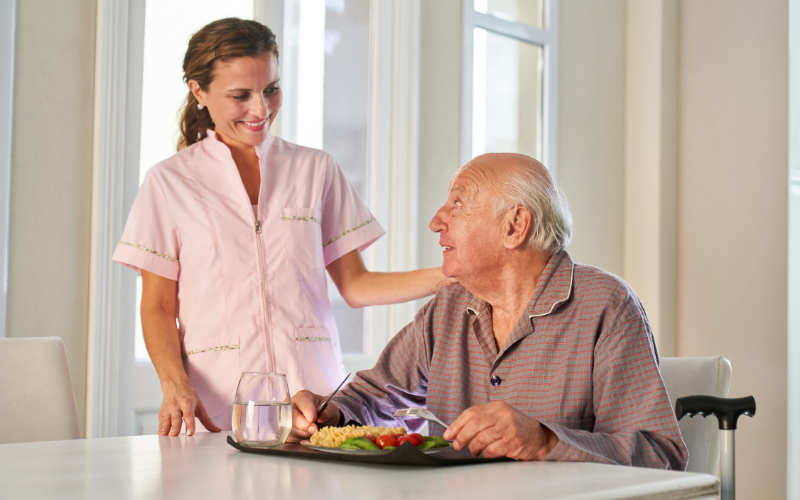
Staying socially connected is one of the most important things an older adult can do for their mental and physical health, and no one should have to do it alone. When companionship and connection are a priority for your elderly loved one, choose Assisting Hands Home Care for companion care and general home care. Our caregivers provide friendly company, transportation to activities and appointments, help with hobbies and errands, and the day-to-day support that keeps seniors engaged with the people and interests they love.
We proudly serve seniors in Schaumburg, Hoffman Estates, Palatine, Elk Grove Village, Inverness, Rolling Meadows, Des Plaines, Park Ridge, Niles, Norridge, Harwood Heights, and the surrounding Chicago suburbs. Call (847) 448-0844 to schedule a free in-home consultation today.
Social Prescribing FAQs
Is social prescribing meant to replace medication or medical treatment?
No. Social prescribing is intended to work alongside conventional medical care, not replace it. A physician may recommend social activities in addition to prescribed treatment as part of a broader approach to a patient’s mental and physical health. Any decisions about medication should always be made with the patient’s doctor.
How much social activity does a senior need?
There’s no single number that fits everyone. The research suggests that regular, meaningful engagement matters more than frequency alone, and that group activities tend to produce the strongest benefits. Even a few standing commitments each week, such as a class, a visit with friends, or a hobby group, can make a real difference. The right amount depends on the individual’s health, temperament, and interests.
What if my parent has always been introverted and resists social activities?
Social prescribing isn’t about forcing anyone to become outgoing. For someone who is shy or introverted, low-pressure activities that allow connection to happen naturally, like a walking group or a shared hobby, often work better than large gatherings. Starting small, matching the activity to a real interest, and going along the first time all help a reluctant senior ease in.
Can companion care help even if my loved one isn’t isolated yet?
Yes. Companion care is valuable both for seniors who are already isolated and for those at risk of becoming so. Consistent visits, help with transportation, and regular social interaction can prevent loneliness from taking hold in the first place, while also providing families with peace of mind.
Which areas does Assisting Hands Home Care Schaumburg serve?
Our companion care and general home care services are available in Schaumburg, Hoffman Estates, Palatine, Elk Grove Village, Inverness, Rolling Meadows, Des Plaines, Park Ridge, Niles, Norridge, Harwood Heights, and the surrounding Chicago suburbs.


