
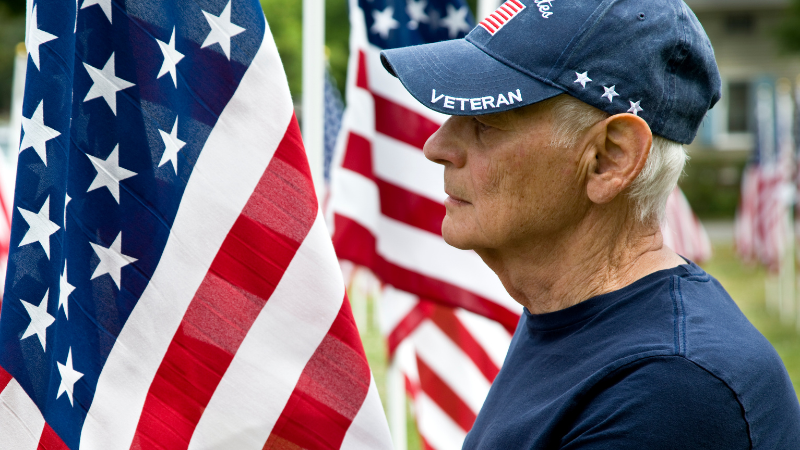
For an older veteran living with post-traumatic stress disorder (PTSD), changes that come with aging can sometimes make symptoms more difficult to manage. Retirement, health problems, reduced mobility, loss of loved ones, and social isolation can all change a veteran’s daily routine and support system.
For families, this can create a difficult question: How can you provide the help your loved one needs without making him feel like he is losing his independence?
Home care for veterans with PTSD can provide practical, day-to-day support while allowing an older veteran to remain in the familiar surroundings of home. A consistent caregiver can assist with personal care, meals, errands, companionship, transportation, and other daily activities while respecting the veteran’s routines and preferences. Home care does not replace PTSD treatment or the veteran’s VA healthcare team. Instead, it can provide the dependable support that helps an older veteran remain safe, comfortable, and engaged at home.
How Can Home Care Help an Older Veteran With PTSD?
Home care can help an older veteran with PTSD by providing predictable routines, familiar caregiver support, companionship, and assistance with everyday activities. For some veterans, accepting help can be difficult. An unfamiliar person entering the home, unexpected physical contact, changes to a routine, or needing assistance with personal care may create anxiety or discomfort.
A trauma-informed approach can make home care feel more predictable and respectful. This may include:
- Keeping the same caregiver whenever possible
- Explaining what will happen before providing care
- Approaching the veteran from the front
- Respecting personal boundaries
- Identifying individual preferences and potential triggers
- Offering choices whenever safely possible
- Maintaining familiar daily routines
The goal is to support the veteran’s independence rather than take it away.
How Can PTSD Affect Older Veterans?
PTSD can affect people at any age. For some older adults, symptoms remain chronic and may fluctuate over time. Others may experience symptoms again after managing them earlier in life. The U.S. Department of Veterans Affairs notes that retirement, health problems, loss of loved ones, loneliness, and changes in daily activities can affect PTSD symptoms in older adults.
Retirement and Loss of Routine
Retirement can remove the structure that once filled much of a veteran’s day. A regular work schedule, responsibilities, social interaction, and familiar activities may have provided a sense of purpose and routine. After retirement, an older veteran may have significantly more unstructured time. A consistent home care schedule can provide another source of structure.
Health and Mobility Changes
Health problems can affect how an older veteran feels about independence and control. A fall, hospitalization, surgery, chronic pain, or reduced mobility may make everyday activities more difficult. Needing help with tasks that were once handled independently can also be frustrating or uncomfortable. Home care can assist with daily activities while allowing the veteran to remain in a familiar environment.
Loss and Social Isolation
Older adults may experience changes in their social networks as spouses, friends, and family members become less available. For a veteran who has relied heavily on a spouse or another family member for companionship and daily support, that loss can be especially difficult. Regular companionship from a trusted caregiver can provide another source of social connection and help reduce time spent alone.
Cognitive Changes
PTSD can occur alongside cognitive changes and conditions such as dementia. The relationship between PTSD, aging, and cognitive impairment can be complex. Families should not assume that every change in memory, mood, or behavior is caused by PTSD. New or significant changes should be discussed with the veteran’s healthcare provider.
What Are the Signs of PTSD in an Older Veteran?
PTSD does not always look like obvious fear or anxiety. Families may instead notice changes in behavior, sleep, social interaction, or the veteran’s need for control and predictability. These behaviors can have many possible causes, but understanding what may be behind them can help families respond with greater patience.
| What the family may notice | What may be happening |
|---|---|
| Wants to sit where he can see the door | He may feel more comfortable when he can monitor his surroundings. |
| Becomes startled when approached unexpectedly | An increased startle response may make sudden movement or touch uncomfortable. |
| Avoids bathing or personal care | Personal care may create discomfort around privacy, vulnerability, touch, or loss of control. |
| Avoids fireworks or crowded events | Loud or unpredictable environments may cause distress. |
| Has difficulty sleeping | Sleep disturbances can occur with PTSD, although they can have many other causes. |
| Becomes upset when plans change | Unexpected changes may increase anxiety or discomfort. |
| Refuses help | Accepting assistance may be difficult for someone who strongly values independence. |
| Becomes anxious around sirens or loud noises | Certain sounds or situations may serve as reminders of traumatic experiences. |
These behaviors are not enough to diagnose PTSD. If a family is concerned about symptoms or significant behavioral changes, the veteran’s healthcare provider or VA mental health team should be involved.
Why Can Home Care Be Challenging for Veterans with PTSD?
Home care can be helpful, but introducing a caregiver is not always easy. For an older veteran who has spent decades managing his own surroundings, having someone unfamiliar enter the home can feel intrusive.
Care may also involve situations that are uncomfortable for someone experiencing PTSD, including:
- Physical touch
- Assistance with bathing or dressing
- Someone entering a bedroom or bathroom
- Changes to a daily routine
- Unexpected visitors
- Accepting help with tasks once handled independently
The way care is introduced can therefore be just as important as the care itself. Starting with less personal assistance, such as companionship, meal preparation, errands, or transportation, may help a veteran become comfortable with a caregiver before more personal care is introduced.

What Is Trauma-Informed Home Care for Veterans?
Trauma-informed home care means recognizing that a person’s past experiences can affect how they respond to caregivers, touch, unfamiliar situations, and changes in routine. For an older veteran with PTSD, that understanding can be translated into simple caregiving practices.
Keep Caregivers Consistent
Whenever possible, having the same caregiver on a predictable schedule can help reduce uncertainty. Over time, the veteran can become familiar with the caregiver’s personality, communication style, and routine.
Explain Before Providing Care
Caregivers should explain what they are going to do before touching the veteran or moving something around him.
For example:
- “I’m going to move your walker closer.” or “I’m going to reach behind you for the towel.”
This gives the veteran advance notice and helps avoid unnecessary surprises.
Approach From the Front
Caregivers should avoid silently approaching from behind whenever possible. Entering the veteran’s field of vision before approaching closely or initiating physical contact can make interactions feel more predictable.
Learn the Veteran’s Preferences
Before care begins, families can share information about the veteran’s routines and preferences.
This might include:
- Preferred wake-up and meal times
- Preferred seating
- Personal care preferences
- Activities he enjoys
- Situations that cause discomfort
- Preferred communication style
- How he prefers to be approached
The goal is to understand the veteran’s needs, not investigate his trauma.
Give the Veteran Choices
Whenever safely possible, offer choices rather than simply giving instructions.
For example:
- “Would you like to shower this morning or tonight?”
- “Would you like to go for a walk before lunch or afterward?”
- “Would you like the door open or closed?”
Small choices can help an older veteran maintain a sense of independence.
Respect Boundaries
Caregivers should never pressure a veteran to discuss traumatic experiences. If a veteran chooses to talk about his past, the caregiver can listen respectfully without asking for unnecessary details. Trauma processing and PTSD treatment should be handled by qualified mental health professionals.
What Home Care Services Can Help Veterans With PTSD?
The right type of care depends on the veteran’s needs, preferences, health, and level of independence.
Companion Care
A caregiver can provide conversation, companionship, and assistance with everyday activities. For an older veteran who spends significant time alone, having a familiar caregiver visit regularly can provide structure and social connection.
Personal Care
Caregivers may assist with activities such as:
- Bathing
- Dressing
- Grooming
- Toileting
- Mobility
For a veteran with PTSD, personal care should be provided with clear communication and respect for privacy and personal boundaries.
Meal Preparation
A caregiver can help prepare meals, organize groceries, and maintain regular mealtimes. A predictable meal routine can also become a familiar part of the veteran’s daily schedule.
Transportation and Errands
Transportation assistance can help veterans get to VA appointments, shop for necessities, visit family, or complete other errands. Having a familiar caregiver provide transportation may make these activities easier for a veteran who becomes uncomfortable in unfamiliar situations.
Respite Care
Respite care gives family caregivers temporary relief from their caregiving responsibilities. The VA offers respite services for eligible veterans and caregivers, including options that may allow a home health aide to come into the veteran’s home. Availability and eligibility vary by location and individual circumstances.
Overnight Care
Some veterans need assistance during nighttime hours because of mobility concerns, sleep disruption, anxiety, or other care needs. Overnight care can provide additional support while allowing the veteran to remain at home.

Will the VA Pay for Home Care for Veterans?
The VA offers several home and community-based services, but eligibility depends on the veteran’s individual circumstances, clinical needs, enrollment, and availability in the local area.
| VA Program | What It May Provide |
|---|---|
| Homemaker/Home Health Aide Care | Assistance with personal care and activities of daily living, such as bathing, dressing, toileting, and meals. |
| Veteran-Directed Care | Allows eligible veterans to have more control over how certain personal care services are arranged. |
| Respite Care | Temporary support that gives a family caregiver a break from caregiving responsibilities. |
| Skilled Home Health Care | Clinical services provided at home for eligible veterans with qualifying medical needs. |
The VA states that Homemaker/Home Health Aide Care can help eligible veterans with personal care and activities of daily living and may support veterans in remaining in their homes. Veteran-Directed Care can provide eligible veterans with a budget for certain services and greater control over how their care is arranged.
Respite Care can provide temporary assistance at home, through adult day health care, or in a nursing home depending on eligibility and availability. Because VA programs and eligibility requirements can change, veterans and families should speak with a VA social worker or care team about which options are currently available.
Read: How to Pay for Home Care: VA Benefits, Long-Term Care Insurance & Private Pay Explained
What Is VA Aid and Attendance?
VA Aid and Attendance is an increased VA pension benefit that may be available to certain eligible veterans and survivors who require assistance with everyday activities or meet other qualifying requirements. Aid and Attendance should not be confused with a VA-provided home care service. It is a pension benefit that may increase the amount of pension a qualified recipient receives. Because eligibility and benefit rates can change, families should verify current requirements directly with the VA before making financial decisions about home care.
How Can Families Help a Veteran Who Refuses Home Care?
For some veterans, accepting help can feel like giving up independence. Instead of focusing on what the veteran can no longer do, start with what he wants to continue doing.
Consider beginning with less intrusive services such as:
- Companionship
- Meal preparation
- Grocery shopping
- Light housekeeping
- Transportation
- Errands
Once the veteran becomes familiar with the caregiver, introducing additional assistance may become easier. A consistent caregiver can also help turn home care from something unfamiliar into a predictable part of the veteran’s routine.
Can Veterans Have PTSD and Dementia at the Same Time?
Yes. PTSD and cognitive conditions such as dementia can occur together, and older veterans may experience additional challenges when physical health, cognitive changes, and PTSD overlap.
When caring for a veteran with PTSD and dementia, caregivers may need to pay particular attention to:
- Changes in memory
- Confusion
- Sleep patterns
- Communication difficulties
- Anxiety
- Changes in behavior
- Dependence on familiar routines
New or rapidly changing symptoms should be evaluated by a healthcare professional rather than automatically attributed to PTSD or dementia.
When Should a Veteran With PTSD Receive Additional Support?
Home care does not replace mental health treatment. Families should contact the veteran’s healthcare provider or VA mental health team if they notice significant changes such as:
- Worsening anxiety or distress
- Major changes in sleep
- Increased isolation
- New confusion or memory problems
- Significant behavioral changes
- Difficulty safely completing daily activities
- Concerns about self-harm or suicide
PTSD treatment can be effective for older adults, and the VA emphasizes that it is never too late to seek treatment.
If a veteran is experiencing an immediate mental health crisis, call 988 and press 1 to reach the Veterans Crisis Line, or text 838255.
How Can Family Caregivers Get Support?
Caring for an older veteran with PTSD can affect the entire family. A spouse or adult child may be responsible for appointments, meals, household tasks, transportation, personal care, and responding to difficult nights or changes in behavior.
Family caregivers need support, too. The VA Caregiver Support Program provides resources for eligible caregivers, and the VA Caregiver Support Line is 855-260-3274.
Respite care can also provide temporary relief so a family caregiver can run errands, attend appointments, spend time with family, or simply rest. The VA recognizes caregiver burden as one factor that may be considered when determining eligibility for respite services.
Local Resources for Veterans with PTSD in Hollywood and Broward County
- Hollywood VA Clinic: Outpatient primary care and specialty services including mental health care, laboratory services, audiology, and social work. Open weekdays, 8:00 a.m. to 4:30 p.m.
- Miami VA Healthcare System: Which provides primary and specialty care to about 63,000 veterans across Miami-Dade, Broward, and Monroe counties from the Bruce W. Carter VA Medical Center and eight community-based outpatient clinics. PTSD is one of its major research areas, and it runs a Geriatric Research, Education, and Clinical Center.
- Pembroke Pines VA Clinic: One of the eight Miami system outpatient clinics, serving southwest Broward.
- Broward County Veterans Services: Accredited county veteran service officers who prepare and file VA claims, including Aid and Attendance, free of charge.
- Veterans Crisis Line: Dial 988, then press 1. Text 838255, or chat online at VeteransCrisisLine.net. Available around the clock, and you do not have to be enrolled in VA health care to use it.
- Florida Veterans Support Line: 1-844-MyFLVet (1-844-693-5838).
How Assisting Hands Hollywood Supports Veterans with PTSD
At Assisting Hands Hollywood, we understand that finding the right caregiver can be especially important for an older veteran who is uncomfortable with unfamiliar people or changes to their routine. We consider each veteran’s personality, preferences, routines, and care needs when helping families find an appropriate caregiver. When possible, we work to maintain caregiver consistency so the veteran can build familiarity and trust.
Care begins with a free in-home consultation. A care coordinator meets with the family, learns about the veteran’s needs and home environment, and develops an individualized care plan. When appropriate, the plan can incorporate the veteran’s preferred routines, communication preferences, and other information that can help make care more comfortable. Our caregivers provide practical, day-to-day assistance. We do not provide PTSD therapy or replace the veteran’s medical or mental health providers. Instead, we work alongside the veteran’s existing care team to provide dependable support at home.

Home Care for Veterans in Hollywood, FL
The right home care can help an older veteran maintain a sense of independence while receiving the assistance needed to remain safely at home. For families in Hollywood, Pembroke Pines, Miramar, Davie, and throughout West Broward County, Assisting Hands Hollywood provides personalized in-home care for veterans and older adults.
Call (954) 859-2271 to schedule a free consultation and learn more about veteran home care and available care options.
Home Care for Veterans with PTSD FAQs
Can PTSD get worse with age?
Yes, and it commonly does. Symptoms a veteran managed for decades often intensify in later life, when retirement removes the structure that contained them, declining health recreates a sense of physical vulnerability, cognitive changes weaken the mental filters that kept memories at bay, and the death of a spouse removes the person who had been buffering the hardest days.
Do home care caregivers receive PTSD-specific training?
Practices vary by agency, so ask directly. The habits that matter most are consistent caregiver assignment rather than rotating staff, announcing each action before performing it, approaching from the front rather than from behind, documenting the veteran’s triggers before care begins, and letting the veteran control the pace of personal care. Ask a prospective agency how it handles each of those.
Will the VA pay for home care for a veteran with PTSD?
There are four possible routes. The Homemaker and Home Health Aide program has the VA arrange and pay a contracted agency directly. VA Respite Care covers scheduled relief for a family caregiver. VA Pension with Aid and Attendance pays a monthly cash benefit that can be spent on a private agency. PCAFC pays a stipend to a designated family caregiver. Eligibility for one does not affect eligibility for another, and many families qualify for more than one.
How much does VA Aid and Attendance pay in 2026?
Up to $2,424 a month for a single veteran, $2,874 for a veteran with one dependent, and $1,558 for a surviving spouse with no dependents. These are maximums. The actual amount equals the maximum annual pension rate minus your countable income, divided by twelve. The countable net worth limit is $163,699, which excludes your primary residence up to two acres, one vehicle, and personal belongings.
Should a caregiver ask a veteran about his combat experience?
No. Processing trauma is clinical work that belongs to a VA mental health provider or a Vet Center counselor. If a veteran chooses to talk, a good caregiver listens without probing for detail and without reacting with alarm or pity, but a caregiver should never initiate the subject or ask questions to satisfy curiosity or build rapport.
My father refuses any help at all. What now?
Start smaller than personal care. Companionship, transportation to his VA appointments, meal preparation, or light housekeeping are easier to accept because they do not involve touch or the bathroom. Frame it as help for you rather than for him, which many veterans find far easier to agree to. Once the same caregiver has been in the house for a few weeks and is a known quantity, personal care becomes a much shorter conversation.
Where can a veteran in Hollywood, FL get help for PTSD right now?
The Hollywood VA Clinic at 3702 Washington Street, Suite 201 provides outpatient mental health care, and all VA health facilities offer same-day help. For an immediate crisis, dial 988 and press 1 to reach the Veterans Crisis Line, available 24 hours a day whether or not the veteran is enrolled in VA health care.

