

Moving a loved one from a wheelchair to a bed is one of the most physically and emotionally challenging tasks many family caregivers face at home. Without proper technique, transfers can quickly become stressful, uncomfortable, and even dangerous for both the senior and the caregiver. In this guide, we will walk through safe wheelchair-to-bed transfer techniques, common mistakes to avoid, essential safety equipment, and practical caregiver tips that can help make daily transfers smoother, safer, and more comfortable.
Why Technique Matters More Than Strength
One of the most common mistakes family caregivers make during wheelchair transfers is relying on physical strength instead of proper body mechanics and transfer technique. It may feel natural to pull, lift, or “muscle through” the movement when helping a loved one transfer from a wheelchair to a bed, but improper lifting techniques can place serious strain on both the caregiver and the senior.
According to the National Institute for Occupational Safety and Health (NIOSH), patient handling and lifting tasks are among the leading causes of musculoskeletal injuries for caregivers and healthcare workers. Back injuries, shoulder strain, joint pain, and falls commonly occur when transfers are performed without proper positioning and support techniques.
The caregivers who avoid these injuries are not necessarily stronger — they use safer mechanics, better positioning, and the appropriate equipment for the situation.
Research published through the National Center for Biotechnology Information (NCBI) also emphasizes that caregivers trained in safe patient transfer techniques experience significantly fewer injuries compared to those relying only on experience or trial and error. Proper preparation, communication, and body positioning can dramatically reduce injury risk while helping seniors feel more stable and secure during transfers.
Before You Start — The Pre-Transfer Assessment
The two minutes before a transfer are as important as the transfer itself. Rushing this step is where most injuries begin.
Assess your loved one’s ability today
Mobility changes day to day. A transfer that worked smoothly yesterday may require more support today — because of fatigue, pain, medication, or a poor night’s sleep. Before every transfer ask:
- Can they bear weight on both legs today?
- Are they dizzy or lightheaded?
- Are they reporting any pain in their legs, hips, or back?
- Are they alert and able to follow simple instructions?
According to StatPearls — NCBI, a one-person assist may be performed only if the person can bear weight on both lower extremities and predictably take small steps. If these criteria are not met — a two-person transfer or mechanical lift is necessary.
If something feels different today — stop. Reassess. Get help before proceeding.
Prepare the environment
Creating a safe environment before the transfer begins is one of the most important ways to reduce fall risk and caregiver injury. Even a well-executed transfer can quickly become dangerous if the wheelchair shifts, the floor is slippery, or obstacles are left in the path.
According to the Centers for Disease Control and Prevention (CDC), falls are one of the leading causes of injury among older adults, making proper transfer preparation especially important for seniors with mobility limitations.
Before beginning the transfer, take a few moments to prepare the area carefully:
- Clear a safe path between the wheelchair and bed by removing rugs, cords, clutter, or loose objects
- Adjust the bed height so it is close to the same level as the wheelchair seat
- Lower the bed rail on the transfer side if applicable
- Make sure the floor is dry and non-slip
- Position the wheelchair close to the bed at a safe angle
- Lock both wheelchair brakes before any movement begins
- Keep a gait belt nearby if one is being used for support
A calm, organized setup helps both the caregiver and the senior feel more stable and confident during the transfer process.
Put on their footwear
Non-slip shoes or socks before any transfer. Bare feet on a smooth floor during a pivot is one of the most consistent causes of transfer-related falls. According to UF Health, putting non-slip socks or shoes on the person’s feet before a transfer is a standard safety step — particularly when stepping onto smooth surfaces.
Tell them what is happening — every time
This matters more than most caregivers realize. According to StatPearls — NCBI, always communicate with the person being transferred so that assistance is given at the appropriate time — allowing for coordination between the caregiver and the patient.
A person who knows what is coming can help. They can shift their weight at the right moment. Push up when you need them to push. Reach for the armrest when you need both hands free. Communication turns a transfer from something you do to your loved one into something you do together.
The 3 Types of Wheelchair-to-Bed Transfers
Not every transfer uses the same technique. The right method depends entirely on how much your loved one can do themselves.
Type 1 — Standing Pivot Transfer
Best for: People who can bear weight on both legs and take small steps
This is the most common transfer for seniors who still have meaningful lower body function. It requires coordination between caregiver and patient but is the least physically demanding method when done correctly.
Type 2 — Seated Pivot Transfer
Best for: People who can bear some weight but cannot fully stand
During a seated pivot transfer, the person scoots to the edge of the wheelchair or bed while remaining in a partial seated or squat position. With caregiver support, they slowly pivot and slide onto the new surface instead of standing fully upright.
This method is often more comfortable for seniors with hip pain, knee weakness, arthritis, or balance concerns because it places less strain on the joints and requires less physical exertion than a full standing transfer.
Type 3 — Transfer Board / Slide Board Transfer
Best for: People who cannot bear weight on their legs but still have some upper body strength
A transfer board, also called a slide board, creates a smooth bridge between the wheelchair and the bed. Instead of standing, the person carefully slides across the board with caregiver assistance.
This transfer method is commonly used for seniors with significant lower-body weakness, paralysis, or mobility limitations who still have enough upper body strength to assist with repositioning and balance during the movement.
When to Use a Mechanical Lift
For: People who cannot bear weight on either leg or cannot assist with the transfer at all
According to MedlinePlus, if the person cannot use at least one leg — you will need to use a mechanical lift to transfer them. Attempting a manual transfer with someone who has no weight-bearing ability puts both of you at serious risk. A Hoyer lift or sit-to-stand lift eliminates that risk entirely.
Step-by-Step — Standing Pivot Transfer — Wheelchair to Bed
This is the full technique for the most common transfer scenario. Follow each step in sequence.
Step 1 — Position the Wheelchair Correctly
Bring the wheelchair to the side of the bed. According to StatPearls — NCBI, place the wheelchair next to the bed at a 45-degree angle — and if one side of the person is weaker, place the wheelchair on the stronger side.
The 45-degree angle is important. It shortens the pivot distance — meaning your loved one has less far to turn and you have more control throughout the movement.
Lock the brakes. Both of them. Every single time.
According to Mobility Shop, always locking the brakes is crucial for preventing the chair from rolling away during a transfer. A wheelchair that moves during a transfer becomes a fall risk immediately.
Swing the footrests out of the way. Both of them. Feet flat on the floor is the goal before any movement begins.
Step 2 — Help Them Sit at the Edge of the Wheelchair
Ask your loved one to scoot forward to the edge of the wheelchair seat. Their feet should be flat on the floor, shoulder-width apart, positioned slightly behind their knees.
Give them a moment here. Do not rush. Allow them to find their balance and feel stable before moving to the next step.
If you are using a gait belt — apply it now. Fasten it securely around their waist over their clothing. Grip the belt from the sides or back — never from the front or top.
Step 3 — Set Your Body Position
Stand directly in front of your loved one — close. Your feet shoulder-width apart. Knees slightly bent. Back straight. Core engaged.
According to StatPearls — NCBI, place the person’s outside leg — the one farthest from the bed — between your knees for support. This gives them a stable pivot point and prevents their knees from buckling outward during the stand.
Reach around their torso and lock your hands behind them — or grip the gait belt firmly at the sides. Never allow them to wrap their arms around your neck. According to MedlinePlus, they should hold onto you at the shoulders or reach for the bed — not around your neck. A person grabbing your neck during a transfer can cause serious cervical injury.
Step 4 — Count Down and Stand Together
Tell your loved one exactly what is about to happen before beginning the movement. Clear communication helps the transfer feel more coordinated, stable, and less frightening.
You might say:
“We are going to stand on three. Lean forward, push up from the armrests, and stand with me. One — two — three.”
As they begin leaning forward and pushing upward, use your legs — not your back — to help guide the movement into a standing position. The motion should feel slow, controlled, and steady. Avoid sudden pulling, jerking, or rushing the movement.
A gentle rocking motion before standing can also help build momentum naturally and make the transition feel smoother for both the caregiver and the senior.
Encourage your loved one to participate as much as they safely can during the transfer. Even small movements and weight shifting help maintain strength, confidence, mobility, and independence over time.
Step 5 — Pivot Toward the Bed
Once standing — pause. Let them find their balance. Make sure they are stable before beginning the pivot.
Guide them to take small steps rotating toward the bed. According to StatPearls — NCBI, pivot your feet rather than twisting your back — keeping your spine aligned throughout the turn.
Move slowly. The pivot should feel controlled and deliberate — not a race to get them seated before something goes wrong.
Step 6 — Lower Them Onto the Bed
Once the backs of their legs are touching the bed — ask them to reach back for the bed surface or the bed rail.
Bend your knees — not your back — and lower them gently onto the bed as they sit. According to MedlinePlus, bend your knees and move your weight from your back to your front leg to lower them into the seat.
Do not release your grip until they are seated and stable.
Step 7 — Position Them Safely on the Bed
Once seated — help them move fully onto the bed and into a safe resting position. Support their legs as they swing them up onto the mattress. Ensure they are positioned away from the edge.
Check in with them. How do they feel? Any dizziness? Any pain? A moment of connection after the transfer confirms they are safe and signals that you are paying attention.
What NOT to Do — The Mistakes That Cause Injuries
These are the mistakes that most commonly cause harm — to your loved one and to you:
| Mistake | Why It Is Dangerous |
|---|---|
| Pulling on the arms, wrists, or shoulders | Causes shoulder dislocations and joint injury in seniors with fragile bones. |
| Lifting from under the armpits | Causes axillary nerve damage and shoulder injuries. |
| Twisting your back during the pivot | Leading cause of caregiver lumbar injury. |
| Rushing the transfer | Reduces coordination and increases fall risk dramatically. |
| Skipping the brake lock | A rolling wheelchair during a transfer can cause immediate falls. |
| Not communicating the steps | Uncoordinated movement between caregiver and patient can destabilize both. |
| Attempting alone when two are needed | Exceeds physical capacity and may lead to dropped patients or caregiver injury. |
| Letting them grab your neck | Creates a serious cervical injury risk for the caregiver. |
Tools That Make Wheelchair to bed Transfers Safer
You do not need a lot of equipment to do wheelchair transfers safely. But the right tools make a meaningful difference.
Gait Belt
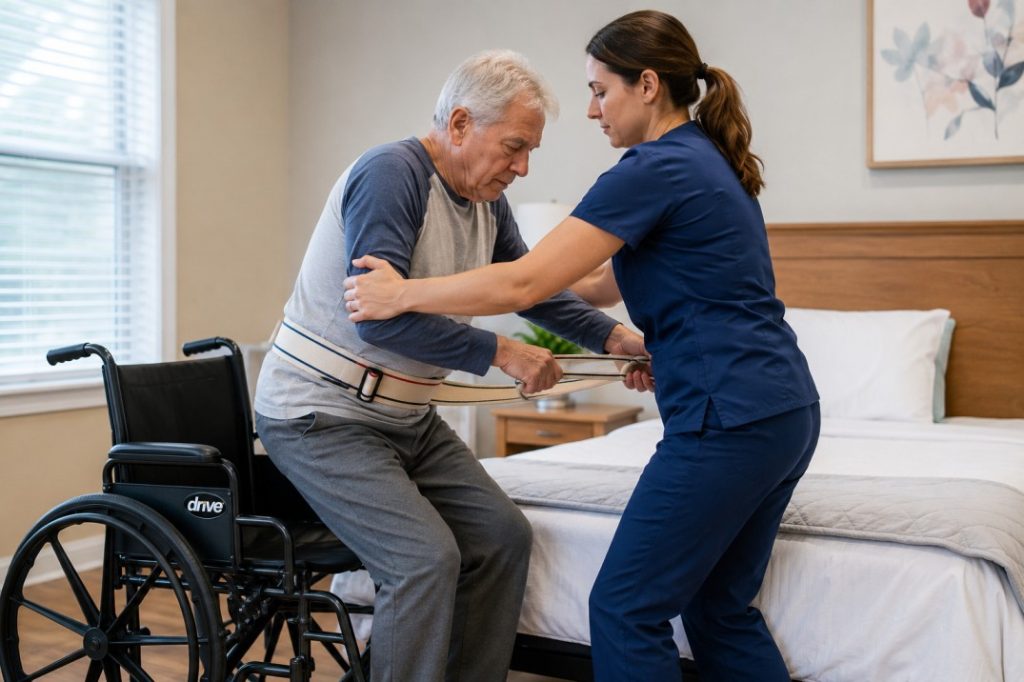
A gait belt is one of the most helpful transfer tools for family caregivers. The belt wraps securely around the senior’s waist and provides a safer, more stable grip during transfers without needing to pull on clothing or awkwardly support the upper body.
Using a gait belt can improve control, reduce strain on the caregiver, and help seniors feel more secure during standing and pivoting movements.
Transfer / Slide Board
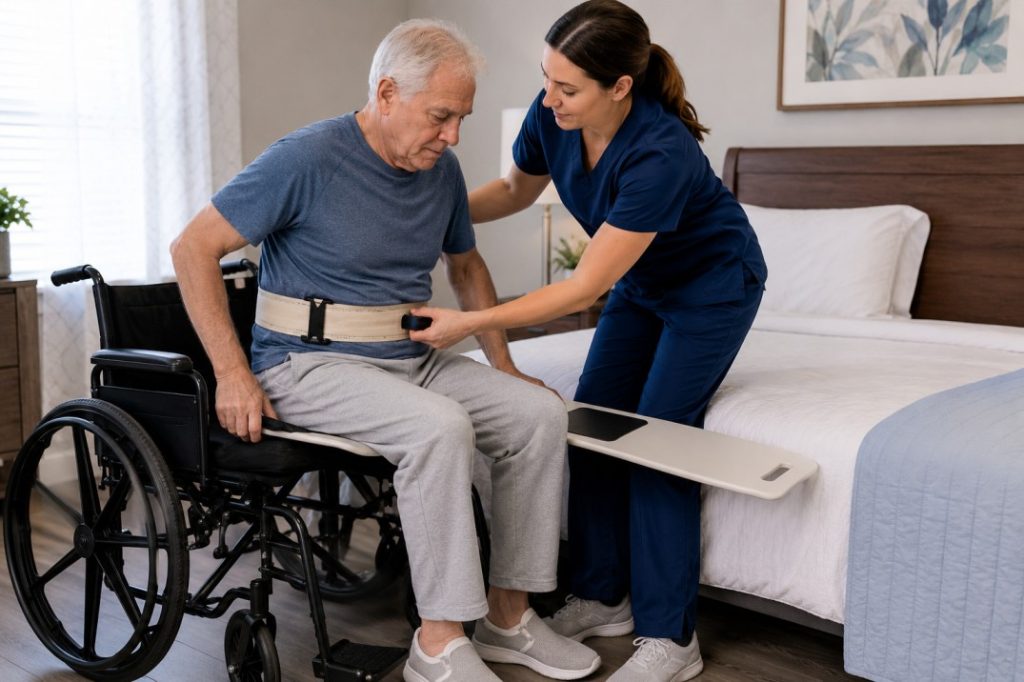
A transfer board, also called a slide board, creates a smooth bridge between the wheelchair and bed. Instead of standing, the senior slides gradually across the board with caregiver assistance. This tool is especially helpful for seniors who have limited or no weight-bearing ability in their legs but still have enough upper body strength to assist with repositioning.
Transfer boards can help reduce caregiver strain while making seated transfers safer and smoother.
Mechanical Lift — Hoyer Lift
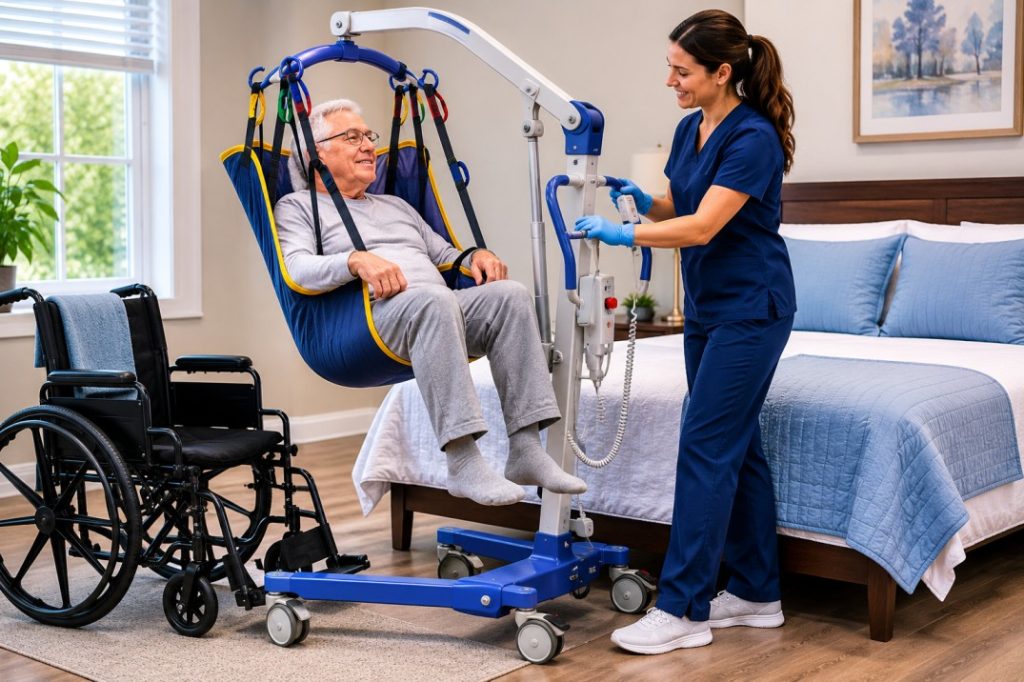
For seniors who cannot bear weight on either leg, a mechanical lift is often the safest transfer option available. A Hoyer lift helps move the individual safely from the wheelchair to the bed without requiring manual lifting from the caregiver. These devices greatly reduce injury risk for both the senior and the person assisting with the transfer.
Families should never feel pressured to manually lift someone who cannot safely assist with standing or pivoting.
Hospital-Style Adjustable Bed
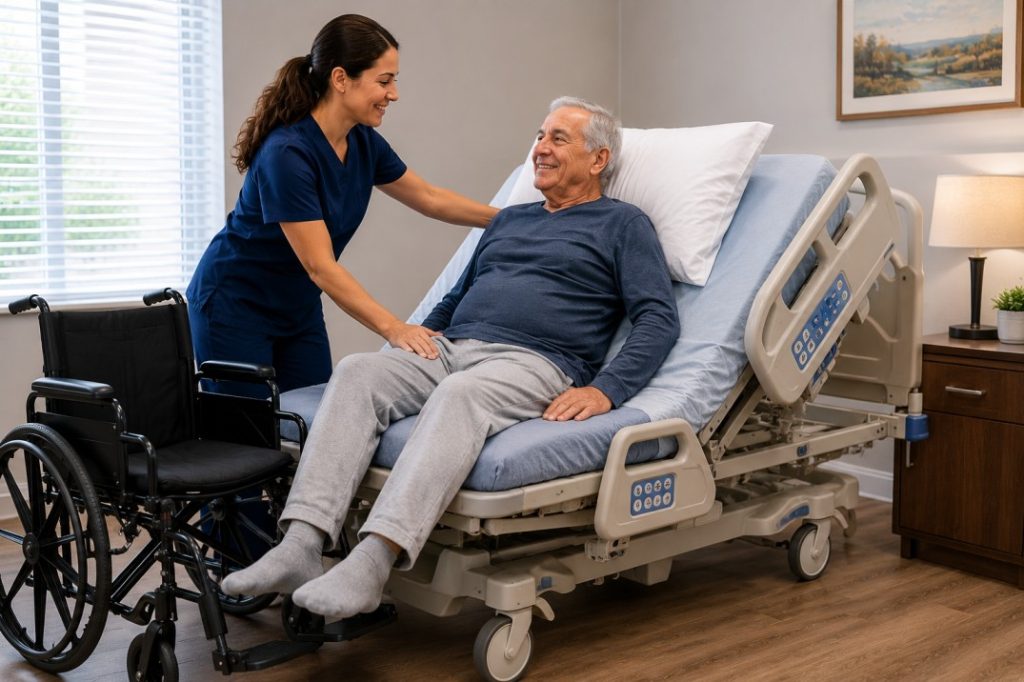
An adjustable bed can make wheelchair transfers significantly easier and safer. Raising or lowering the bed to match the wheelchair height helps shorten the transfer distance and reduces physical strain during movement.
Adjustable beds can also improve comfort, positioning, and overall accessibility for seniors with mobility limitations.
Non-Slip Footwear
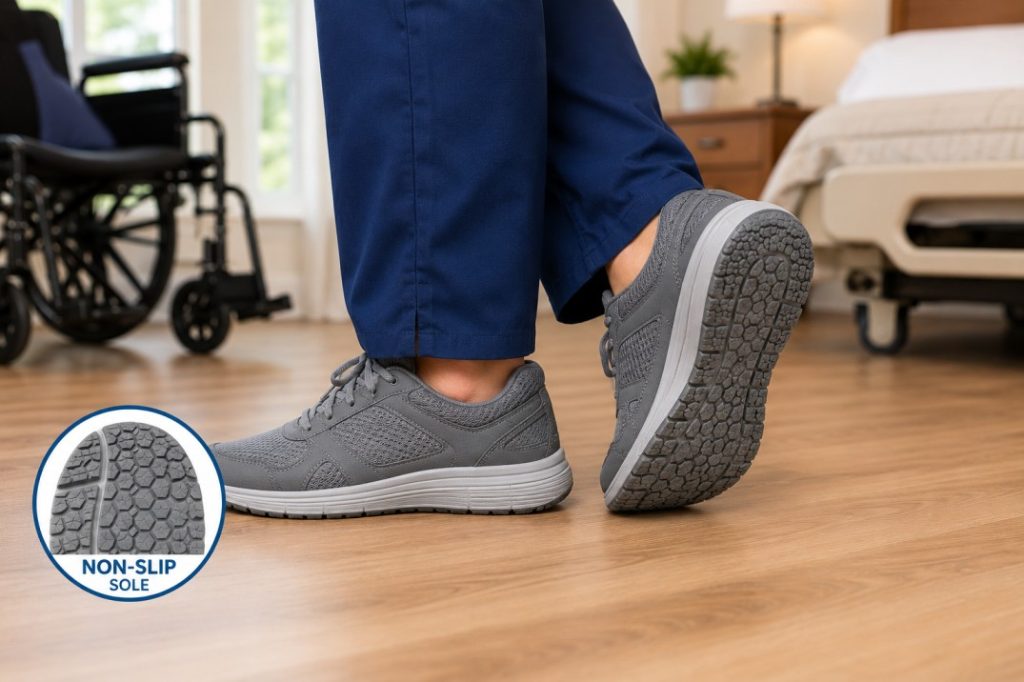
Non-slip shoes or grip socks are simple but extremely important during transfers. Proper footwear helps prevent slipping during standing or pivoting movements and provides better stability on smooth flooring surfaces.
Even a small loss of footing during a transfer can increase fall risk, making supportive footwear an important part of transfer safety.
When You Should Not Attempt a Transfer Alone
Knowing when to ask for help is not weakness. It is the most important safety judgment a caregiver makes.
Do not attempt a solo transfer when:
- Your loved one cannot bear weight on either leg A mechanical lift or second in home caregiver is required. There is no manual technique that safely substitutes.
- They are significantly larger than you can safely support, caregivers should never feel pressured to perform a lift that exceeds their physical abilities.
- They are uncooperative, combative, or confused today A transfer requires coordination. An uncooperative transfer is an unpredictable transfer. Wait until they are more settled — or get help.
- They report sudden pain, dizziness, or weakness Any of these symptoms changes the risk profile of the transfer entirely. Contact their healthcare provider before proceeding.
- You have a back, shoulder, or joint injury Your injury matters. An injured caregiver performing transfers is at significant risk of making the injury permanent. Get help.
- The environment cannot be made safe Wet floor, inadequate space, no clear path — if the environment cannot be properly prepared, the transfer should wait.
Conclusion
Wheelchair-to-bed transfers are a routine part of caregiving, but doing them safely is essential. The right technique helps protect your loved one from falls and injuries while reducing strain on your own body.
Every safe transfer comes down to preparation, proper positioning, clear communication, and controlled movement. When the situation requires additional support, using the right equipment—or asking for help—can make all the difference.
A safe transfer is not just about moving someone from one place to another. It’s about preserving dignity, promoting independence, and keeping both the caregiver and care recipient safe.

