
You might have noticed your parent pushing food around their plate, saying they’re “just not hungry,” or relying on tea and toast instead of real meals. While it can seem harmless at first, skipping meals in older adults can lead to serious health issues, including malnutrition — a condition that quietly weakens the body, energy, and spirit.
Let’s talk about why this happens, what to look for, and how you can help your loved one regain both their appetite and their strength.
What Is Malnutrition in Seniors?
Malnutrition doesn’t just mean someone isn’t eating — it means their body isn’t getting the right balance of nutrients to function properly. Older adults can become malnourished even if they eat regularly, especially if their meals lack protein, vitamins, and essential minerals.
According to studies, nearly 1 in 4 seniors are at risk of malnutrition. It can worsen existing conditions like diabetes, heart disease, or dementia, and make recovery from illness or injury much slower.
Why Seniors May Start Skipping Meals
There’s almost always a reason behind a loss of appetite in seniors — and understanding it can help you address the root cause with empathy.
- Changes in Taste and Smell
As we age, our senses are naturally dull. Foods that once tasted delicious may suddenly seem bland or even unpleasant. Certain medications can also alter taste, leading to disinterest in meals.
- Dental or Chewing Problems
Ill-fitting dentures, sore gums, or missing teeth can make eating uncomfortable. Seniors may quietly avoid food rather than complain about pain or difficulty chewing.
- Medication Side Effects
Many prescriptions can suppress appetite, cause nausea, or alter digestion. A medication review with a doctor can often pinpoint and fix this issue.
- Cognitive Changes
For those living with dementia or Alzheimer’s, meals can become confusing. They might forget they haven’t eaten or lose interest in food altogether.
- Emotional and Social Factors
Loneliness is a major contributor to poor nutrition. Cooking for one — or eating alone — simply doesn’t feel rewarding. Depression can also dull appetite and motivation to prepare food.
- Physical Limitations
Arthritis, poor mobility, or vision problems can make grocery shopping, meal preparation, or even eating difficult. Over time, that can lead to skipped meals and unintentional weight loss.
Signs Your Parent Might Be Malnourished
Malnutrition in seniors often develops slowly, making it easy to overlook until the effects become more noticeable. You may start to see subtle physical or behavioral changes that hint something isn’t right. Paying attention to these early signs can help prevent more serious health problems down the road.
Here are some common indicators to watch for:
- Unintentional Weight Loss or Loose-Fitting Clothes: Even a small drop in weight can signal your parents aren’t eating enough to meet their body’s needs.
- Constant Fatigue or Low Energy: A lack of essential nutrients can leave seniors feeling weak, tired, and less interested in activities they once enjoyed.
- Muscle Weakness or Frequent Falls: Inadequate protein and calorie intake can lead to muscle loss, making it harder for your parent to walk, climb stairs, or stay balanced.
- Loss of Appetite or Skipping Meals: If they often say “I’m not hungry” or eat very little, this can quickly lead to nutritional deficiencies.
- Changes in Appearance: Pale skin, brittle nails, or thinning hair are visible signs that their body isn’t getting enough vitamins or minerals.
- Mood or Cognitive Changes: Malnutrition can affect brain function, causing irritability, sadness, or confusion.
- Slow Healing or Frequent Illness: Poor nutrition weakens the immune system, making it harder to recover from wounds or fight off infections.
- Limited or Repetitive Diet: If your parents mainly eat toast, crackers, or snacks, they may be missing out on the balanced nutrition their body needs.
If you suspect malnutrition, start by tracking your parent’s weight and food habits. Even small, unintentional changes are worth bringing up with their doctor to identify the cause and create a care plan before it worsens.
How to Encourage Healthy Eating at Home
Helping a senior eat better isn’t just about food — it’s about restoring the joy and comfort that come from nourishing meals. Simple adjustments and a bit of creativity can make a big difference in helping your loved one regain their appetite and strength.
Here are a few thoughtful ways to make healthy eating easier and more enjoyable:
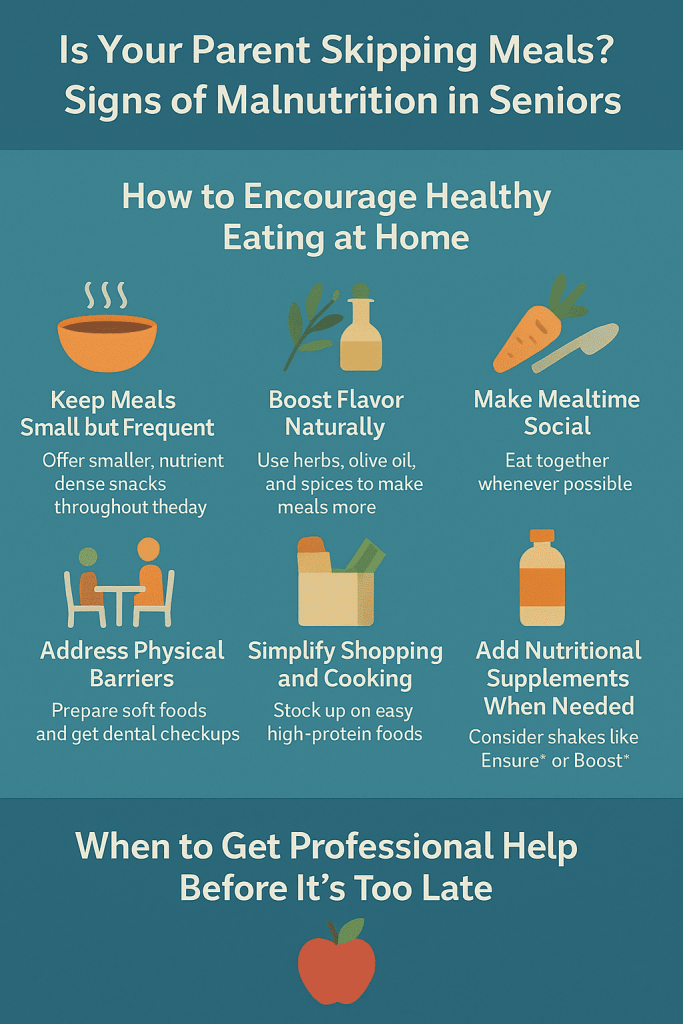
Keep Meals Small but Frequent
Large portions can feel overwhelming, especially for seniors with smaller appetites. Offer smaller, nutrient-rich meals or snacks every few hours — like Greek yogurt with fruit, scrambled eggs, hearty soups, or smoothies. These provide energy without feeling heavy.
Boost Flavor Naturally
As taste buds fade with age, food can start to seem bland. Enhance flavors with fresh herbs, olive oil, lemon juice, or mild spices instead of relying on salt. A little extra flavor can bring back their interest in eating.
Make Mealtime Social
Eating alone can dampen anyone’s appetite. Whenever possible, sit down and share meals together. Even short conversations or background music can turn a simple meal into a meaningful moment.
Address Physical Barriers
Chewing or swallowing difficulties are common in older adults. Prepare softer foods like mashed vegetables, oatmeal, cottage cheese, or smoothies that are easier to eat. If pain, dentures, or mouth dryness are issues, a dental checkup or texture adjustments can help tremendously.
Simplify Shopping and Cooking
Make healthy eating effortless by keeping easy, ready-to-eat options on hand — such as rotisserie chicken, peanut butter, canned tuna, and frozen vegetables. Grocery delivery or local meal services can also relieve the stress of shopping and cooking.
Add Nutritional Supplements When Needed
If your parent struggles to eat enough through regular meals, talk with their doctor about nutritional shakes like Ensure® or Boost®. These can fill gaps safely while you work on improving appetite and variety in meals.
When to Get Professional Help Before It’s Too Late
If your parent’s weight keeps dropping, they look weaker, or you notice ongoing changes in appetite, don’t wait to act. Early professional support can prevent serious complications and help your loved one regain strength safely.
Start by talking with their doctor or a registered dietitian. They can check for malnutrition, review medications, and create a personalized nutrition plan that fits your parent’s medical conditions, preferences, and daily routine.
Sometimes, having in-home care can make all the difference. A compassionate caregiver can step in to provide both nutritional and emotional support by helping to:
- Prepare healthy, balanced meals and snacks
- Encourage hydration and monitor eating habits
- Offer companionship during mealtimes to make eating enjoyable again
- Communicate changes in appetite or health to family members
Having this kind of support at home not only helps seniors stay nourished, but also restores a sense of comfort, connection, and dignity — which are just as important to their well-being as the food itself.
Need Caregivers?
Watching a loved one lose interest in food can be heartbreaking — but it’s also something you can help change. With a little patience, compassion, and the right support, most seniors can regain their appetite and strength, and rediscover the joy of eating again.
If you’re concerned that your parents may be skipping meals or showing signs of malnutrition, in-home caregivers johns creek can help. They can prepare nourishing meals, offer gentle reminders, and ensure your loved one gets the daily nutrition and care they need to thrive at home.

