
You probably were not looking for signs of a problem. Maybe you stopped by your mother’s house on a Sunday afternoon and noticed her hair looked as though it had not been washed in days. Maybe you sat down next to your father at dinner and noticed an odor that had never been there before. At first, you may have wondered whether you were imagining it. Then you started noticing other things.
If that sounds familiar, noticing a change in personal hygiene is not the same as judging your loved one. A decline in hygiene is rarely simply about not caring. More often, it can be a visible sign that something else has become difficult. A sore shoulder may make washing or dressing painful. Fear of falling may make the bathroom feel unsafe. Memory changes may cause someone to forget steps in a routine they have followed for decades or lose track of when they last bathed.
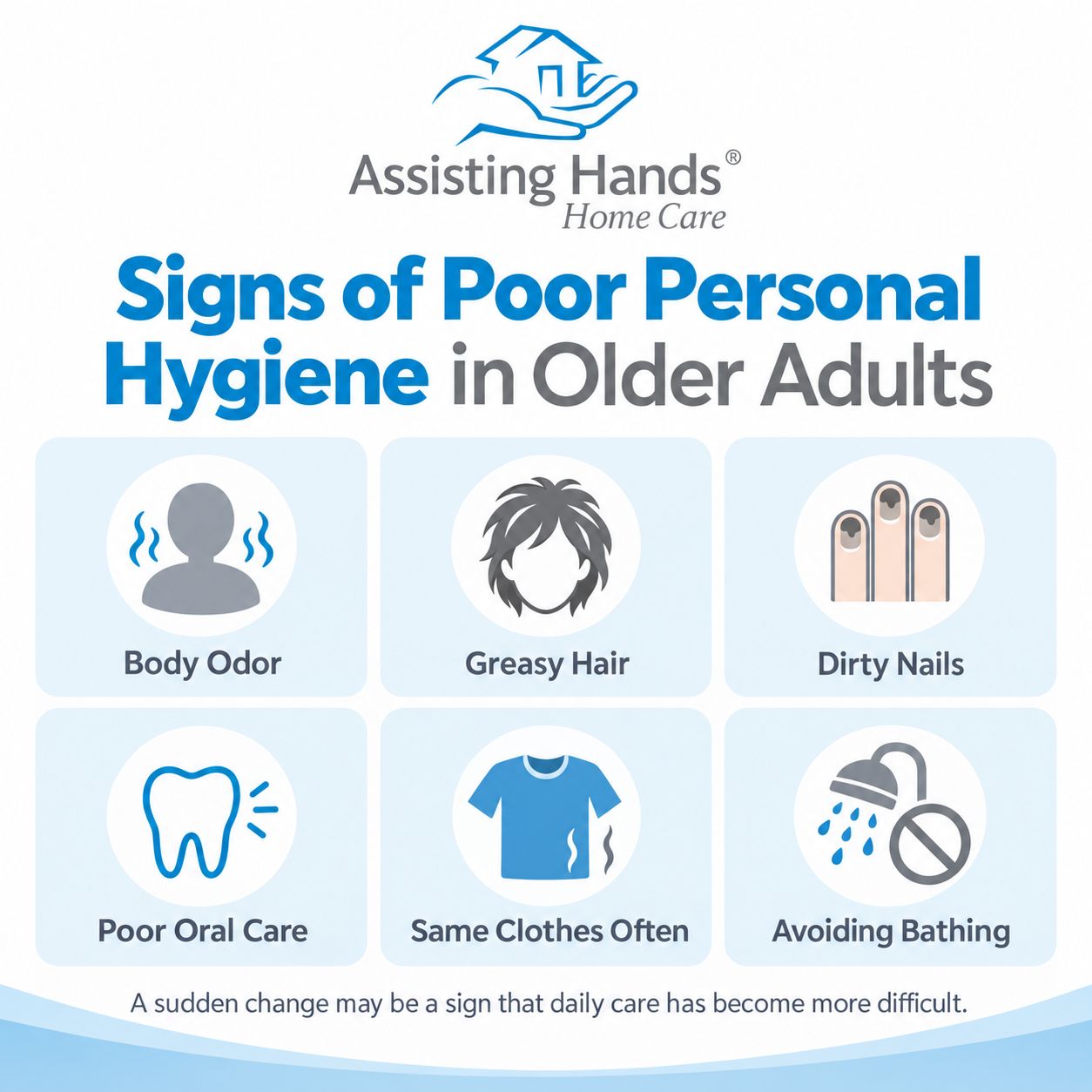
Common signs of declining personal hygiene in older adults include persistent body odor, greasy or unwashed hair, dirty or overgrown nails, poor oral hygiene, wearing the same clothing for several days, recurring skin irritation, and avoiding bathing or grooming. Changes in hygiene may sometimes be connected to mobility problems, pain, memory loss, depression, vision changes, medication side effects, incontinence, or fear of falling.
The important thing is to recognize the change without turning it into a source of shame. In this guide, we will look at common signs of poor personal hygiene in older adults, what may be causing them, how to bring up the subject respectfully, and when additional support may help.
For families in Palos Heights, Palos Hills, Hickory Hills, Worth, Lemont, Homer Glen, Lockport, Romeoville, and nearby southwest Chicago suburbs, these changes are often first noticed during an ordinary visit with an aging parent or loved one.
Why Should You Pay Attention to Changes in an Older Adult’s Hygiene?
Personal care is one of the last parts of a daily routine many people want to give up, which is why a noticeable change can tell you a lot.
Bathing, grooming, brushing teeth, getting dressed, and doing laundry require memory, coordination, strength, balance, and enough confidence to complete each task safely. When one of those abilities begins to change, personal hygiene may be one of the first places families notice a difference.
You may notice that your mother has stopped washing her hair regularly before anyone realizes she is also forgetting medications or having difficulty keeping up with household tasks.
There is a practical reason to pay attention, too. Skin that remains damp, soiled, or irritated may become uncomfortable or develop problems. Overgrown toenails can make walking painful. Poor oral care can contribute to dental pain and make eating less comfortable.
A change in hygiene does not automatically mean there is a serious problem. It is worth paying attention to, however, because it may indicate that a familiar daily routine has become harder to manage independently or safely.
What Are the Signs of Poor Personal Hygiene in the Elderly?
Look for patterns, particularly when several changes begin happening at the same time.
Body Odor and Unwashed Hair
Persistent body odor is often the first thing families notice, and it tends to be the hardest one to talk about. What matters is whether the odor is there consistently rather than after an afternoon in the yard, and whether your loved one genuinely believes they bathed recently. That gap between what they remember doing and what happened tells you more than the odor itself.
Hair is a close second, partly because it is so visible. Look for hair that stays greasy or flat at the roots for days, an unusual smell, or a scalp that has turned dry and flaky. For someone who always kept a standing salon appointment, a few missed months is worth a gentle question.
Skin and Nail Changes
Aging skin is naturally drier and thinner, so some change is expected, but certain patterns point toward missed washing rather than normal aging. Watch for flaking or reddened patches, irritation in the folds of skin under the arms or beneath the chest, and small rashes that keep returning to the same spots. Recurring skin infections are a strong signal that the routine is not working.
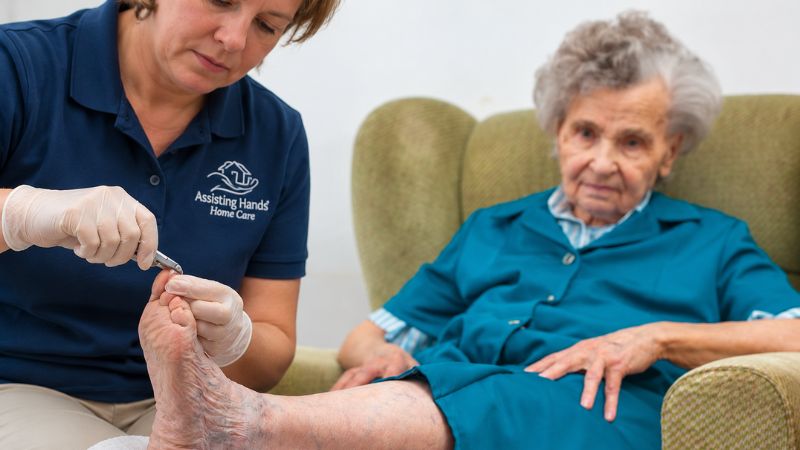
Nails are easy to check during an ordinary visit. Fingernails that have grown long, ragged, or visibly dirty usually mean grooming has slipped, and thickened or overgrown toenails deserve attention because they can cause pain and change how your loved one walks.
A Decline in Oral Care
Oral hygiene is one of the easiest routines to quietly abandon, since nobody sees the inside of someone else’s mouth. Watch for plaque along the gumline, breath that has changed noticeably, sore gums, or a toothbrush that always looks dry. If your loved one wears dentures, ask casually how the cleaning is going, because dentures that are not soaked and brushed properly cause sores and can make eating painful enough that meals get skipped.
Wearing the Same Clothes for Several Days
Repeating an outfit once or twice does not necessarily indicate a problem. A repeated pattern is more important. You might notice:
- The same shirt or pants being worn during several visits
- Clothing with old stains
- Soiled clothing that has not been changed
- Laundry accumulating for long periods
- Fewer clean clothes available
Sometimes the problem has little to do with hygiene itself. Your loved one may no longer feel safe carrying a laundry basket down basement stairs or may find bending, sorting, and loading a washing machine physically exhausting.
Signs That the Bathroom Is Not Being Used Normally
Sometimes the home provides clues your loved one may not talk about. You may notice:
- Towels that remain completely dry
- Soap or shampoo that appears untouched
- A shower or bathtub that looks unused
- Washcloths accumulating beside the sink
- Grooming products that have not moved
- A shower chair or safety equipment that is not being used
Your loved one may have created a new routine without telling anyone, such as washing only at the sink because getting into the shower feels unsafe.
Other Signs of Possible Self-Neglect
Pay attention to what is happening beyond personal hygiene, particularly when several changes appear at once. Increasing clutter, spoiled food in the refrigerator, unopened mail, missed medications, dirty dishes, or neglected household tasks may suggest broader difficulty managing daily activities. When these problems occur alongside declining hygiene, the person may need more consistent assistance than occasional family visits can provide.
Why Do Some Older Adults Stop Bathing or Caring for Their Hygiene?
Understanding the cause makes the conversation easier, because it moves the discussion away from what your loved one is failing to do and toward what is standing in the way.
- Mobility and pain: Arthritis, stiffness, and balance problems turn a simple shower into an exhausting and genuinely risky task, and many seniors avoid bathing rather than admit they no longer feel steady. Some older adults begin avoiding showers because they are afraid of falling but are embarrassed to tell their family. Simple changes such as grab bars, nonslip flooring, better lighting, and a shower chair can help make the bathroom safer. Families can also review these senior-friendly bathroom safety tips for additional ways to reduce fall risks and make bathing and other daily routines easier.
- Dementia: Cognitive changes and dementia interrupt hygiene differently, either by erasing the steps of a familiar routine or by making water, noise, and being undressed feel frightening. Families dealing with these challenges may benefit from specialized Alzheimer’s and dementia care that approaches personal care with patience and familiarity.
- Depression and grief: Feeling of depression can affect personal care, especially after the loss of a spouse or another major life change. Getting dressed, styling your hair, or taking a shower can start to feel unnecessary when there is no longer the same reason to get ready for the day.
- Incontinence: Incontinence can add embarrassment or fear of having an accident, making someone more reluctant to bathe or ask for help.
- Impaired vision: Vision changes can play a quieter role. Someone who cannot clearly see a stain on their clothing, a dirty sink, or food caught between their teeth may simply not realize anything has changed.
- Medications: Certain medications can contribute to fatigue, weakness, or dizziness as well, turning an ordinary shower into something that feels physically demanding or unsafe.
How Can You Talk to an Elderly Parent About Poor Hygiene Without Embarrassing Them?
How you start the conversation can make a big difference in how your loved one responds. Lead with something you have noticed rather than something they have failed to do. Saying, “I’ve noticed the shower has been a little difficult lately,” is far less likely to feel accusatory than, “You haven’t showered in a week.” Better yet, offer a possible solution before making the problem the focus. Asking, “What would you think about putting a grab bar and shower chair in there?” gives your loved one something practical to consider rather than making them feel as though they are being criticized.
Timing matters, too. Choose a quiet moment when you are both comfortable and have some privacy. Avoid bringing it up during an argument or in front of grandchildren, friends, or other visitors. Remember that helping does not have to mean taking over. If washing their hair or getting safely in and out of the tub is the main challenge, offer help with those specific tasks and let them continue handling the parts they can manage themselves. That small distinction can go a long way toward preserving their independence.
If your loved one continues to resist help, it may be worth bringing the conversation to their doctor. A medical visit can uncover issues that are not immediately obvious, such as an infection, depression, vision changes, medication side effects, or cognitive changes. Some older adults may also be more willing to consider a change when it comes from a physician rather than an adult child who has been encouraging them to accept help.
What If Your Elderly Parent Refuses to Bathe?
Resistance to bathing does not always mean your loved one is being stubborn. In many cases, there is a reason behind the refusal. They may be worried about falling, experiencing pain when getting in and out of the shower, uncomfortable receiving help from a family member, or confused about when they last bathed. For someone with memory loss, the sound or sensation of running water may also feel unfamiliar or frightening.
Instead of arguing about the bath itself, try to understand what is making the routine difficult. Once you know the cause, it may be easier to find a solution that feels safer and more comfortable for your loved one.
If the resistance is new, becomes more frequent, or is accompanied by other changes in behavior or daily routines, consider discussing it with their doctor. Pain, infections, vision changes, medication side effects, depression, and cognitive changes can all affect a person’s willingness or ability to manage personal care. Some older adults may also be more receptive to accepting help when the recommendation comes from a physician or another professional they trust.
When Is It Time to Get Help With an Elderly Parent’s Personal Hygiene?
Some situations eventually move beyond what family visits and home modifications can reasonably address.
Consider additional help when:
- Bathing has become unsafe
- Your loved one has experienced a fall or near fall
- Skin problems or infections keep returning
- Clothing and bedding regularly remain soiled
- Your loved one consistently refuses personal care
- Memory problems interfere with bathing or grooming
- Family caregivers cannot safely provide physical assistance
- Hygiene problems occur alongside other signs of self-neglect
- Managing everyday routines is becoming increasingly difficult
Professional in-home care does not have to mean giving up independence.
Often, a small amount of assistance with the tasks that have become difficult is enough.
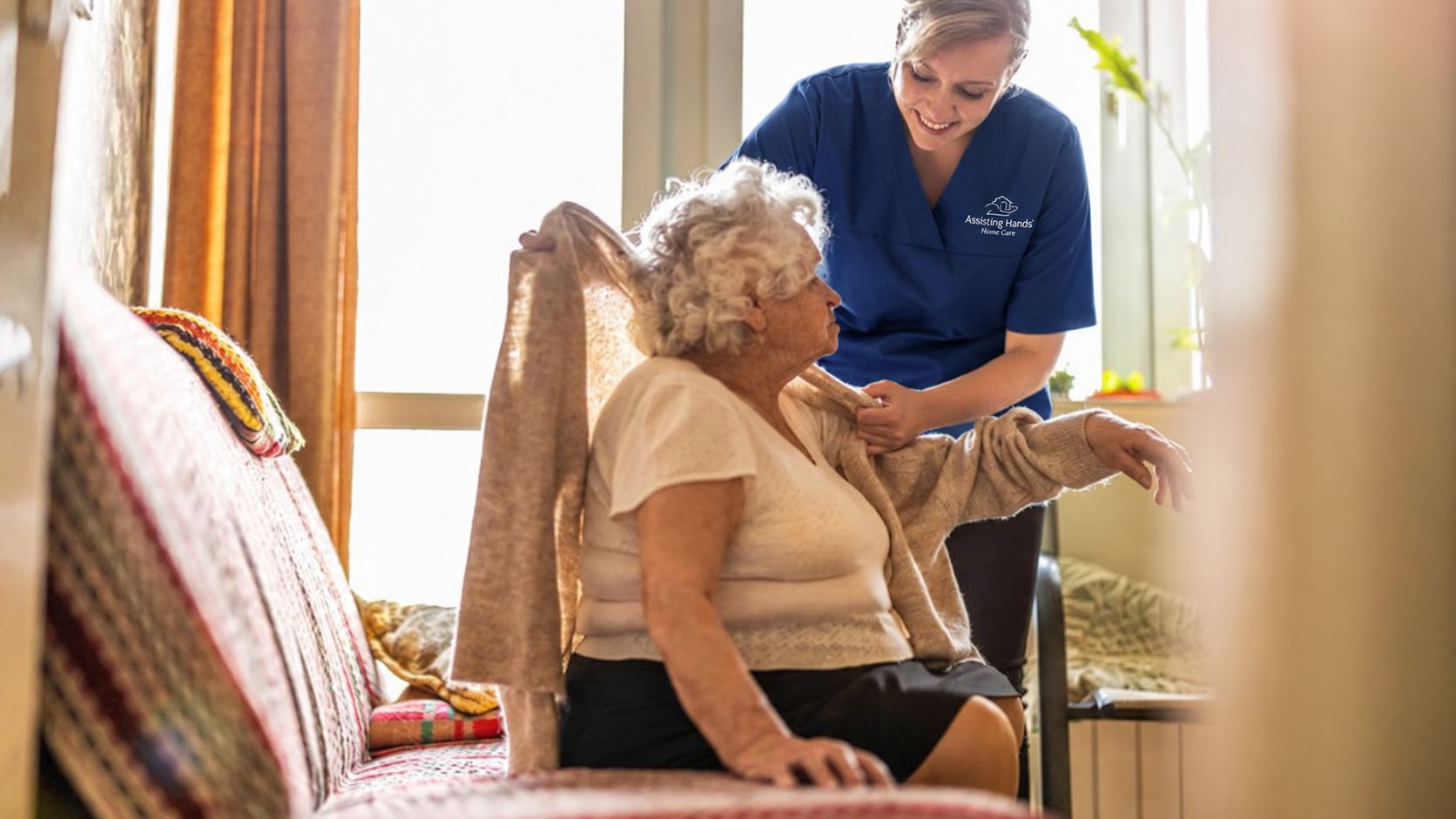
A trained caregiver can help with bathing, grooming, oral care, dressing, toileting, laundry, and other everyday routines while encouraging the older adult to continue doing as much as they safely can for themselves.
At Assisting Hands Palos, caregivers are screened, trained, bonded, and insured. Care can be tailored around the personal-care tasks an older adult is having difficulty managing while respecting their privacy, preferences, routines, and dignity.
We serve families in Palos Heights, Palos Hills, Hickory Hills, Worth, Lemont, Homer Glen, Lockport, Romeoville, and surrounding southwest Chicago communities. Call Assisting Hands Palos at (773) 207-3767 and schedule a free consultation
Decline in Personal Hygiene FAQs
What is considered self-neglect in the elderly?
Self-neglect describes a pattern in which an older adult stops meeting their own basic needs, including bathing, grooming, dressing, eating well, taking medications, and keeping their home safe and sanitary. A single missed shower is not self-neglect. A consistent pattern across several areas of daily living, continuing for weeks, is what raises concern and usually points to an underlying physical, cognitive, or emotional cause.
Why do seniors suddenly stop bathing?
A sudden change almost always has a specific trigger, such as pain, a recent fall or near miss in the bathroom, new medication causing dizziness, depression after a loss, or early cognitive decline. Because the change is sudden rather than gradual, it is worth scheduling a medical visit, since infections and medication side effects are common causes and both are treatable.
Is refusing to bathe a sign of dementia?
It can be, though it is not a diagnosis on its own. Many people living with dementia resist bathing because the experience has become disorienting or frightening, or because the sequence of steps no longer makes sense to them. When bathing refusal appears alongside memory lapses, confusion about time and place, or trouble with other familiar routines, discuss it with your loved one’s doctor.
How often should an elderly person shower?
Most older adults do well with a full shower or bath one to three times a week, combined with daily washing of the face, hands, underarms, and groin area. Older skin is drier and more fragile, so daily bathing can cause more irritation than it prevents. What matters most is that the routine stays consistent and that skin, hair, and nails are cared for regularly.
When should I get outside help for my parent’s hygiene?
Consider professional support when bathing has become unsafe, when skin or urinary tract infections keep returning, when your loved one consistently refuses help from family, or when hygiene decline appears alongside other signs of self-neglect. Bringing in help early is easier on everyone than waiting until a fall or infection forces the decision.