

The knees are a part of the body that succumbs to the effects of aging. Severe arthritis of the knee is an especially common cause for knee replacement. Recovering from this type of surgery takes approximately twelve weeks with attentive in-home post-surgical care.
Seniors with knee pain can have trouble in daily life. Personal care activities, like bathing, and household chores, like washing the car, can be hard to manage when the knees hurt. Osteoarthritis is often behind the severe knee pain—but a knee replacement can relieve the ache.
How does osteoarthritis cause knee pain?
Osteoarthritis is a degenerative joint disease that develops when the cushions located at the ends of the bones wear down. As the condition progresses and worsens over time, the senior can experience pain, stiffness, and swelling. Daily tasks can be impossible to perform when the disease is severe.
This joint disease frequently attacks the knees. Seniors with osteoarthritis of the knee have a harder time walking, climbing, sitting in and getting up from chairs or entering and exiting the bathtub. Their knees start to buckle and they might hear grinding noises when walking. Osteoarthritis of the knee has no cure. However, physicians focus on treatments to alleviate pain, help elderly patients move better, and prevent the disease from getting worse. Exercise, weight control, medications, complementary therapy, and knee replacement surgery are forms of treatment.
A knee replacement is a common surgery performed on people over 50 years old. Surgery is usually recommended when other forms of treatment fail to work and the joint damage is extensive. As of the past decade, an estimated 4 million adults live with a total knee replacement.
What happens during knee replacement surgery?
When a senior opts for a knee replacement, their damaged cartilage and bone are removed from the knee joint during a surgical procedure. The surgeon inserts a prosthesis, which may be plastic, metal, or ceramic, into the knee joint. This replacement joint lasts up to 15 years.
How long is the recovery period after knee replacement surgery?
The surgery itself takes approximately two hours. Once the procedure is completed, the elderly patient remains in the hospital for three to five days.
The day after surgery, however, the senior may be asked to move around with the help of a walker, crutch, or cane.
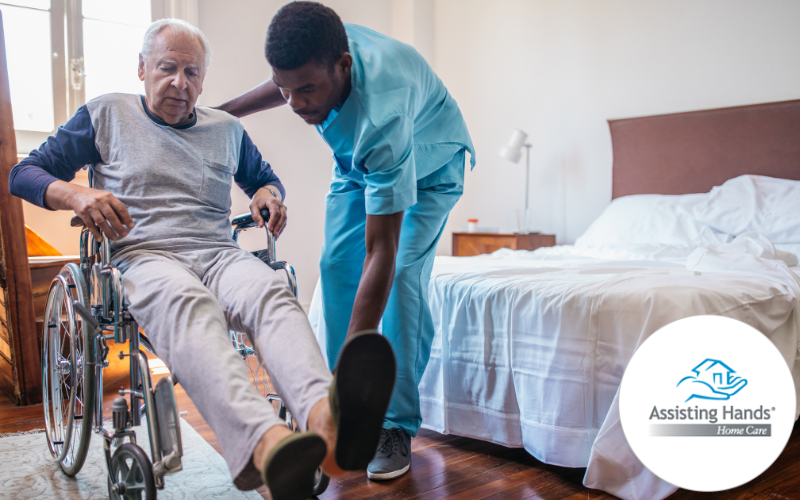
For the first two to three weeks after the knee replacement surgery, the senior will rely on a mobility device (walker, crutch, or cane) to move around. An in-home caregiver can further help support the older adult and promote confidence when walking.
Four to six weeks after surgery, the swelling in the senior’s knee will reduce significantly. The knee will have greater movement during this period, as well. Physical therapy will be necessary throughout the recovery period to strengthen the new joint.
Some older patients may require a brief stay at the rehabilitation center after their surgery. At the rehab facility, the seniors will learn how to safely perform activities on their own. If rehab is necessary, a professional caregiver can provide transportation to the center.
As mentioned, the recovery period after knee replacement surgery is three months; however, full recovery may extend to a year in some individuals. Once the senior learns to move around, their new knee should allow them to resume their daily activities. Pain and stiffness should subside.
What is the outlook after a knee replacement surgery?
The prognosis for most knee replacement patients is excellent. The surgery relieves pain for most seniors. After the aging patient fully recovers, they normally do not need help with walking. Periodic check-ups with the surgeon ensure the parts of the artificial joint remain in good condition.
Following the doctor’s and physical therapist’s directions is the most important part of the recovery phase. Knee replacement patients should make progress steadily, rather than too hastily—which can ultimately slow down their recovery. A professional caregiver will be helpful during healing.
How is post-surgical care beneficial during recovery?
Post-operative caregivers are trained to support seniors who have undergone a surgical procedure. This type of care is given at home. They ensure the senior follows the physical therapist’s instructions and attends all physical therapy sessions and doctor’s follow-up appointments.
Considering full recovery can take three months to a year, elderly patients will need help preparing meals, shopping for groceries, and performing light housekeeping. Professional caregivers are the ideal professionals to provide this invaluable service in the convenience of the home environment.
Family members may be asked to support the recovering senior, but they oftentimes juggle numerous family and career responsibilities. Professional caregivers, such as those from Assisting Hands Home Care, dedicate all their working hours to support their elderly care recipient.
Call us for Your Recovery Journey
When your aging loved one is preparing for an upcoming knee replacement surgery or has recently had the procedure, incorporate Assisting Hands Home Care into the recovery care plan. We offer compassionate post-operative care for seniors in their own homes.
The seniors will have plenty of time to rest and recuperate as we handle daily tasks to keep their household running. We prepare nutritious meals to give the care recipient the nutrients necessary to promote healing, provide timely medication reminders, and shop for fresh groceries.
Our post-surgical caregivers help the senior with personal hygiene tasks, like bathing and dressing. We schedule follow-up appointments with the physical therapist and provide transportation to the sessions. Caregivers coordinate the delivery of durable medical equipment and set up a safe home environment.
Quality after-surgery care has a major impact on the elderly patient’s quality of life after surgery and reduces the chances of hospital readmission due to health complications. Our caregivers are highly qualified, being licensed, bonded, and insured; we deliver both care and peace of mind.
Choose Assisting Hands Home Care for all of your elderly loved one’s post-operative care needs. Our highly regarded services are available to seniors living in Palos Heights, Illinois, and the surrounding areas.
Schedule a free in-home consultation and learn how our after-surgery care aids in recovery.