

Needing help with the bathroom can be difficult for an older adult to talk about. Changes in balance, arthritis, weakness, limited mobility, dementia, urinary urgency, or incontinence can turn a private everyday activity into something that requires assistance.
To help a senior with toileting safely, focus on three things: getting to and from the toilet without falling, providing only as much hands-on assistance as necessary, and keeping the skin clean and dry afterward. Grab bars, raised toilet seats, bedside commodes, easy-to-remove clothing, and incontinence products may also make toileting safer and more manageable.
Just as important is how the assistance is provided. Older adults should be given as much privacy, independence, and control as their abilities safely allow.
Why Might an Older Adult Need Help Using the Toilet?
Difficulty with toileting does not always mean that a senior has lost bladder or bowel control. Sometimes the primary problem is simply getting to the bathroom safely or quickly enough.
An older adult may need assistance because of arthritis, weakness, poor balance, difficulty standing from a low toilet, recovery after surgery or hospitalization, Parkinson’s disease, stroke-related limitations, dementia, or other changes in mobility and cognition.
The National Institute on Aging notes that some older adults experience functional incontinence, meaning they have difficulty reaching the toilet because conditions such as arthritis or mobility problems make it difficult to move quickly enough. Dementia can create additional challenges when a person no longer recognizes the urge to use the bathroom, forgets where the bathroom is, or has trouble communicating what they need.
This distinction matters because the right solution depends on the underlying problem. Someone who has difficulty standing may benefit from a raised toilet seat and grab bar, while someone with dementia may benefit more from clear pathways, easy-to-remove clothing, regular bathroom reminders, and consistent routines.
How Do You Help an Elderly Person Use the Toilet Safely?
Start by determining what the person can still do independently.
Some seniors only need someone nearby in case they become unsteady. Others may need assistance lowering themselves onto the toilet, standing afterward, managing clothing, cleaning themselves, or transferring from a wheelchair.
Whenever possible, encourage the older adult to complete the portions of the routine they can safely handle themselves. Instead of automatically doing everything for them, provide enough assistance to make the task safe while preserving their independence.
A typical routine may involve helping the senior walk or transfer to the bathroom, making sure clothing can be removed easily, providing steady assistance while sitting or standing, allowing privacy when it is safe to do so, helping with wiping or cleansing when necessary, and making sure the person’s hands and skin are clean and dry afterward.
Never pull an older adult up by the arms or improvise a transfer technique if they cannot safely bear weight. A healthcare professional, physical therapist, or occupational therapist can recommend appropriate transfer methods and equipment when mobility is significantly limited.
How Can You Protect a Senior’s Dignity During Toileting?
Dignity is one of the most important parts of toileting assistance.
For an older adult who has been independent throughout life, suddenly needing help with such a personal activity can feel embarrassing or frustrating. A rushed or overly clinical approach can make the experience even more uncomfortable.
Explain what you are going to do before touching or moving the person. Close the bathroom door when appropriate, keep the senior covered as much as possible, and avoid discussing accidents or incontinence in front of other people.
It also helps to give choices whenever possible. Asking, “Would you like to use the bathroom before lunch or afterward?” can feel very different from simply announcing that it is time to go.
The goal is not merely to complete a task. It is to help someone maintain as much independence and control over their daily routine as possible.
What Toileting Aids Can Make Bathroom Use Easier for Seniors?
The right equipment depends on mobility, balance, continence, cognition, and the layout of the home.
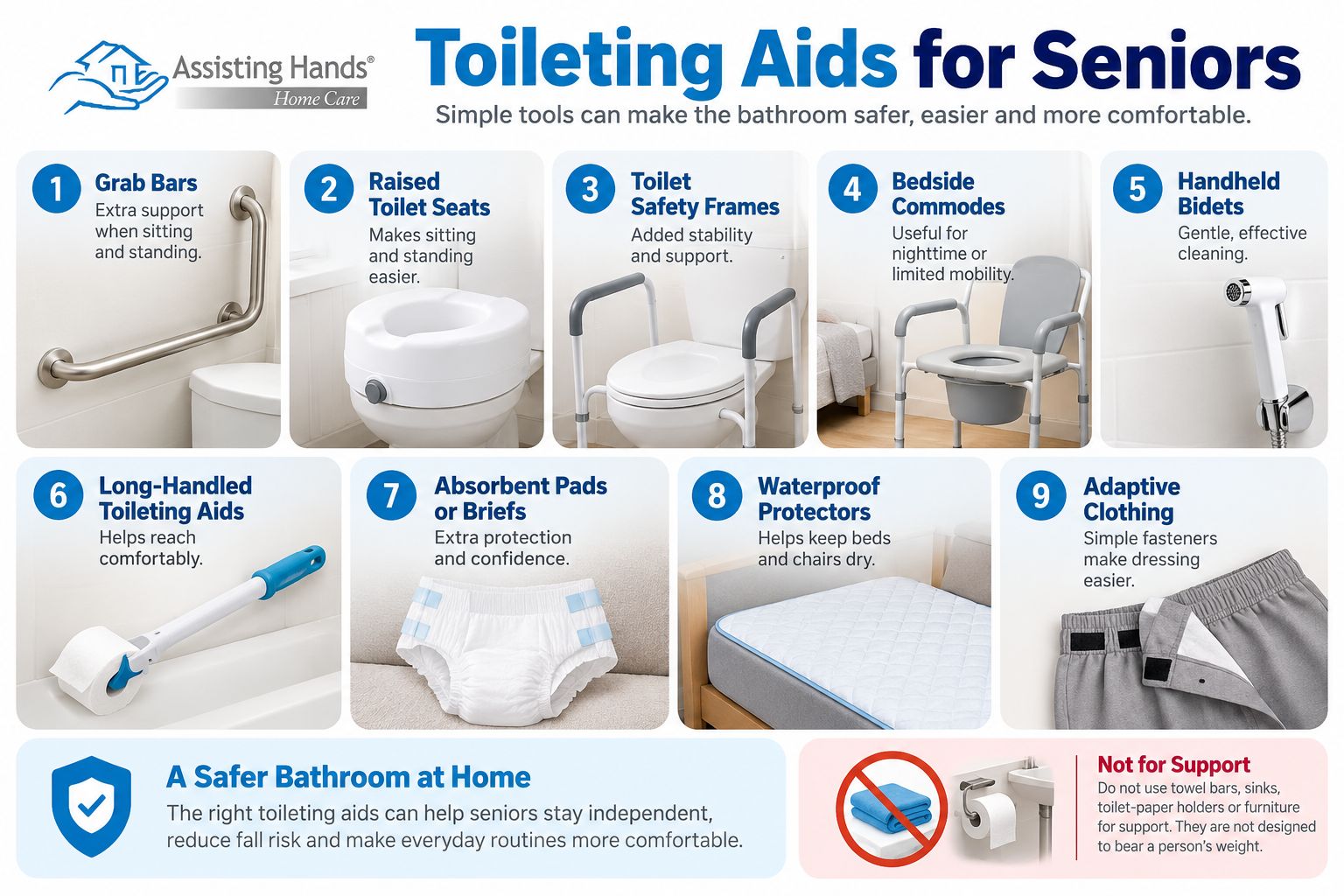
Useful options may include grab bars beside the toilet, raised toilet seats, toilet safety frames, bedside commodes, handheld bidets, long-handled toileting aids, absorbent pads or briefs, waterproof mattress or chair protectors, and clothing with simple fasteners.
A bedside commode can be especially helpful when walking to the bathroom at night is difficult or unsafe. A raised toilet seat may reduce how far a person must lower themselves, while properly installed grab bars can provide additional support when sitting and standing.
The CDC specifically recommends installing grab bars next to toilets and in bathing areas as part of making a home safer for older adults.
Avoid relying on towel bars, sinks, toilet-paper holders, or unsecured furniture for support. They are not designed to bear a person’s weight.
How Should You Help a Senior Clean Up After Toileting?
Good skin care is especially important when an older adult experiences urinary or bowel incontinence.
Urine and stool that remain against the skin can contribute to irritation and skin breakdown. MedlinePlus recommends cleaning and drying the affected area promptly and using gentle skin-care products that do not cause unnecessary dryness or irritation.
Use soft toilet tissue, gentle wipes designed for personal care, or a soft washcloth as appropriate. Avoid aggressive rubbing. The area should be cleaned carefully and then patted dry.
For people with frequent incontinence, a healthcare professional may recommend a moisture-barrier cream or other skin-protection product. Absorbent briefs and pads should also be changed when wet or soiled rather than left against the skin for extended periods.
Check regularly for redness, persistent irritation, sores, broken skin, or unusual drainage and contact a healthcare provider when skin changes do not improve.
What Is the Best Way to Help a Senior With Incontinence?
Incontinence products can make everyday care easier, but they should not automatically replace regular bathroom opportunities.
Depending on the person’s abilities, a caregiver may help by offering bathroom breaks at predictable times, making the bathroom easier to locate and access, choosing clothing that can be removed quickly, using appropriate absorbent products, and helping the person clean and change promptly after an accident.
For some people, a healthcare professional may recommend bladder training or timed voiding. The National Institute on Aging describes timed voiding as following a planned bathroom schedule and gradually adjusting the interval when appropriate.
Do not severely restrict an older adult’s water intake simply to prevent bathroom trips unless a healthcare professional has specifically recommended a fluid restriction. Adequate hydration remains important for overall and bladder health.
Urinary incontinence also should not automatically be dismissed as a normal part of aging. There are different types and causes of bladder-control problems, and treatments or management strategies may be available.
How Can You Make the Bathroom Safer for an Older Adult?
The trip to the bathroom can be as important as the toilet itself. A senior who is rushing because of urinary urgency may be particularly vulnerable to losing their balance.
Keep the path from the bedroom or living area to the bathroom clear. Improve lighting, particularly for nighttime bathroom trips. Remove loose rugs or other tripping hazards and make sure the senior wears supportive, non-slip footwear when appropriate.
Inside the bathroom, properly installed grab bars beside the toilet can make sitting and standing easier. Depending on the person’s height and mobility, a raised toilet seat or toilet safety frame may also help.
The CDC recommends reducing home tripping hazards, improving lighting, and installing bathroom grab bars as part of fall-prevention efforts for older adults.
If repeated falls, near-falls, or transfer difficulties are occurring, an occupational therapist can assess the home and recommend modifications based on the senior’s specific abilities.
How Do You Help a Bedridden Senior With Toileting?
A person who is unable to safely walk to the bathroom may need a bedside commode, bedpan, urinal, absorbent products, or another solution recommended by their healthcare team.
Care becomes more complicated when someone has significant mobility limitations because toileting may also involve repositioning, changing linens, cleaning the skin, and protecting against prolonged moisture and pressure.
Before beginning, gather the necessary supplies so the older adult does not have to remain exposed or uncomfortable while items are retrieved. Explain what you are doing, protect privacy, use safe positioning techniques, clean the skin carefully, replace wet or soiled clothing and bedding, and make sure the person is comfortably repositioned afterward.
If the senior cannot assist with turning or transferring, caregivers should be trained in the appropriate technique and use recommended equipment rather than attempting unsafe lifting.
Bedridden older adults are also at increased risk of pressure injuries and skin problems. MedlinePlus advises keeping skin clean and dry and regularly changing position for people who spend most of their time in bed.
When Should Toileting Problems Be Discussed With a Doctor?
A new change in toileting habits deserves attention, particularly when it appears suddenly.
Contact a healthcare professional if an older adult develops new or worsening incontinence, pain or burning with urination, blood in the urine, difficulty emptying the bladder, unexplained changes in urinary frequency, persistent constipation or diarrhea, skin sores, repeated falls while going to the bathroom, or a significant decline in the ability to toilet independently.
A sudden change in continence should not simply be assumed to be part of getting older. Bladder-control problems can have multiple causes, and identifying the cause can help determine whether treatment, rehabilitation, medication changes, environmental modifications, or additional personal care is appropriate.
How Can Family Caregivers Make Toileting Less Stressful?
Consistency often makes toileting easier for both the older adult and the caregiver.
Pay attention to the person’s normal routine and signs that they may need the bathroom. Someone with dementia may become restless, begin pulling at clothing, pace, or repeatedly stand up instead of verbally saying that they need the toilet.
Keep needed supplies in the same place and make clothing easy to manage. At night, make sure the route to the bathroom is well lit and free of obstacles.
Most importantly, avoid showing frustration when accidents happen. Incontinence and toileting difficulties can already be embarrassing. A calm, matter-of-fact response helps preserve the person’s dignity.
When Is Professional Toileting Assistance Helpful?
Family caregivers are often comfortable helping with meals, transportation, and errands but find bathing, dressing, toileting, or incontinence care much more difficult.
Professional personal care can become useful when a senior cannot safely get on or off the toilet, experiences frequent incontinence, has difficulty transferring, needs assistance several times throughout the day, or requires more personal care than family members can consistently provide.
It may also be helpful when family members are physically unable to perform transfers safely or when the older adult feels more comfortable receiving intimate personal care from a trained caregiver.

Personal Care and Toileting Assistance in Westlake, Ohio
Assisting Hands Home Care provides non-medical personal care for older adults in Westlake, Ohio, and nearby communities. Our caregivers can assist with activities of daily living, including restroom use, toileting, bathing, dressing, grooming, mobility, transferring, and incontinence care.
The amount of assistance can be tailored to the individual. Some seniors simply need standby support while walking to the bathroom. Others may require more hands-on help with transfers, clothing, personal hygiene, or incontinence care.
Our goal is to help older adults remain safe and comfortable at home while preserving their privacy, routines, and independence whenever possible.
If your parent or loved one is having increasing difficulty using the bathroom safely, call Assisting Hands Home Care at 440-517-4623 to schedule a free in-home consultation and discuss the level of personal care that may be appropriate.
Frequently Asked Questions About Toileting Assistance for Seniors
How often should an elderly person use the bathroom?
There is no single bathroom schedule that is appropriate for every older adult. Frequency depends on fluid intake, medications, bladder and bowel health, mobility, medical conditions, and the person’s normal routine. Some people with incontinence benefit from scheduled or timed bathroom visits recommended by a healthcare professional.
Is incontinence a normal part of aging?
Bladder changes become more common with age, but urinary incontinence should not simply be considered an unavoidable consequence of getting older. Different types of incontinence have different causes, and treatment or management options may be available. New or worsening incontinence should be discussed with a healthcare professional.
What can help an elderly person get on and off the toilet?
Depending on the person’s mobility, properly installed grab bars, a toilet safety frame, or a raised toilet seat may make sitting and standing easier. Anyone with significant weakness, repeated falls, or difficulty transferring should be evaluated to determine which equipment is safest.
Is a bedside commode helpful for seniors?
A bedside commode can be useful for someone who cannot reach the bathroom safely or quickly, especially overnight. The appropriate setup depends on the person’s balance, ability to transfer, and level of caregiver assistance.
How can you help someone with dementia use the toilet?
Keep the bathroom easy to find, maintain a clear and well-lit path, use simple clothing, provide calm reminders, and offer regular opportunities to use the toilet. Watch for nonverbal signs such as restlessness or pulling at clothing. Maintaining a predictable routine may make toileting easier.
Can an in-home caregiver help with toileting and incontinence?
Yes. Personal-care caregivers may provide assistance with restroom use, transfers, clothing, hygiene, and incontinence care within the services permitted by the home care agency and the person’s care plan. Assisting Hands Home Care in Westlake includes both toileting and incontinence care among its personal-care services.

