
Fall Prevention Tips
The good news is that many falls can be prevented. Fall prevention programs can start by looking around the patient’s…
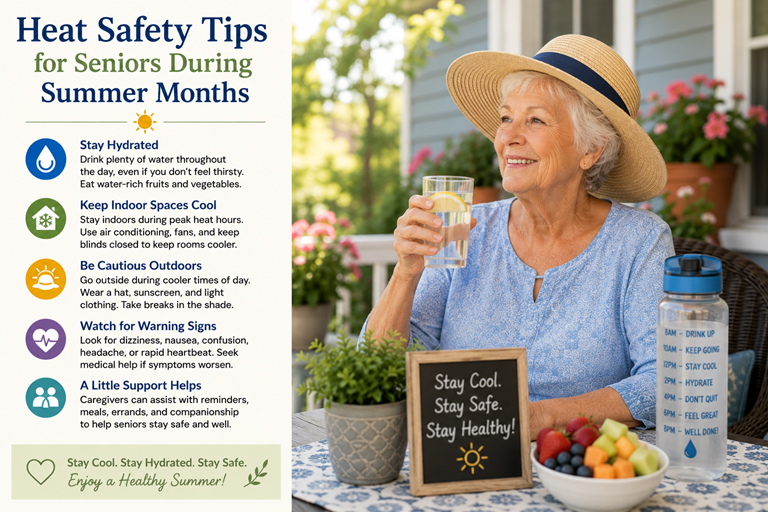
Summer can be a wonderful time of year for older adults. Longer days, sunshine, family gatherings, and time outdoors often lift spirits and encourage activity. But warmer temperatures can also create serious health risks for seniors if precautions are not taken.
As we age, the body becomes less efficient at regulating temperature. Certain medications, chronic health conditions, and reduced mobility can make older adults more vulnerable to heat exhaustion, dehydration, and heat related illness.
The good news is that simple daily habits can help seniors stay safe, healthy, and comfortable throughout the hottest months of the year.
Why Seniors Are More Sensitive to Heat
Many families are surprised to learn how quickly heat can affect older adults.
Seniors may:
Even moderate heat can become dangerous when combined with humidity, physical exertion, or inadequate cooling.
Hydration Is Essential
One of the most important summer safety habits is drinking enough fluids throughout the day. Older adults should not wait until they feel thirsty to drink water.
Helpful hydration tips include:
Families can encourage hydration by making drinks easily accessible and reminding loved ones to sip water regularly.
Keep Indoor Spaces Cool
Air conditioning and proper ventilation play an important role in preventing heat-related illness.
Seniors should try to:
If air conditioning is unavailable, cooling centers, libraries, senior centers, or visits with family members may provide safer environments during extreme heat.
Be Cautious Outdoors
Many older adults enjoy gardening, walking, and outdoor activities during summer. These activities can still be enjoyed safely with a few adjustments.
Helpful precautions include:
Families should also pay attention to air quality alerts and extreme heat advisories during the summer months.
Watch for Signs of Heat Related Illness
Heat exhaustion and heat stroke can become serious very quickly.
Warning signs may include:
If symptoms become severe, immediate medical attention should be sought.
A Little Support Can Make a Big Difference
For many seniors, summer safety simply becomes easier when someone is there to help with daily routines, meals, errands, and reminders.
Assisting Hands caregivers can provide valuable support with hydration reminders, meal preparation, transportation, companionship, and assistance with daily activities that help older adults remain safe and comfortable at home during the summer months. Families often feel peace of mind knowing their loved one has caring support nearby during periods of extreme heat.
Summer should be a season filled with enjoyment, connection, and comfort. With thoughtful precautions and the right support, seniors can safely enjoy all the warmth and beauty the season brings.
The good news is that many falls can be prevented. Fall prevention programs can start by looking around the patient’s…
FORT MYERS FRANCHISE OWNER RECOGNIZED FOR OUTSTANDING CONTRIBUTIONS TO FRANCHISING Franchise Leaders Deliver “Franchising Votes” Message to Congress WASHINGTON, D.C.,…
More and more families across the country are being affected by the growing Alzheimer’s epidemic. As family members take on…
Assisting Hands Fort Myers, the company’s first independent franchise location, celebrated its fifth birthday by moving offices to 1850 Boy…