
Growing Older Leads to Greater Emotional Stability
"Most of the grumpy old men out there are grumpy young men who grew old," Carstensen said. "Aging isn't going...
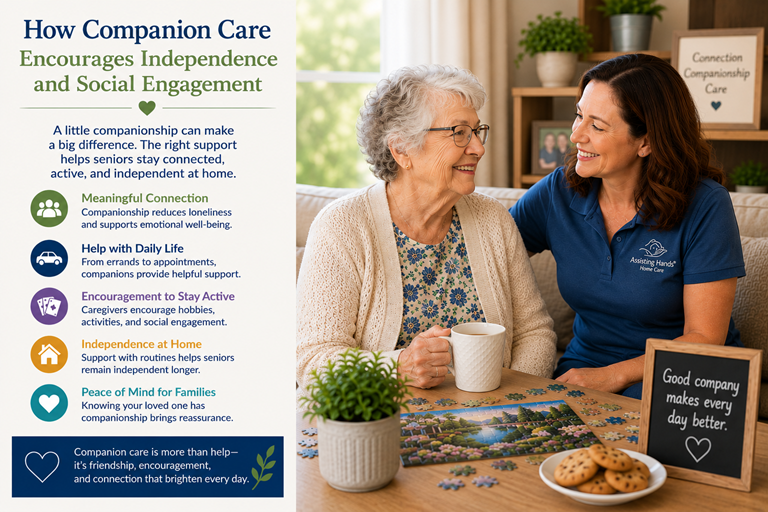
Many older adults want the same thing as they age, to remain independent, stay in their own home, and continue living life on their own terms for as long as possible.
What families sometimes do not realize is that independence does not always mean doing everything alone.
In fact, having the right support can often help seniors maintain independence longer while improving emotional wellbeing, confidence, and quality of life.
Companion care is one of the most valuable forms of support for older adults because it focuses not only on practical assistance, but also on meaningful human connection.
Independence Looks Different as We Age
As seniors grow older, some daily activities naturally become more tiring or difficult. Tasks that once felt simple may require more energy, coordination, or transportation assistance.
That does not mean older adults suddenly lose their desire for purpose, routine, social interaction, or independence.
Companion care helps bridge that gap by offering support while still encouraging seniors to remain active and engaged in their daily lives.
The Emotional Impact of Loneliness
Loneliness and isolation are far more common among seniors than many people realize.
Changes such as retirement, the loss of a spouse, reduced mobility, or no longer driving can significantly limit social interaction. Over time, isolation may affect emotional and even physical health.
Seniors who spend too much time alone may experience:
Sometimes simply having regular conversation and companionship can make a tremendous difference in a senior’s outlook and emotional wellbeing.
Companion Care Supports Daily Life
Companion caregivers provide support that helps seniors continue enjoying everyday routines and activities safely.
This may include:
These simple interactions often become meaningful highlights in a senior’s day.
Encouragement Builds Confidence
One of the greatest benefits of companion care is encouragement.
Seniors are often more likely to stay active, maintain routines, and participate socially when someone is there to provide support and motivation.
Something as simple as:
can help older adults feel more connected, engaged, and confident.
Peace of Mind for Families
Adult children frequently worry about aging parents who spend long periods of time alone. Families may wonder whether their loved one is eating properly, staying safe, or becoming isolated.
Companion care provides reassurance that someone is regularly checking in, offering support, and providing meaningful interaction.
For many families, knowing their loved one has trusted companionship nearby brings enormous peace of mind.
Support That Feels Personal and Comforting
The best companion care never feels cold or clinical. It feels like friendship, encouragement, and compassionate support woven naturally into everyday life.
Assisting Hands caregivers provide companionship and personalized support that helps seniors remain socially connected, emotionally supported, and comfortable at home. Whether helping with routines, providing transportation, or simply sharing conversation and laughter, companion care can help older adults continue enjoying life while maintaining the independence they value most.
Aging should never mean feeling alone. Sometimes the smallest moments of connection create the greatest sense of comfort and joy.
"Most of the grumpy old men out there are grumpy young men who grew old," Carstensen said. "Aging isn't going...
The American Heart Association recently released a report about heart disease in America. The good news is that the death...
You may have read that people who quit smoking can eventually lower their risk of heart disease and stroke. Previous…
Indulging in all those rich holiday treats packs on the pounds, which is no doubt why many of us put…