
Female Heart Specialists Share Tips for Women’s Heart Health
February is American Heart Month, and Friday, Feb. 5 has been named as National Go Red Day, a time to…
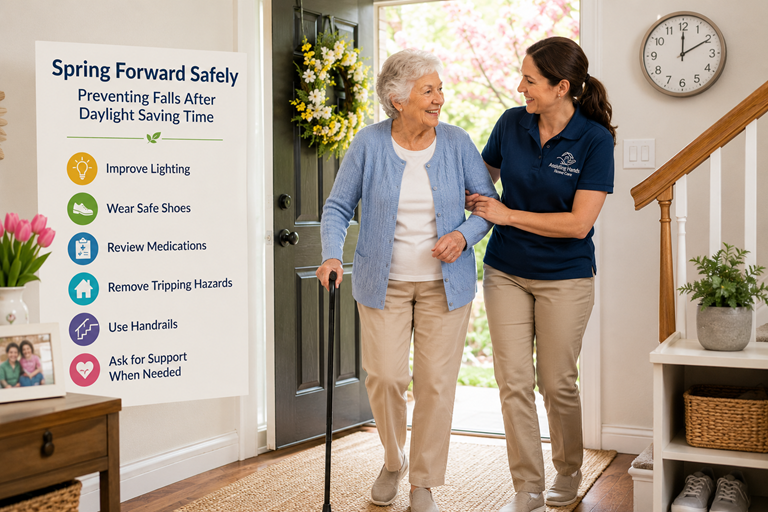
Every spring, we adjust our clocks forward by one hour for Daylight Saving Time. While losing an hour may not seem like a major change, it can actually affect older adults more than many people realize.
Changes in sleep patterns, darker mornings, disrupted routines, and reduced alertness can all increase the risk of falls for seniors. For older adults already dealing with mobility challenges, balance concerns, vision changes, or medication side effects, even small disruptions in routine can create safety concerns.
The good news is that a few simple precautions can help seniors stay safe and confident during the transition into spring.
Why Falls Become More Common This Time of Year
Many seniors rely heavily on routine. Changes in sleeping habits and daily schedules can temporarily affect coordination, concentration, and energy levels.
After the time change, older adults may experience:
These factors may seem minor, but together they can increase the likelihood of slips and falls both inside and outside the home.
Improve Lighting Throughout the Home
Good lighting is one of the simplest and most effective ways to help prevent falls.
As daylight hours shift, seniors may find certain rooms darker than usual during times they are accustomed to moving around the house.
Helpful lighting improvements include:
Motion sensor lighting can also be especially helpful during nighttime bathroom trips.
Watch for Spring Hazards Outdoors
Spring weather often brings wet sidewalks, puddles, uneven pavement, and leftover winter debris that can become tripping hazards.
Encourage seniors to:
Even gardening activities and spring cleanup can create unexpected fall risks if seniors overreach, lift heavy items, or use unstable step stools.
Review Medications and Health Changes
Some medications can increase dizziness, drowsiness, or balance issues. Seasonal allergies and illness may also affect energy and coordination.
Families should pay attention to:
If concerns arise, discussing them with a physician can help identify possible adjustments or solutions.
Keep Everyday Items Within Reach
Falls often happen when seniors bend too far, climb, or try to reach awkwardly for items around the home.
Simple adjustments can make daily life safer:
These small changes can greatly reduce fall risks while helping seniors remain independent.
A Little Support Goes a Long Way
Sometimes preventing falls is simply about having an extra set of helping hands nearby. Assistance with errands, household tasks, transportation, meal preparation, and mobility support can help older adults move more safely through daily routines.
Assisting Hands caregivers provide compassionate support that helps seniors remain safe, comfortable, and confident at home throughout seasonal transitions. Families often find peace of mind knowing their loved one has someone there to provide encouragement, companionship, and an extra layer of safety when needed most.
Spring is a season of renewal and fresh beginnings. With a few thoughtful precautions, older adults can enjoy the season safely while maintaining the independence and routines they value most.
February is American Heart Month, and Friday, Feb. 5 has been named as National Go Red Day, a time to…
Supporting spouse caregivers When we think of a typical family caregiver, most of us picture a middle-aged adult child—perhaps a…
“Mom, we’d all feel a lot better if we knew you had some help.” One of the great joys of…