
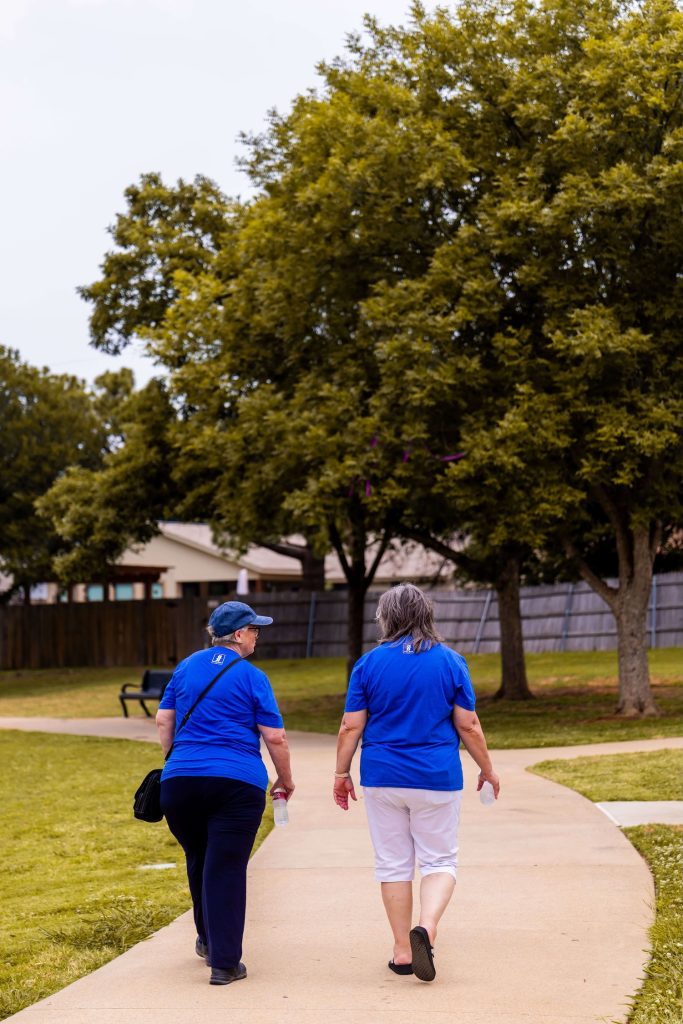
Falls Happen to Seniors… Why?
 Falls among seniors happen, and they can have a significant impact on the lives of our seniors, and according to the National Institute of Health, a loss of independence, chronic pain, and reduced quality of life.
Aging naturally increases the risk of us falling. This is because of a number of factors: our bones become more fragile, our muscles are not as strong as they used to be; our reaction time slows down; when our vision, inner ear, and sense of our body in space decline, so does our sense of balance, placing us at high risk of falling. Research suggests that taking a number of medications (5 or more is called “polypharmacy”) also increases hospitalization risks significantly. Diabetics among us can suffer from peripheral neuropathy, which decreases the sensation in your feet.
Put together, these risks compound. This is why our aging bodies are much more susceptible to falling. Thankfully, because these are known, the reasons why we fall can be mitigated.
How Do I Know That I Am at Risk of a Fall? Am I a Fall Risk?
Because falls have detrimental effects on our lives, and because they are part of the normal aging process does not mean there is nothing we can do to mitigate these. On the contrary.
In this blog, we’ll review all the things that we can put in place to prevent falls, as well as recover from falls when they occur.
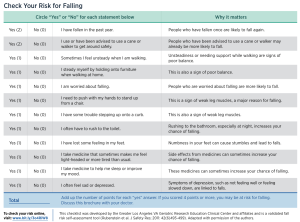
There are 2 great places to visit to evaluate your fall risk.
The Falls Free CheckUp from the National Council on Aging takes a couple minutes to complete.
And the Center for Disease Control and Prevention (CDC) offers this similar fall risk questionnaire.
Fall Prevention is a Thing
There are several things that can cause a fall. We briefly reviewed the causes of one’s aging body. But we should also consider the “environmental” factors of your home. Is your home optimized to prevent falls?
Work on both aspects: be your own first and best line of defence against falling, and optimize your house.
Strengthen You!
- Visit your doctor, assess your health, and talk openly about your fall risk
- Talk to your doctor about your medications to avoid polypharmacy if possible
- Check your eyesight, your balance, and your feet
- For women especially, check your bone density to see where you fall on the spectrum of osteopenia and osteoporosis
- Wear appropriate, comfortable shoes that keep you stable regardless of any condition, but especially if you have little to no sensation in your feet
- Use a cane or a walker
- Exercise your muscles to strengthen your legs and your balance. Chair yoga, chair exercises, pilates, tai chi are excellent exercises.
Optimize Your House!
- Get rid of tripping hazards, from clutter, curled-up rugs, to cords, etc..
- Upgrade your lighting and make sure that it is adequate for your vision
- Move to non-slip mats in the bathroom
- Have grab bars placed in the bathroom to hold on to
- Install handrails outside
- Ensure your stairs handrails are in working order
Finally, you can also enroll in technology to help: various technologies can do a mix of fall detection and fall prevention. We’ll cover this topic in a future blog.
Once You’ve Experienced a Fall, How Do You “Bounce Back”?
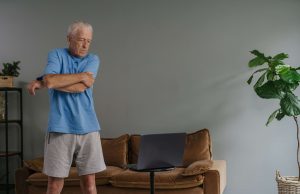 Depending on the severity of your fall, you may spend some time in a hospital. The road to recovery includes a stay in a rehabilitation facility for another few weeks and being released home, often with some home health and physical therapy (PT). The hospital, rehab facility, and home health will all help you get stronger and better.
Often though, home health only comes a couple times a week, which is insufficient to get stronger, leaving you at risk of rehospitalization, loss of confidence, and fear of falling again. Once you’ve fallen once, or more times, you will become weary of falling again. We understand it. We live it. It is time to put all the chances on your side with some loving home care.
Assisting Hands Home Care Increases Your Chances of a Better Recovery, Live an Independent Life, Keep You Safe at Home as Is Your Desire
This is why Home Care is a crucial part of avoiding hospital readmissions and allowing you to have the support you need, from:
- A caregiver watching you walk and move around the home, ready to assist when needed,
- A caregiver assisting you transfer in & out of bed and in the bathroom,
- A caregiver gently nudging you to do strengthening exercises on the days the PT is not coming
- A caregiver giving you back the confidence that you can safely walk and move around your home
If some household chores are becoming too heavy, a caregiver can assist you in:
- Doing the laundry
- Making the bed and changing the sheets
- Getting the garbage out
- Preparing meals
- Cleaning up the kitchen and living areas
Starting home care before a fall is also advisable, as it will reduce your fall risk from the start.
Local Resources
As you know, we never forget to give you a window into local resources. Check out Fall Prevention at the Utah Commission on Aging for great ideas.
Also check out the University of Utah information on Preventing Falls for Older Adults.
FAQ
At What Age Do Elderly Start Falling?
According to the CDC, about 1 in 4 older adults report falling every year, and in Utah, this percentage is 30%.
And according to the National Institute of Health, the chances of fall increase with age: from 28% of adults over 65, to between 32% and 42% of those over 70, and exceeding 50% for individuals over 80.
In 2021, emergency departments recorded nearly 3 million visits for older adult falls.
What Are the 3 Key Questions for Fall Risk?
The CDC uses this questionaire to evaluate the risk of falling. Out of these 12 questions, the top 3 are:
- Have you fallen in the past year?
- Do you feel unsteady when standing or walking?
- Do you worry about falling?
Answering “yes” to any of these three questions indicates an increased risk of falling and suggests the need for a more comprehensive fall risk evaluation.
The Falls Free CheckUp from the National Council on Aging takes a couple minutes to complete.
What Is the Best Recommendation for Fall Prevention in the Elderly?
- Keep active and strong, with appropriate balancing and strengthening exercises
- Enroll your doctors’ help in checking your overall fall risk and health, including checking your vision, reviewing your medications,
- Reduce tripping hazards and upgrade your home to better lighting, new handrails, grab bars etc..
What Is the Single Most Effective Intervention to Prevent Most Falls in Older Adults?
And the winner is…. Exercise, as defined by the CDC. What type of exercise? The ones focused on balance, gait, and strength training.
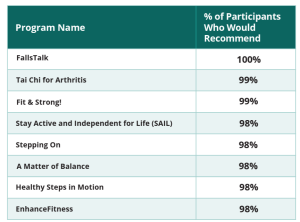 There are many programs that exist to prevent our elders from falling. Check out the extensive list from the National Council on Aging.
We also recommend checking out your Salt Lake County Aging Services for the free exercise classes they offer.
Find Fall Prevention For Seniors in Murray, UT
A fall doesn’t have to mean the end of independence — but recovering well and staying safe at home requires the right support. At Assisting Hands Home Care, we understand that the days between physical therapy visits are just as important as the sessions themselves. Whether you’re working to prevent a fall before it happens or rebuilding your strength and confidence after one, our compassionate caregivers are here to support you. From helping you move safely through your home to gently encouraging your strengthening exercises on the days your PT isn’t there, we provide the consistent, loving presence that makes all the difference. If you or a loved one could benefit from fall prevention for seniors in Murray, UT, we’d love to talk. You can start by following these simple steps:
- Reach out for a free consultation.
- Meet with our caring team
- Start receiving the support you deserve!
Other Services Offered with Assisting Hands Home Care
Assisting Hands Home Care in Greater Murray, we offer other forms of support in addition to Fall Prevention. We also provide a full range of professional, compassionate in-home care services designed to help seniors live with greater comfort, safety, and peace of mind in the place they call home.
Services we offer include respite care services, Parkinson’s Home Care, Stroke Recovery Home Care, and Orthopedic Home Care Services. We also provide Alzheimer’s and Dementia care, Personal Care & Grooming, Meal Preparation, Light Housekeeping, and Grocery Shopping & Errands to support the day-to-day needs of seniors.
Additionally, we also offer Transitional Care, Hospice Support Services, and Coordination of Care services, which can also provide support. We also proudly serve Veterans through our Veterans Aid & Assistance program, and offer Companionship services. Whatever your family’s needs look like, Assisting Hands is here to help. Explore our full list of services or contact us today for support!

