

Staying hydrated is essential year-round, not just during the sweltering summer months. When cold weather sets in, it can be easy to forget about drinking enough fluids, but maintaining proper hydration is especially important for older adults. Dehydration in the winter can lead to a range of health issues, including fatigue, dizziness, and even more serious complications. Here’s why keeping hydrated matters just as much in freezing temperatures as it does on scorching summer days and how it supports overall health and well-being throughout the year.
Why is Hydration Important?
Water supports nearly every bodily function, from temperature regulation to the transport of nutrients and oxygen. In fact, most of the body is made up of water. On average, the human body contains 60% water, but varies slightly depending on age, gender, and hydration levels.
Drinking enough fluids allows for temperature regulation by producing sweat. The blood contains mostly water, which carries oxygen, nutrients, and glucose to cells. Water helps the body eliminate waste through urination. During digestion, water moistens food and is necessary to break down meals.
Without consuming enough fluids, older adults are vulnerable to a host of health issues, such as headaches, constipation, and kidney stones. Furthermore, a lack of sufficient hydration levels can lead to reduced energy levels, a decline in cognitive health, and poor skin health.
Why does Hydration Matter in Cold Weather?
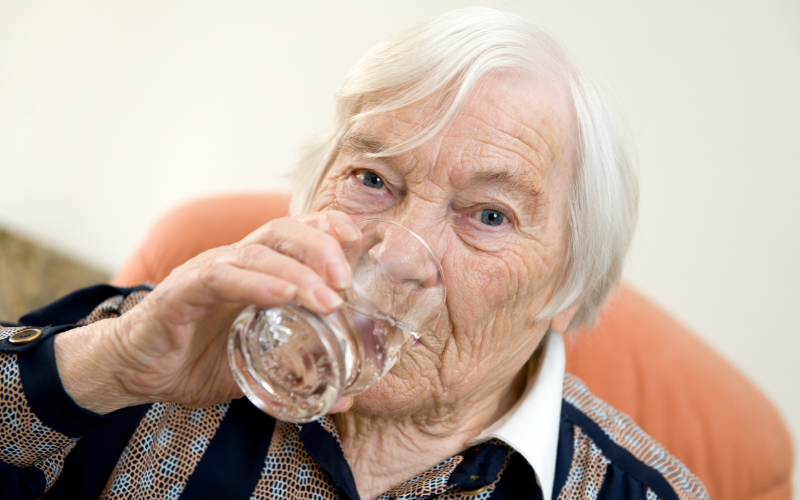
It’s clear the body needs water to function. While staying hydrated in the heat and dryness of summer is an obvious necessity, drinking fluids during a cold winter is equally critical. Without adequate hydration, the aging body lacks the fluids necessary to function.
The following are factors that can lead to dehydration in the winter:
- Sweating and Urination: Water is lost through a variety of daily activities, from sweating to urination and having bowel movements. Older adults may fail to notice when they sweat during cold weather, as they are bundled up in thick, warm clothing. Yet their need for fluids does not decrease in the frigid months.
- Neglecting to Hydrate: Seniors may neglect to hydrate in the winter due to a variety of factors. Their thirst sensation naturally diminishes with age, so they do not drink enough fluids to replenish those they have lost, resulting in dehydration. Studies show 40% percent of aging adults are chronically dehydrated.
- Chronic Health Conditions: Chronic health conditions also make it harder for the elderly to stay hydrated. Some medications, like diuretics and laxatives, have the same effect, causing older people to become dehydrated. It’s important that senior citizens make the extra effort to drink enough fluids throughout the long winter days.
- Dry Air: Older adults are at risk of dehydration in winter because of the dry indoor air. Heating systems reduce the moisture levels in the air, increasing the rate of water loss in the body. The dry air draws out moisture from the skin, leading to increased fluid loss.
- Breathing: Moisture is also lost as the elderly breathe. Cold temperatures combined with extra layers of clothing cause an increase in respiration. The added winter clothing increases perspiration and results in the loss of bodily fluids, both of which seniors may fail to notice.
What are Symptoms of Dehydration?
Symptoms of dehydration in older adults, such as confusion and fatigue, are often mistaken for normal signs of aging. That’s why it’s crucial for caregivers to recognize these warning signs and ensure seniors receive enough fluids to prevent serious health complications.
One clear indicator of dehydration is dark-colored urine; a well-hydrated body typically produces light-yellow or clear urine. Other common symptoms include dry mouth, muscle cramps, constipation, chapped lips, dry skin, and sudden fatigue.
Dehydration can also affect mood and cognition, leading to dizziness, confusion, and irritability. If left untreated, it can contribute to more serious health problems, including heart issues, urinary tract infections (UTIs), and an increased risk of falls. In severe cases, dehydration may require hospitalization.
How do Seniors Stay Hydrated in Winter?
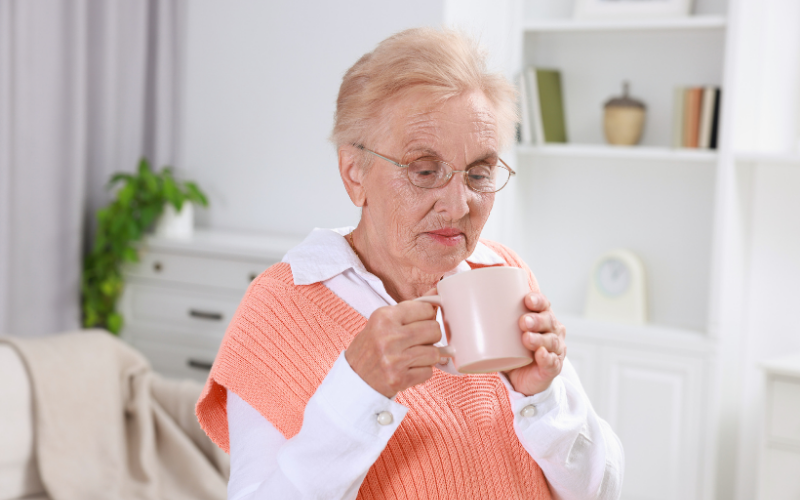
Caregivers should remember that seniors often have a reduced sense of thirst, so it’s important to offer hydrating beverages regularly throughout the winter months. If an older adult has a health condition that limits fluid intake, consult their physician, who can help create a safe and effective hydration plan.
Drink Plenty of Water
A general guideline for seniors is to aim for about eight glasses of water each day, roughly 64 ounces, or the equivalent of a two-liter pitcher. Encourage small, frequent sips throughout the day. If a senior forgets to drink, pair water with meals or medications to help maintain consistent hydration.
Water is the best choice for hydration, as it’s easiest for the body to absorb. If plain water isn’t appealing, try adding a twist of lemon or a few berries for flavoring and a boost of vitamin C.
Warm Hydrating Beverages
Warm beverages can also help seniors stay hydrated during colder months. Options like hot cocoa made with low-fat milk can be enjoyed in moderation, while warm apple cider provides a comforting sweetness along with antioxidants and vitamin C. Herbal teas, such as chamomile, ginger, or lemongrass, are also excellent hydrating choices that can soothe and refresh.
Senior Home Care from Assisting Hands

Winter is just around the corner, and it’s more important than ever for seniors to stay properly hydrated. If your aging loved one struggles to drink enough fluids, a compassionate caregiver from Assisting Hands Home Care can help ensure they remain healthy and well-hydrated throughout the season.
Our professional caregivers assist seniors with a wide range of daily tasks, from grocery shopping and meal preparation to serving nutrient-rich meals and beverages. By socializing with seniors during mealtimes, caregivers help encourage better eating habits and consistent hydration.
In addition to nutrition support, our caregivers assist with hygiene tasks, including toileting, grooming, and bathing. They stay alert for signs of dehydration, such as dark-colored urine, provide medication reminders, perform light housekeeping, and offer transportation or accompaniment to medical appointments.
From meaningful companionship to fall prevention, our comprehensive non-medical senior home care services support seniors year-round. We offer specialized care, including Alzheimer’s care, 24-hour care, and live-in care, all tailored to meet the unique needs of your loved one.
This winter, trust Assisting Hands Home Care to provide attentive, personalized care for your elderly family members. Proudly serving Park Ridge, Niles, Norridge, Harwood Heights, IL and the surrounding areas, we invite you to call at (847) 448-0844 for a complimentary in-home consultation today and discover how quality senior care can enhance your loved one’s well-being.

