

Aggression in dementia can be one of the most distressing challenges families and caregivers face. A loved one who was once gentle and calm may suddenly become angry, verbally abusive, or physically aggressive. These moments can feel frightening, confusing, and emotionally overwhelming.
Understanding why aggression happens—and how to respond safely and compassionately—can make a meaningful difference for both the person living with dementia and those caring for them.
Dementia in the United States: A Growing Reality
Dementia affects millions of families across the United States, and the number continues to grow as the population ages. Alzheimer’s disease is the most common form of dementia, followed by vascular dementia, Lewy body dementia, and frontotemporal dementia.
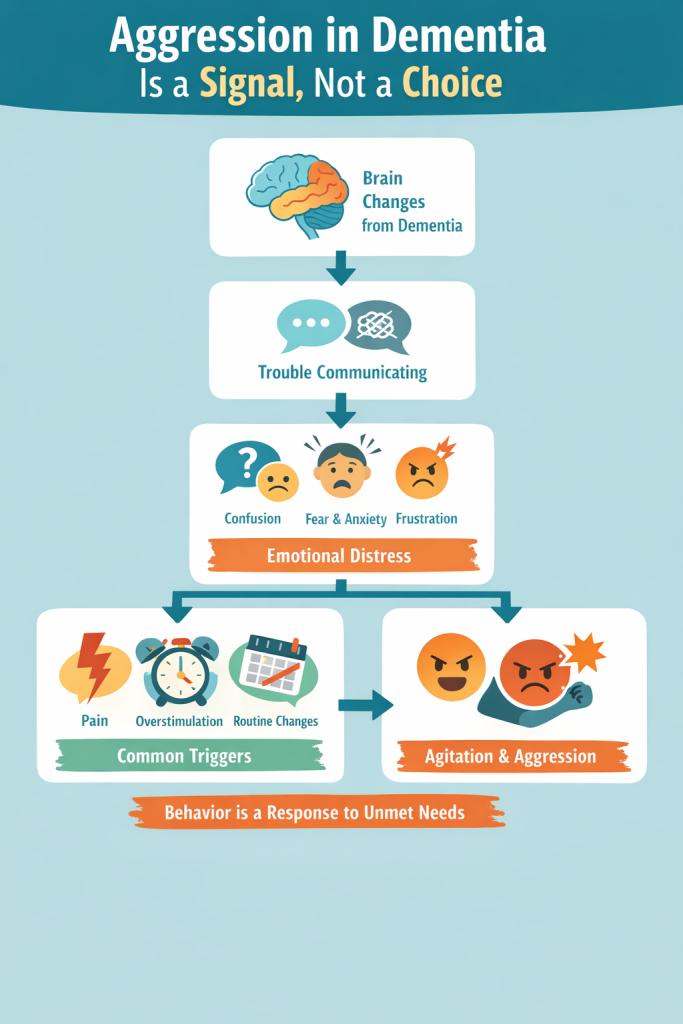
As dementia progresses, changes in the brain affect memory, reasoning, communication, and emotional regulation. Behavioral symptoms, including agitation and aggression, are especially common in the middle to later stages of the disease. These behaviors are not intentional acts of harm—they are often signals that something feels confusing, frightening, or overwhelming to the person experiencing them.
Why Do Dementia Patients Become Aggressive?
Aggression in dementia is usually a form of communication rather than intentional behavior. As the disease advances, individuals lose the ability to clearly express discomfort, fear, confusion, or unmet needs. When words are no longer accessible, behavior becomes the message.
Common triggers include physical pain, fatigue, hunger, overstimulation, changes in routine, or feeling rushed or misunderstood. Even well-intended caregiving actions—such as bathing, dressing, or repositioning—can feel threatening to someone who no longer understands what is happening. Viewing aggression as a response to distress helps caregivers move from reacting emotionally to responding supportively.
What Does Aggression Look Like in Dementia?
Aggression does not always appear suddenly or look the same from person to person. In many cases, it develops gradually and presents through behavioral changes before becoming more intense.
Aggressive behaviors may include:
- Yelling, swearing, or verbal outbursts
- Hitting, pushing, or kicking
- Resisting personal care such as bathing or dressing
- Throwing objects
- Restlessness, pacing, or clenched fists
These behaviors often escalate when a person feels unsafe, misunderstood, or overwhelmed, making early recognition especially important.
How to Prevent Aggression in Dementia Patients?
Aggressive behavior in dementia is often preventable when caregivers focus on reducing stress and maintaining a sense of safety and familiarity. Prevention matters because once agitation escalates, it becomes harder for the person to self-regulate or understand reassurance.
Consistency plays a major role. Following a predictable daily routine helps reduce confusion and anxiety, particularly for individuals with memory loss. Keeping the environment calm—by limiting loud noises, bright lights, and crowded spaces—can also reduce overstimulation, a common trigger for dementia-related aggression.
Physical comfort is equally important. Untreated pain, fatigue, hunger, dehydration, or the need to use the bathroom can quickly lead to frustration when communication is impaired. Addressing these needs proactively often reduces irritability and emotional outbursts. Caregivers who learn a loved one’s habits, preferences, and early warning signs are better able to anticipate triggers and adjust care before frustration builds.
Can Communication Help Prevent Aggressive Behavior in Dementia?
Clear, calm communication can significantly reduce aggression in dementia because many outbursts begin when a person feels confused, rushed, or misunderstood. As dementia progresses, the brain struggles to process complex language, multiple instructions, or sudden changes.
Using short, direct sentences and a gentle tone can help. Offering one request at a time, allowing extra time for responses, and approaching from the front with reassuring body language all support a sense of safety. Many people with dementia respond more to tone and facial expression than to the exact words being used.
It is also important to avoid correcting or arguing, even when confusion is present. Trying to “fix” reality in the moment often increases frustration. Validating the emotion—acknowledging fear or distress—and gently redirecting attention to something calming or familiar can prevent agitation from escalating into aggressive behavior.
When Aggression May Signal a Medical Issue
Sudden or worsening aggression is sometimes linked to medical concerns rather than dementia progression alone. Infections, medication side effects, dehydration, unmanaged pain, or sleep disturbances can all contribute to behavioral changes.
If aggression appears abruptly or intensifies without an obvious trigger, it is important to consult a healthcare provider. Identifying and treating underlying medical issues can significantly improve behavior and overall well-being.
How In-Home Dementia Care Can Help
Professional dementia caregivers are trained to recognize behavioral triggers and respond using proven de-escalation techniques. In-home care provides structure, consistency, and calm interactions that can reduce aggressive episodes over time.
Caregivers experienced in dementia care understand how to adjust routines, communication, and care tasks to better match a person’s abilities and comfort level. In addition to improving safety, in-home support gives family caregivers much-needed relief, helping prevent burnout while allowing loved ones to remain in familiar surroundings.
Supporting the Caregiver’s Emotional Well-Being
Caring for someone with dementia-related aggression can take a heavy emotional toll. Feelings of guilt, frustration, sadness, and grief are common—and valid.
Caregivers need support just as much as the person living with dementia. Education, respite care, and emotional support help caregivers maintain their own health and continue providing compassionate, patient-centered care.
Final Thoughts
Aggression in dementia is a symptom of a complex neurological disease—not a personal choice. With understanding, patience, and the right support, families can navigate these moments more safely and compassionately.
No caregiver should feel they have to manage this alone. Early education and professional support can make a meaningful difference for both the person living with dementia and those who care for them.

