
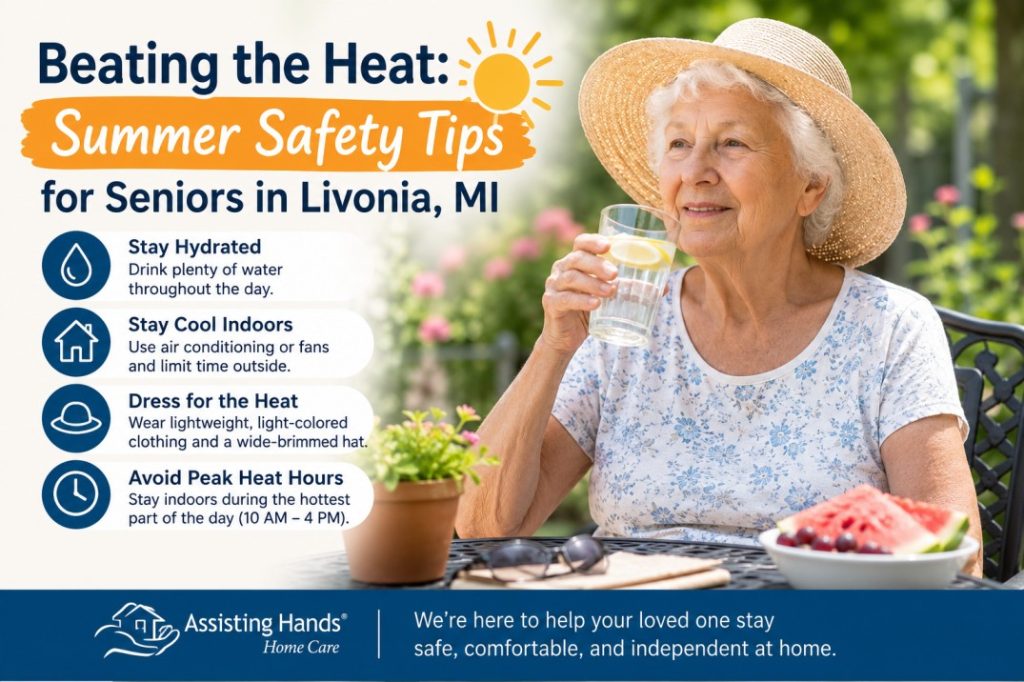
Michigan winters get all the attention when it comes to senior safety, but summer carries its own real risks — and they’re often easier to miss. Heat doesn’t announce itself the way ice does. A senior can be overheating or dehydrated well before it looks like an emergency, which is exactly why families in Livonia should keep an eye on a few specific things as temperatures climb this July.
Why Summer Heat Is Riskier for Seniors
As we age, the body becomes less efficient at regulating temperature and recognizing thirst, which means:
- Dehydration can set in without obvious thirst cues — many seniors simply don’t feel thirsty until they’re already low on fluids
- Certain medications increase heat sensitivity — some blood pressure medications, diuretics, and other common prescriptions can make it harder for the body to cope with heat
- Chronic conditions compound the risk — heart disease, diabetes, and COPD can all make heat exposure more dangerous
- Reduced mobility can mean less ability to move to a cooler space or adjust clothing/fans independently
Warning Signs of Heat-Related Illness
Families should watch for:
- Heavy sweating or, conversely, dry skin with no sweating at all
- Dizziness, weakness, or confusion
- Rapid pulse or headache
- Nausea
- Skin that feels hot and dry, or cool and clammy
If you notice any of these signs, especially confusion or a hot, dry appearance, this can indicate heat stroke and needs immediate medical attention — don’t wait to see if it passes on its own.
Practical Summer Safety Steps
- Keep the home cool — check that AC units are working properly before a heat wave hits, not during one
- Encourage regular fluids — water throughout the day, not just when thirsty, since thirst cues fade with age
- Time outdoor activities wisely — mornings or evenings, avoiding peak heat between roughly noon and 4 p.m.
- Dress for the weather — lightweight, breathable clothing and a hat for any time outside
- Check in more often during heat waves — a quick daily call or visit matters more when temperatures spike
When a Loved One Needs More Support Than a Checklist Can Provide
Some families notice a parent skipping meals because it’s “too hot to cook,” avoiding the AC to save on the electric bill, or getting quietly dehydrated because no one’s there to remind them to drink water throughout the day. These are exactly the kinds of small, easy-to-miss patterns that add up over a summer.
How Assisting Hands Supports Families in Livonia This Summer
Our caregivers help with the everyday things that keep a loved one safe when temperatures rise- meal preparation so cooking in a hot kitchen isn’t a daily task, hydration reminders throughout the day, transportation to appointments in air-conditioned comfort, and companionship so no one is managing the heat alone. We’re also familiar with the Livonia area, including coordinating around appointments at Trinity Health Livonia Hospital when needed.
Frequently Asked Questions
How much water does an elderly person actually need in summer heat?
Needs vary by individual health and medications, so this is worth discussing with their doctor — but the key is regular fluids throughout the day rather than waiting until thirsty, since thirst cues become less reliable with age.
My parent doesn’t want to run the AC to save money. How do I address this?
This is common. Framing it around safety rather than comfort sometimes helps, and a caregiver present during the day can also help monitor the situation and encourage cooling measures.
Can a caregiver help short-term, just to get through a heat wave?
Yes. Care plans are flexible, and some families bring in extra support just during particularly hot stretches.

