
As people age, managing multiple prescriptions can become increasingly complex. Many seniors take several medications each day, often on different schedules and with specific instructions that can be easy to overlook or mix up. Without proper management, the risk of missed doses, accidental double dosing, or harmful drug interactions increases significantly. These medication errors can lead to serious health complications, including hospitalizations, worsened chronic conditions, and reduced overall well-being.
Home care plays an important role in reducing these risks by providing consistent support with medication routines. Caregivers help seniors stay on track by offering timely reminders, organizing pill schedules, and ensuring medications are taken exactly as prescribed. With this added layer of oversight, older adults can maintain greater independence while also improving safety, consistency, and peace of mind for both themselves and their families.
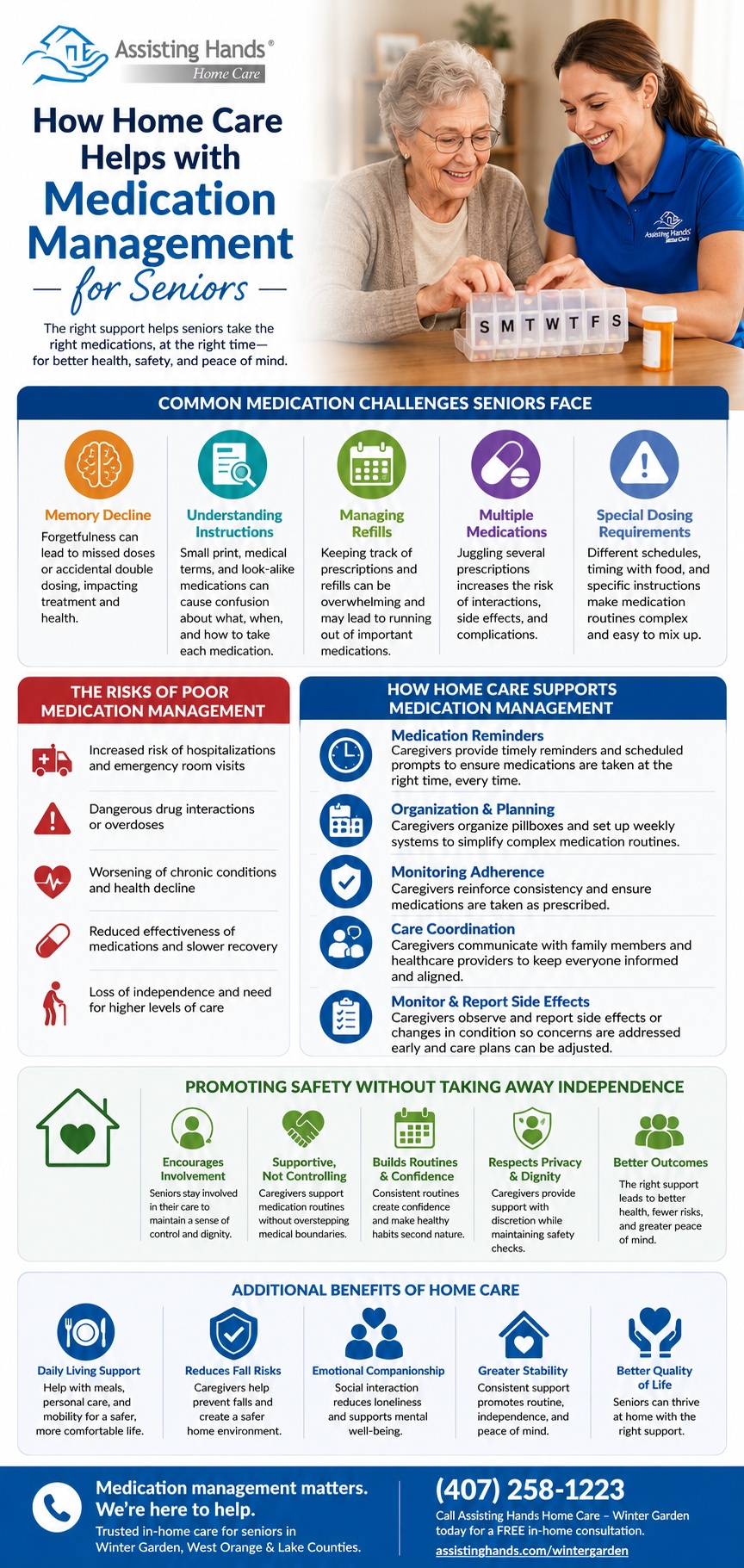
Common Medication Challenges Seniors Face
For many older adults, managing medications is not as simple as taking a daily pill or two. Seniors often juggle multiple prescriptions for chronic conditions such as high blood pressure, diabetes, arthritis, or heart disease. Each medication may come with its own dosing schedule, special instructions, and timing requirements, making adherence increasingly difficult to manage without support.
- Memory decline: Even mild forgetfulness can lead to missed doses or accidental double dosing, both of which can reduce the effectiveness of treatment or create serious health risks. Over time, inconsistent medication use can cause symptoms to worsen or lead to avoidable medical complications.
- Understanding instructions: Seniors may also struggle with reading labels or understanding prescription instructions, especially when medications use small print, medical terminology, or look-alike packaging. This can lead to confusion about when and how to take each medication correctly.
- Medication management: Managing refills and staying on top of pharmacy coordination can become overwhelming. Running out of a critical medication or taking it incorrectly due to a delay in refills can disrupt treatment plans and negatively impact health.
- Side effects and similarities between medications: When multiple prescriptions are involved, it can be difficult to distinguish which medication is causing certain symptoms or whether drugs may be interacting in harmful ways.
These challenges highlight just how easily medication routines can become complicated and why additional support is often essential for senior safety and well-being.

The Risks of Poor Medication Management
When medications are not taken correctly, the consequences for seniors can be serious and sometimes life-threatening. One of the most immediate risks is an increased likelihood of hospitalizations and emergency room visits. Even a single missed dose or accidental double dose can quickly lead to complications that require urgent medical attention.
Poor medication management also raises the risk of dangerous drug interactions or overdoses, especially when multiple prescriptions are involved. Without careful monitoring, certain combinations of medications can negatively interact, leading to harmful side effects or toxic reactions that may not be immediately recognized.
Over time, inconsistent or incorrect medication use can cause chronic conditions such as diabetes, heart disease, or high blood pressure to worsen. When treatments are not followed as prescribed, symptoms may become harder to control, leading to a decline in overall health and stability.
In addition, medications are only effective when taken consistently and as directed. Skipping doses or taking them at the wrong times can reduce their effectiveness, meaning treatments may not deliver the intended results. This can slow recovery, increase discomfort, and lead to further medical complications.
These preventable issues can contribute to a loss of independence. As health declines due to medication errors, seniors may require more frequent medical intervention or higher levels of care than would have otherwise been necessary.
How Does Home Care Support Medication Management?
Home care provides practical, day-to-day support that helps seniors stay safe and consistent with their medication routines.
- Medication reminders: One of the most important ways caregivers assist is through medication reminders and scheduled prompts. These reminders help ensure that prescriptions are taken at the correct times, reducing the risk of missed or double doses and keeping treatment plans on track.
- Medication organization: Caregivers can also assist with organizing pillboxes or setting up weekly medication systems. By sorting medications in advance, they help simplify what can otherwise be a confusing and overwhelming routine, especially for seniors managing multiple prescriptions.
- Ongoing monitoring of medication adherence: Caregivers help reinforce consistency, making sure medications are taken as directed and routines remain stable from day to day. This added layer of support can significantly improve safety and effectiveness.
- Care coordination: In many cases, caregivers also serve as an important communication link between seniors, family members, and healthcare providers. They can help coordinate updates, share concerns, and ensure that everyone involved in the senior’s care is informed and aligned.
- Monitor and report side effects: Caregivers are trained to observe and report side effects or changes in condition. Whether it’s a new symptom, a reaction to medication, or a noticeable shift in behavior or health, this early awareness allows families and medical professionals to respond quickly and make necessary adjustments to care plans.
Promoting Safety Without Taking Away Independence
Effective medication support is not about taking control away from seniors, it’s about helping them maintain their independence while reducing risk. A key part of home care is encouraging older adults to stay actively involved in their own care. Whether it’s confirming their daily medications or participating in organizing pillboxes, this involvement helps seniors maintain a sense of control and dignity.
At the same time, caregivers provide essential support without overstepping medical boundaries. They do not change prescriptions or make clinical decisions, but they help ensure that medications are taken correctly and consistently as prescribed. This balance allows seniors to benefit from assistance while remaining at the center of their own care plan.
Home care also focuses on building routines that foster confidence and consistency. When medication schedules are predictable and well-supported, seniors are more likely to feel secure in managing their health. Over time, these routines become second nature, reducing stress and improving adherence.
Equally important is respecting privacy while still maintaining safety checks. Caregivers approach medication support with discretion and respect, ensuring that seniors feel comfortable and supported rather than monitored or restricted. This thoughtful balance helps create a safe environment where independence is preserved and health needs are reliably met.
The Role of Communication in Medication Safety
Clear and consistent communication is a cornerstone of safe medication management for seniors. Home care caregivers help bridge the gap between seniors, families, and healthcare providers by keeping families informed about medication adherence and any concerns that may arise. This ongoing communication gives loved ones peace of mind and ensures they stay aware of important changes in a senior’s routine or condition.
When issues do come up, such as missed doses, side effects, or changes in health, caregivers can promptly notify family members and, when appropriate, medical professionals. This quick response helps prevent small concerns from becoming larger health complications and supports timely adjustments to care plans.
Caregivers also play an important role in helping seniors better understand what each medication is for. By reinforcing education provided by doctors or pharmacists, they can reduce confusion and help seniors feel more confident and informed about their treatment plans.
In addition, home care support encourages better communication with healthcare providers. With accurate observations and updates from caregivers, families and doctors can have more productive conversations, leading to better-informed decisions about prescriptions, dosage adjustments, and overall care strategies.
Additional Benefits of Home Care Beyond Medication Management
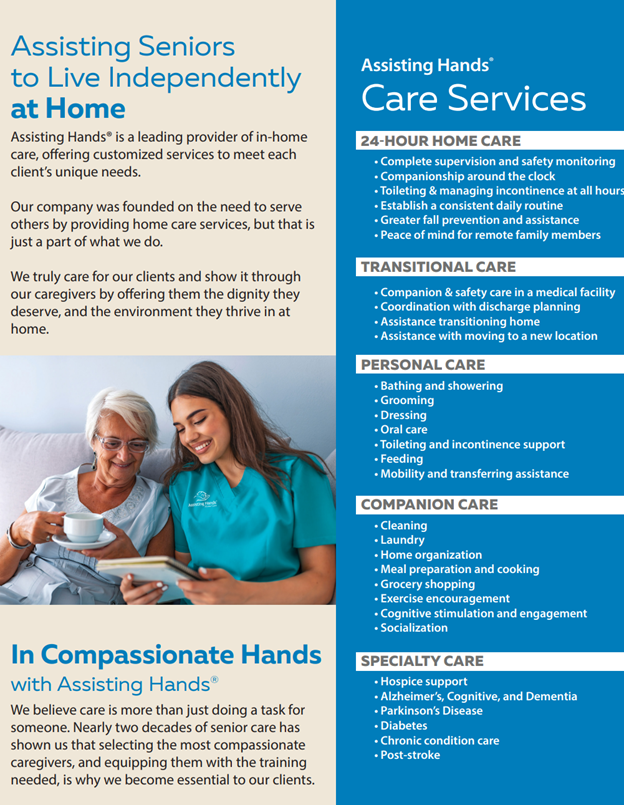
While medication support is a critical part of senior care, home care offers a much broader range of benefits that contribute to overall health and well-being. Caregivers also assist with daily living activities such as meal preparation, personal hygiene, and mobility support. These essential tasks help seniors maintain a safe, comfortable routine while reducing the physical strain of everyday activities.
Another important benefit is a reduced risk of falls and accidents at home. Caregivers can help identify potential hazards, encourage safe movement throughout the home, and provide hands-on assistance when needed. This added layer of supervision and support significantly lowers the likelihood of injuries, which are a leading cause of hospitalization among older adults.
Beyond physical care, home caregivers provide valuable emotional companionship. Regular social interaction helps reduce feelings of loneliness and isolation, which are common among seniors living alone. This connection can have a positive impact on mental health, mood, and overall outlook on life.
Together, these services contribute to a greater sense of stability and routine. When seniors receive consistent support in multiple areas of daily living, they are better able to maintain independence, enjoy a higher quality of life, and feel more secure in their own homes.
Why Medication Support Matters at Home
Proper medication management is one of the most important factors in maintaining a senior’s health, independence, and overall quality of life. As we’ve seen, the challenges of managing multiple prescriptions, remembering complex schedules, and avoiding dangerous interactions can quickly become overwhelming without the right support. Fortunately, with the help of professional caregivers, seniors can stay safe, consistent, and confident in their daily routines.
Home care services provide more than just reminders, they offer peace of mind. From organizing medications and monitoring adherence to communicating with families and healthcare providers, caregivers help ensure that nothing is overlooked. This consistent support reduces health risks while allowing seniors to continue living comfortably in their own homes.
Professional home care is an excellent option for families looking for trusted assistance. Assisting Hands Home Care provides compassionate senior care services designed to support safety, independence, and well-being right at home. Our trained caregivers can help with medication reminders, daily living support, and personalized care tailored to each individual’s needs.
With the right care in place, seniors can enjoy greater confidence, families can gain peace of mind, and medication routines can become safer and more manageable every day. Call Assisting Hands Home Care – Winter Garden at (407) 258-1223 for a free in-home consultation. Let’s create a personalized care plan to help your senior loved ones in Winter Garden, FL and the surrounding areas in West Orange and Lake Counties.

Medication Management FAQs
How does medication management senior care help family caregivers?
Medication management support from home care services helps relieve the stress and responsibility placed on family caregivers. Instead of constantly worrying about whether medications are taken correctly, family members can rely on trained caregivers to provide reminders, organize prescriptions, and monitor adherence. This reduces caregiver burnout, improves communication about the senior’s health, and gives families peace of mind knowing their loved one’s medication routine is being safely managed.
What happens if a senior misses a dose of their medication?
The impact of a missed dose depends on the type of medication and the condition being treated. In some cases, it may cause mild symptoms, while in others it can lead to serious health complications or reduced treatment effectiveness. Home caregivers help prevent missed doses by providing consistent reminders and maintaining structured medication schedules, reducing the risk of disruptions in treatment.
Can home caregivers administer medications directly to seniors?
In most cases, caregivers provide reminders and assistance with organizing and tracking medications rather than administering them, unless they are specifically trained and authorized to do so according to state regulations. Their primary role is to ensure medications are taken correctly as prescribed and to report any concerns or changes in the senior’s condition to family members or healthcare professionals.

