
Deciding how best to support an aging loved one is rarely straightforward. Many families notice small changes at first, including missed medications, a decline in housekeeping, increased forgetfulness, or a loved one becoming more withdrawn, but aren’t sure when those signs point to a greater need for daily assistance.
Understanding what those changes mean is often the first step in choosing the right level of care. For some, additional help at home can restore safety, independence, and comfort without disrupting familiar routines. For others, assisted living may offer a more structured environment with built-in support and social engagement.
If you’re noticing these changes in a parent or loved one in Winter Garden, Orlando, or Orange County, FL, Assisting Hands Home Care can help you assess care options with a free consultation.
This guide will help you recognize the common signs that a loved one may need extra help, while also breaking down the key differences between in-home care and assisted living. By the end, you’ll have a clearer picture of which option may best fit your family’s needs, preferences, and peace of mind.
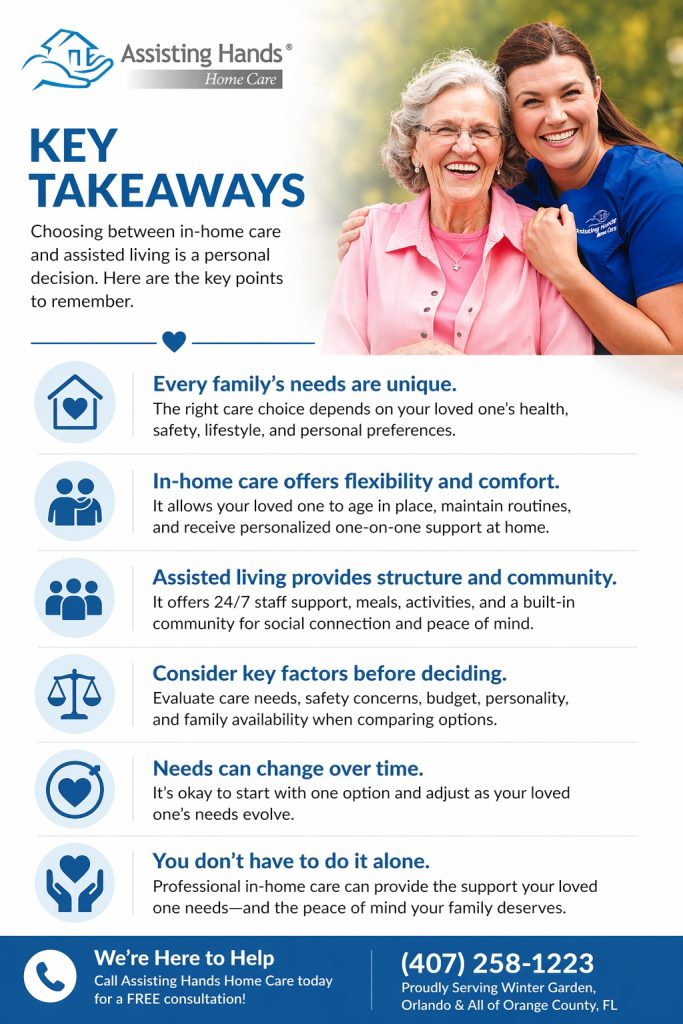
Key Takeaways
- In-home care allows seniors to remain safely in the comfort of their own home with personalized one-on-one support.
- Assisted living offers a structured community setting with meals, activities, and 24/7 staff assistance.
- The best choice depends on your loved one’s care needs, safety, independence, and personal preferences.
- In-home care is often ideal for seniors who want to age in place and need part-time or flexible help.
- Assisted living may be better when a senior needs daily supervision, social engagement, or consistent support.
- Families in Winter Garden, Orlando, and Orange County, FL should evaluate both current and future care needs.
- Care decisions can evolve over time – many families start with home care before considering assisted living.
- Professional guidance can make the process less overwhelming and help families choose with confidence.
Common Signs a Loved One May Need Additional Support
Recognizing when an aging loved one needs extra help often starts with subtle changes in their daily routine. These shifts may develop gradually, making them easy to overlook at first or dismiss as “normal aging.” However, consistent patterns in behavior or functioning can signal that additional support is needed to ensure safety, health, and overall well-being.
- Difficulty managing everyday tasks: Activities that were once routine, such as bathing, dressing, preparing meals, or keeping up with household chores, may become overwhelming or neglected altogether. You might also notice missed medications or skipped medical appointments, which can quickly lead to more serious health complications if not addressed.
- Changes in personal hygiene or living conditions: Unwashed clothing, unexplained clutter, or a generally unkempt home environment may suggest that keeping up with daily responsibilities has become challenging.
- Cognitive changes: Increased forgetfulness, confusion, or memory loss may lead to repeated questions, missed steps in familiar routines, or difficulty managing finances and medications. While occasional lapses are common with age, a noticeable or worsening pattern should not be ignored.
- Physical safety: Mobility issues, unsteadiness, or recent falls can indicate a higher risk of injury at home. Even minor falls can have serious consequences for older adults, making early intervention especially important.
- Social and emotional changes: A loved one who once enjoyed social activities may begin to withdraw from friends, hobbies, or community involvement. Isolation can contribute to both emotional decline and worsening physical health.
- Care becomes overwhelming: Family members themselves often recognize when something isn’t right. Increased worry, stress, or caregiver burnout can be a sign that current support is no longer sufficient. When care begins to feel overwhelming for the family, it may be time to consider additional assistance.
Concerned about your loved one’s safety at home in Orange County? Speak with Assisting Hands Home Care to explore personalized in-home support options.
Understanding In-Home Care
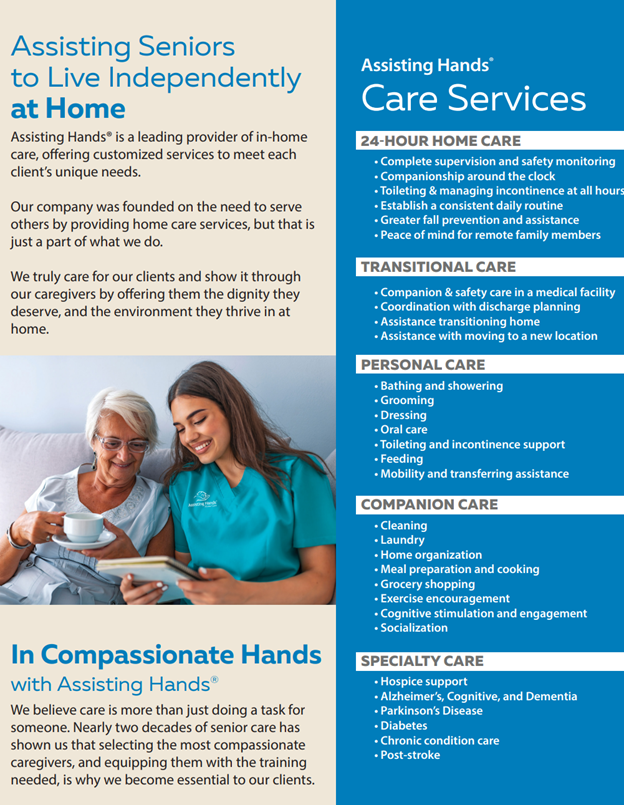
In-home care is designed to support older adults who want to remain in the comfort and familiarity of their own home while receiving the assistance they need to stay safe and independent. It can be tailored to a wide range of needs, from a few hours of help each week to around-the-clock care.

What In-Home Care Includes
In-home care services are highly customizable and focus on supporting both daily living and overall well-being. Depending on individual needs, caregivers may provide:
- Personal care assistance, such as bathing, grooming, and dressing
- Meal preparation and light housekeeping to maintain a safe and comfortable home environment
- Medication reminders and mobility support to help reduce health risks and prevent accidents
- Companionship and emotional support, which can be just as important as physical assistance for overall quality of life
These services are designed not only to meet practical needs but also to promote dignity and confidence in everyday living.
Benefits of In-Home Care
One of the biggest advantages of in-home care is that it allows seniors to age in place, remaining in a familiar environment filled with personal memories, routines, and comfort. This can significantly reduce stress and confusion, especially for individuals experiencing cognitive changes.
In-home care also provides one-on-one personalized attention, meaning care is focused entirely on the individual rather than divided among multiple residents, as is often the case in facility settings.
Another key benefit is flexibility. Care plans can be adjusted as needs change, whether that means a few hours of help per day, overnight support, or full-time care.
Most importantly, in-home care helps individuals maintain a greater sense of independence and daily routine, allowing them to continue living life on their own terms while still receiving the support they need.
Want to help your parent stay safely at home in Winter Garden or Orlando? Call Assisting Hands Home Care at (407) 258-1223 for a customized care plan.
Understanding Assisted Living
Assisted living is a residential care option designed for older adults who need some help with daily activities but do not require full-time medical care. It combines housing, personal support, and social opportunities in a structured community setting, offering a balance between independence and assistance.
What Assisted Living Provides
Assisted living communities are designed to make daily life easier and more supportive for seniors. While services may vary by location, most communities typically include:
- Private or semi-private living spaces that offer a sense of independence while still being part of a supportive environment
- On-site meals, housekeeping, and transportation, reducing the demands of day-to-day chores and logistics
- Staff available 24/7 for support, ensuring help is always nearby in case of emergencies or daily needs
- Structured social activities and programs that encourage engagement, mental stimulation, and connection with others
These services work together to create a supportive environment where residents can focus less on household responsibilities and more on enjoying their daily lives.
Benefits of Assisted Living
One of the primary advantages of assisted living is the built-in community it provides. Seniors have regular opportunities to socialize, participate in activities, and form meaningful connections, which can help reduce feelings of loneliness or isolation.
Assisted living also offers increased access to care and supervision, giving families peace of mind that help is available whenever it is needed. This can be especially important for individuals who may be at risk of falls or who need regular assistance with medications or daily tasks.
Another benefit is the reduction of household responsibilities. With meals, cleaning, and maintenance taken care of, residents are free to spend more time focusing on their health, hobbies, and relationships.
Finally, assisted living communities are specially designed with senior safety in mind, offering features and support systems that help reduce risks and promote overall well-being in a secure environment.
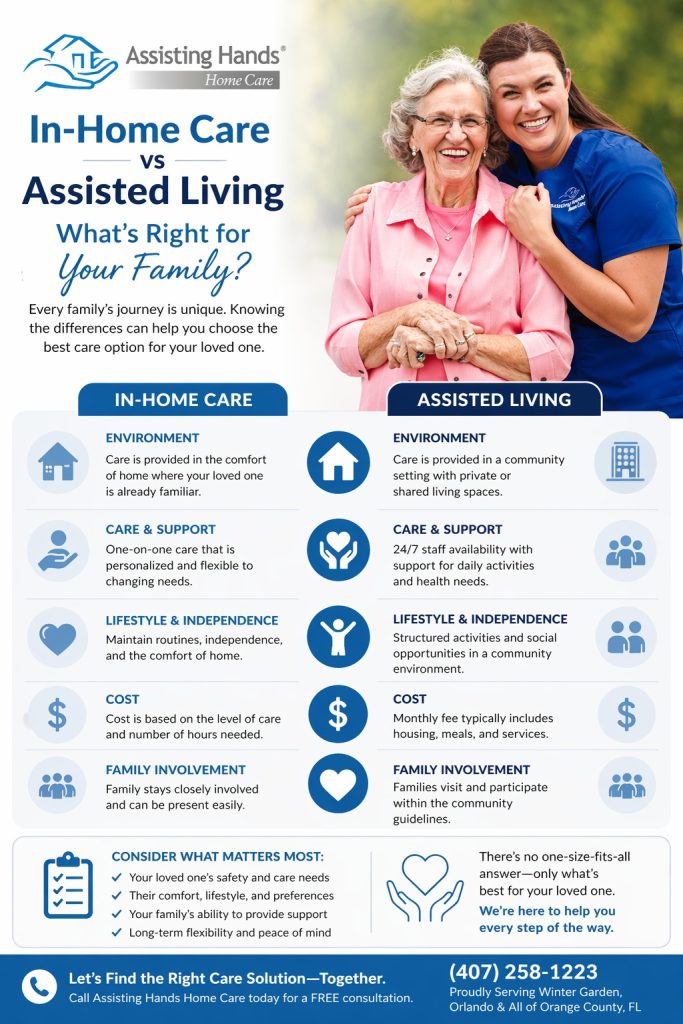
In-Home Care vs Assisted Living: Key Differences
When deciding between in-home care and assisted living, it’s important to understand how these two options differ in everyday experience. While both are designed to support seniors, they vary significantly in structure, environment, and level of flexibility.
- Level of independence and flexibility: In-home care allows individuals to remain in their own homes, maintaining familiar routines and choosing exactly when and how support is provided. Assisted living, on the other hand, follows a more structured daily schedule within a community setting, which can offer consistency but less personal flexibility.
- Cost considerations and payment structures: In-home care is typically based on the number of hours or level of support needed, which can make it more scalable depending on the situation. Assisted living usually involves a monthly fee that includes housing, meals, and services bundled together, which may be easier to budget but less adjustable over time.
- Living environment: In-home care takes place in a private residence, allowing seniors to stay in a familiar setting surrounded by personal belongings and memories. Assisted living provides a community environment where residents live among peers in a shared facility designed for senior living.
- Type and consistency of caregiver support: In-home care often provides one-on-one attention from a consistent caregiver or small care team, which can help build strong relationships. Assisted living facilities typically have multiple staff members rotating shifts, meaning care may be provided by different caregivers throughout the day.
- Family involvement and visitation: In-home care makes it easy for family members to remain closely involved in daily life, often stepping in and out of care routines as needed. Assisted living communities also encourage family visits, but interactions take place within the structure and policies of the facility.
Understanding these key differences can help families weigh which option best aligns with their loved one’s needs, preferences, and long-term well-being.
Need help comparing care choices for a parent in Orange County, FL? Assisting Hands Home Care can guide your family through the decision-making process.
Factors to Consider When Choosing the Right Option
Choosing between in-home care and assisted living is a highly personal decision, and the right answer often depends on a combination of practical needs and individual preferences. Taking time to evaluate key factors can help families make a choice that supports both safety and quality of life.
- Level of care required: Consider whether your loved one needs primarily non-medical support or more advanced assistance. In-home care is often well-suited for help with daily activities and companionship, while assisted living may be a better fit when more consistent supervision or structured support is needed.
- Safety concerns at home: Issues such as fall risks, difficulty navigating stairs, or challenges with cooking and personal care can indicate whether remaining at home is still a safe option without modifications or additional support.
- Budget and long-term affordability: Families should consider not only current costs but also how care needs may change over time. Understanding what level of support is sustainable helps prevent unexpected financial strain in the future.
- Personality and lifestyle preferences of your loved one: Some individuals thrive in a social, community-based environment like assisted living, while others feel most comfortable and secure staying in their own home surrounded by familiar surroundings.
- Family availability for support and caregiving: If family members are nearby and able to provide regular assistance, in-home care may be more manageable. However, if caregiving responsibilities are becoming overwhelming or inconsistent, additional structured support may be necessary.
By thoughtfully weighing these factors, families can make a more confident and informed decision that prioritizes both safety and quality of life.
When In-Home Care May Be the Better Fit
In-home care is often the preferred option for families who want to support a loved one while allowing them to remain in a familiar and comforting environment. It can be especially beneficial in situations where maintaining independence at home is still a priority, but some additional help is needed to stay safe and comfortable.
- Strong preference to remain at home: Many older adults feel most secure and at ease in their own space, surrounded by personal belongings, memories, and established routines. In-home care makes it possible to receive support without the disruption of moving to a new environment.
- Early stages of aging-related challenges: When care needs are beginning to increase but are not yet extensive, in-home caregivers can provide just the right level of assistance, helping with daily tasks while still encouraging independence.
- Strong attachment to familiar surroundings: For many seniors, staying in a known environment can reduce stress, confusion, and anxiety, particularly for those experiencing mild memory loss or cognitive changes. Remaining at home can help preserve a sense of stability and continuity.
- Flexible or part-time assistance: Families may only require a few hours of help each day or support during specific times, such as mornings, evenings, or after hospital discharge. This flexibility allows care to be tailored to evolving needs without committing to full-time residential care.
For many families, in-home care offers a balanced solution that supports safety and well-being while preserving comfort, independence, and familiarity.
If your loved one wants to stay home in Winter Garden or Orlando, Assisting Hands Home Care can provide compassionate support tailored to their needs.
When Assisted Living May Be the Better Fit
While many older adults can remain safely at home with the right level of support, there are situations where assisted living becomes the more appropriate option. This is often the case when care needs increase beyond what can be comfortably or safely managed in a home setting.
Increased need for daily supervision or medical support: When a loved one requires frequent assistance throughout the day, regular monitoring, or help managing complex health conditions, assisted living can provide consistent access to trained staff and structured care.
Social isolation or a growing need for community engagement: Seniors who spend most of their time alone may experience loneliness, depression, or a decline in overall well-being. Assisted living communities offer built-in social opportunities, group activities, and shared spaces that encourage interaction and connection with others.
Home is no longer safe or manageable: This can include challenges such as frequent falls, difficulty navigating stairs, or an inability to maintain a clean and hazard-free living environment. In these cases, a supportive community setting designed with senior safety in mind can significantly reduce risk.
Care needs exceed what can realistically be provided at home: This may be true even with professional in-home care and family support. As needs become more complex or constant, a residential care environment can ensure that assistance is always available, offering families greater peace of mind.
In these situations, assisted living can provide a stable, supportive environment that balances care, safety, and opportunities for social connection.
Senior Home Care from Assisting Hands
Deciding between in-home care and assisted living is rarely about which option is “better” overall, it’s about which option best fits your loved one’s current needs, personality, and long-term well-being. As those needs change over time, it’s also common for families to adjust their approach, starting with in-home support and later transitioning to a more structured setting if necessary.
What matters most is ensuring your loved one remains safe, supported, and able to maintain as much independence and dignity as possible. By carefully evaluating signs of changing needs, understanding the differences between care options, and considering both practical and emotional factors, families can make more confident and informed decisions.
If your loved one could benefit from personalized support at home, professional caregivers can make a meaningful difference in daily life, providing help with routines, companionship, and peace of mind for the entire family.
For compassionate, reliable support, Assisting Hands Home Care offers personalized senior in-home care services designed to help older adults remain safe and comfortable in the place they love most, their home. Our trained caregivers provide assistance tailored to individual needs, from daily living support to companionship and respite care for family members.
Families throughout Winter Garden, Orlando, and Orange County trust Assisting Hands Home Care for dependable senior support. To learn more about how in-home care can support your loved one, give us a call at (407) 258-1223. Taking the next step doesn’t have to feel overwhelming. With the right support, your family can find a care solution that brings both confidence and peace of mind.
Home Care vs Assisted Living FAQs
How do I know if my loved one needs in-home care or assisted living?
It often comes down to the level of daily support required. In-home care may be a better fit if your loved one needs help with activities like bathing, meal preparation, or medication reminders but still wants to remain at home. Assisted living may be more appropriate if they require ongoing supervision, have increased safety concerns, or would benefit from a more structured environment with built-in social opportunities.
What are the main differences between in-home care and assisted living?
In-home care provides personalized support in a senior’s own home, allowing them to maintain independence and familiar routines. Assisted living offers housing in a community setting with meals, activities, and 24/7 staff support. The key differences include environment, level of independence, and how care is delivered.
How does home care vs assisted living comparison help family caregivers?
Comparing home care and assisted living helps family caregivers better understand which option aligns with their loved one’s needs and their own capacity to provide support. It clarifies the level of care required, highlights safety considerations, and can reduce stress by helping families make more informed, confident decisions about long-term care planning.
Can in-home care delay the need for assisted living?
Yes, in many cases in-home care can help seniors remain safely at home longer by providing assistance with daily tasks, monitoring health needs, and reducing fall risks. However, as care needs increase over time, families may still need to reevaluate whether assisted living becomes the safer option.
Is assisted living more expensive than in-home care?
The cost depends on the level of care needed and how many hours of in-home care are required. In-home care is typically paid by the hour, which can be more cost-effective for part-time needs. Assisted living usually involves a monthly fee that covers housing, meals, and services, which may be more predictable for families with higher or more consistent care needs.

