
As parents grow older, small changes in memory, mood, or behavior can start to stand out. Maybe Mom repeats the same story twice in one afternoon. Maybe Dad misplaces his keys more often than he used to. Moments like these can leave families wondering: Is this just normal aging, or could it be something more serious like dementia?
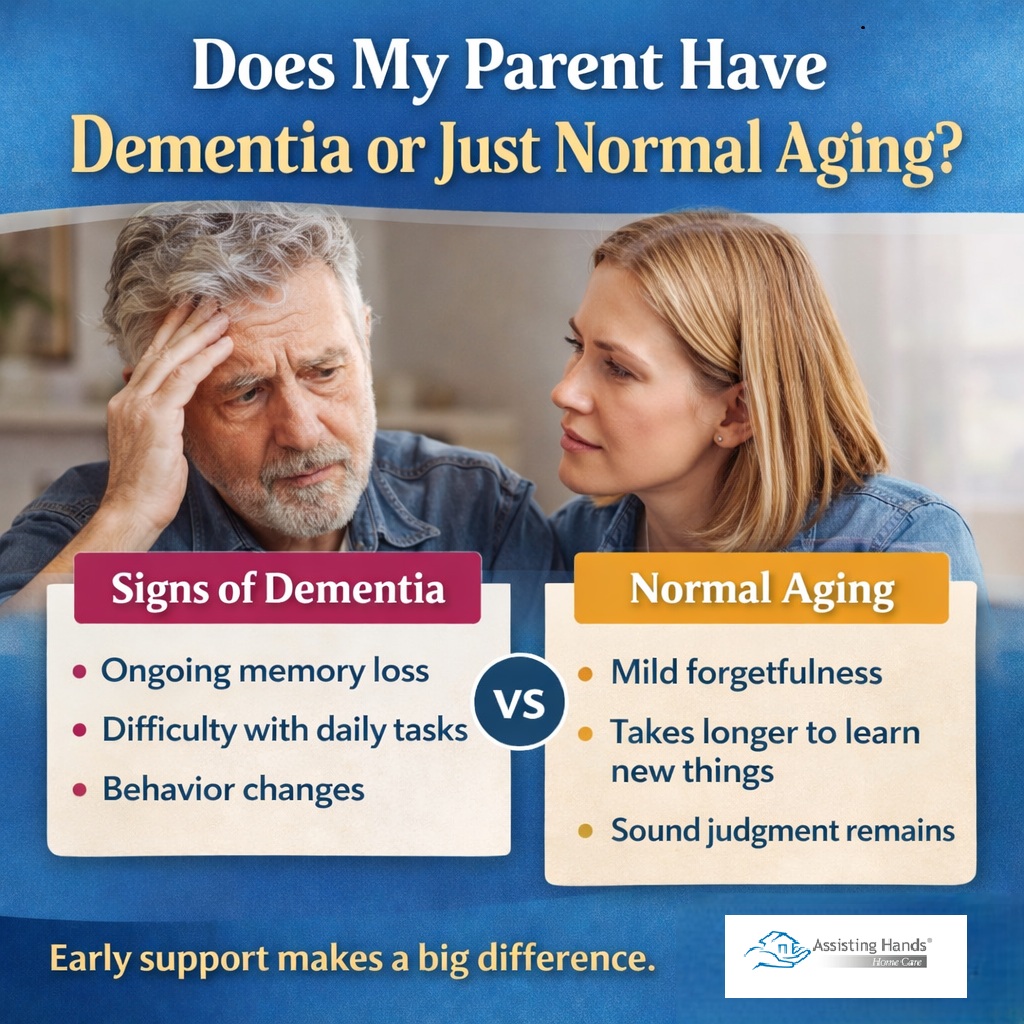
Understanding the difference is important. Typical age-related forgetfulness can be frustrating, but it usually doesn’t disrupt daily life. Dementia, on the other hand, involves ongoing changes in memory, thinking, and reasoning that gradually make everyday tasks more difficult. Recognizing the early warning signs allows families to seek medical guidance, plan ahead, and put the right support systems in place sooner rather than later.
In this article, we’ll walk through clear, practical examples of what normal aging looks like versus potential signs of dementia and explain why early attention and compassionate care can make a meaningful difference for both seniors and the people who love them.
Why the Confusion Happens
It can be surprisingly hard to tell the difference between typical age-related changes and something more serious. As people grow older, the brain naturally processes information a little more slowly. Forgetting where the glasses were set down, needing extra time to learn new technology, or occasionally blanking on a word are common experiences and, by themselves, usually aren’t cause for alarm.
To make things more complicated, many everyday factors can temporarily affect memory and thinking. Stress, grief, medication side effects, dehydration, infections, or even a few nights of poor sleep can make an older adult seem forgetful or mentally foggy. When these issues improve, thinking often improves too.
Because of this overlap, families may either panic too quickly or, just as often, dismiss concerns that deserve attention. The key is to look for patterns. Are the changes becoming more frequent? Are they interfering with daily routines or safety? Do they seem to be getting worse over time?
Keeping an eye on the bigger picture helps you respond thoughtfully without overreacting, but without ignoring signs that may signal your parent needs extra support or a medical evaluation.
What Normal Aging Typically Looks Like
Let’s start with the reassuring news: some forgetfulness is a normal part of getting older. The brain changes with age, and it may take longer to retrieve information or juggle multiple tasks at once. These moments can be frustrating, but they don’t necessarily point to dementia.
For example, your parents might occasionally forget someone’s name but remember it later in the day. They may misplace their phone or keys from time to time. Perhaps they miss paying a bill once, especially if their routine changed or they were busy with something else. Many older adults also rely more on calendars, pill organizers, notes, or smartphone reminders to stay on track, and that’s a smart adaptation, not a warning sign.
Another hallmark of normal aging is slower recall but solid judgment. Your parents might pause longer to think through options, yet still make sound decisions about finances, safety, and daily responsibilities.
Most importantly, seniors experiencing typical age-related changes are still able to manage everyday life. They maintain personal hygiene, prepare meals, keep appointments, and continue participating in hobbies and social activities. Independence remains largely intact, even if a few extra reminders are helpful along the way.
Understanding what’s considered normal can make it easier to recognize when changes fall outside of that range.
Early Signs That May Point to Dementia
While occasional forgetfulness can be normal, dementia tends to show up differently. The changes usually happen more often, become progressively worse, and begin to interfere with everyday life. A helpful question to ask is: Does my parent still function the way they used to, or are they starting to need more help than before?
Here are some of the early warning signs families commonly notice.
Memory Changes
Your parents may:
- Repeat the same questions within minutes or hours
- Forget information they just learned
- Depend heavily on family members to handle tasks they previously managed on their own
This goes beyond misplacing keys, it’s memory loss that disrupts routine.
Difficulty with Familiar Tasks
Activities that were once second nature can suddenly feel overwhelming. You might see:
- Trouble following well-known recipes
- Getting lost while driving familiar routes
- Confusion when paying bills or balancing accounts
These moments can be frightening for both seniors and their loved ones.
Communication Problems
Language and conversation may also change. A parent might:
- Struggle to find the right word
- Substitute unusual words
- Stop mid-sentence or lose track of what they were saying
Over time, conversations can become more difficult to follow.
Changes in Judgment or Personality
Families are often surprised by shifts in behavior. Watch for:
- Uncharacteristically poor financial decisions
- Pulling away from friends, hobbies, or gatherings
- Increased irritability, anxiety, fearfulness, or suspicion
Sometimes personality changes are the earliest clue that something isn’t right.
If several of these signs are appearing, happening regularly, or growing more noticeable, it may be time to seek professional guidance. Early recognition opens the door to treatment options, planning, and supportive care that can make the road ahead easier.

Red Flags Families Often Notice First
In many cases, dementia becomes apparent not through one dramatic moment, but through small changes that slowly add up. Adult children often spot these signs when they visit a parent’s home or speak with them regularly on the phone.
Missed appointments can be one of the earliest clues. Your parents may forget doctor visits, social plans, or important dates they would have once carefully tracked. You might also notice stacks of unopened mail, late notices, or paperwork that feels too overwhelming for them to manage.
Changes in personal hygiene are another common red flag. A loved one who used to take pride in their appearance may start wearing the same clothes repeatedly, neglect bathing, or forget basic grooming routines.
In the kitchen, problems may show up as expired groceries, spoiled food left in the refrigerator, or difficulty preparing safe meals. Sometimes families find burners left on or appliances used incorrectly, raising concerns about safety.
You may also see increasing isolation. Your parents might withdraw from hobbies, church, clubs, or time with friends, not always because they want to, but because participating has become confusing or stressful.
Individually, any of these situations might have a simple explanation. Together, however, they can signal that extra help or a medical evaluation is needed.
When to Talk to a Doctor
If you’re noticing consistent changes in memory, behavior, or daily functioning, it’s a good idea to schedule a medical evaluation. Many families hesitate, hoping symptoms will improve or worrying about what a diagnosis might mean. But getting answers early can make a powerful difference.
An early diagnosis helps your parent access treatments, support services, and planning opportunities sooner. It allows them to participate in decisions about their future, express their wishes, and build a care strategy while they can still communicate clearly. For families, clarity often replaces uncertainty and makes the path forward feel more manageable.
It’s also important to remember that not all memory problems are dementia. Some conditions can be treated or even reversed, including vitamin deficiencies, thyroid issues, medication interactions, depression, dehydration, or infections. A doctor can run tests to rule out these possibilities.
Before the appointment, it’s helpful to document what you’ve observed. Write down specific examples, when they started, and how often they occur. Note changes in mood, safety concerns, or new difficulties with everyday tasks. Concrete information helps healthcare providers see the full picture and make more accurate recommendations.
Seeking medical advice isn’t about labeling your parents, it’s about making sure they receive the care and attention they deserve.
The Emotional Side for Families
Watching a parent change is deeply personal, and the uncertainty can stir up a mix of difficult emotions. Many adult children worry they are overreacting or being overly critical. You might second-guess what you’re seeing, wondering if you’re making too much out of normal forgetfulness or a bad day.
At the same time, there can be real fear about what an evaluation might reveal. A diagnosis of dementia carries weight, and it can feel overwhelming to imagine how life may change for your parents and for your family. Because of this, some people delay seeking help, hoping the signs will simply go away.
Yet families often describe an unexpected sense of relief once they have clarity. Putting a name to what’s happening allows everyone to stop guessing and start planning. With answers comes the ability to explore treatment options, arrange support, and prepare for the future step by step instead of reacting in crisis mode.
If you’re feeling torn between worry and hesitation, you’re not alone. These emotions are a normal part of loving someone and wanting the very best for them.
Why Early Support Makes a Big Difference
Putting help in place early can feel intimidating, but it often leads to better outcomes for everyone involved. When support begins at the first signs of difficulty rather than during a crisis, seniors are more likely to maintain their independence and confidence for a longer period of time.
Early assistance also creates a safer living environment. Small risks, like missed medications, fall hazards, or kitchen mishaps, can be addressed before they turn into emergencies. A little extra oversight goes a long way toward preventing injuries and hospital visits.
For family members, early support can dramatically reduce stress. Instead of trying to manage everything alone, you gain a partner who can share responsibilities and provide reassurance. Caregiving becomes more sustainable, allowing you to focus on your relationship with your parent rather than constant worry.
Another important benefit is the chance to build routines and trust. When caregivers are introduced early, your loved one can become familiar with them, accept help more comfortably, and settle into consistent daily patterns. That foundation makes future changes much easier to navigate.
Taking action sooner rather than later isn’t giving up independence, it’s protecting it.
How In-Home Care Can Help
When memory or thinking changes begin to affect daily life, in-home care can provide the right balance of assistance while allowing your parents to remain in familiar surroundings. Support is designed to enhance independence, not take it away.

Caregivers offer companionship and supervision, providing someone your loved one can talk to, share activities with, and rely on throughout the day. Having another person present can also reduce anxiety and help prevent unsafe situations before they happen.
Practical help is just as important. In-home caregivers can prepare meals, encourage proper nutrition, give medication reminders, and assist with bathing, grooming, and dressing. These everyday tasks often become stressful early in cognitive decline, and gentle guidance can make them manageable again.
Because caregivers see your parents regularly, they are also in a strong position to notice changes. Subtle shifts in mood, appetite, mobility, or memory can be communicated to families, so concerns are addressed quickly.
Perhaps most importantly, care can grow and adapt. As needs evolve, the level of support can increase, routines can be adjusted, and new strategies can be introduced while your loved one continues living at home.
The right help at the right time can make daily life safer, calmer, and far more comfortable for everyone involved.
Alzheimer’s and Dementia Home Care from Assisting Hands
Recognizing the difference between normal aging and early signs of dementia can feel overwhelming, but you don’t have to navigate it alone. Early support and guidance can make a real difference in your parent’s quality of life, helping them stay safe, independent, and engaged for as long as possible.
If you’re noticing memory changes, confusion with daily tasks, or shifts in behavior, reaching out to professionals is a proactive step that benefits both your loved one and your family. Specialized in-home care for Alzheimer’s and dementia provides the compassionate assistance, supervision, and companionship your parent needs, tailored to their unique needs as these conditions progress.
For families in Winter Garden, FL, Assisting Hands Home Care offers trusted Alzheimer’s and dementia home care services designed to keep your loved one safe and comfortable while preserving their independence.
Early action brings clarity, peace of mind, and the support your family deserves. Don’t wait, call Assisting Hands Home Care today to help ensure a better quality of life for senior loved ones affected by dementia.

Alzheimer’s and Dementia Care FAQs
How do dementia vs. normal aging signs help family caregivers?
Understanding the difference helps caregivers respond appropriately. Recognizing normal age-related changes prevents unnecessary worry, while spotting early signs of dementia allows caregivers to arrange professional support, adapt routines, and monitor safety before challenges escalate. This knowledge reduces stress and improves care planning.
When should families seek professional evaluation for memory or behavior changes?
Families should consider a medical evaluation if memory lapses, confusion, or personality changes are persistent, worsening, or affecting daily activities. Early evaluation can rule out reversible conditions, provide a clear diagnosis, and open the door to treatments and support that improve both safety and quality of life.
Can early support or in-home care slow the progression of dementia?
While there is currently no cure for dementia, early support and in-home care can help slow functional decline and improve quality of life. Structured routines, cognitive stimulation, medication management, and consistent supervision reduce stress and confusion for your loved one, helping them maintain independence and safety for longer.

