
For many older adults, aging in place, or remaining in the comfort and familiarity of home, is an important part of maintaining independence and quality of life. However, as the seasons change, so do the potential safety risks around the home. Spring is an ideal time to refresh, reorganize, and address small household hazards before they turn into bigger problems.
From checking outdoor walkways after experiencing winter weather to improving lighting and reducing indoor fall risks, a seasonal safety review can make a significant difference for seniors living at home. Taking a proactive approach not only helps prevent accidents but also supports confidence and peace of mind for both older adults and their families.
In this spring safety checklist, we’ll cover practical steps seniors and caregivers can take to create a safer living environment and help make aging in place both comfortable and secure.
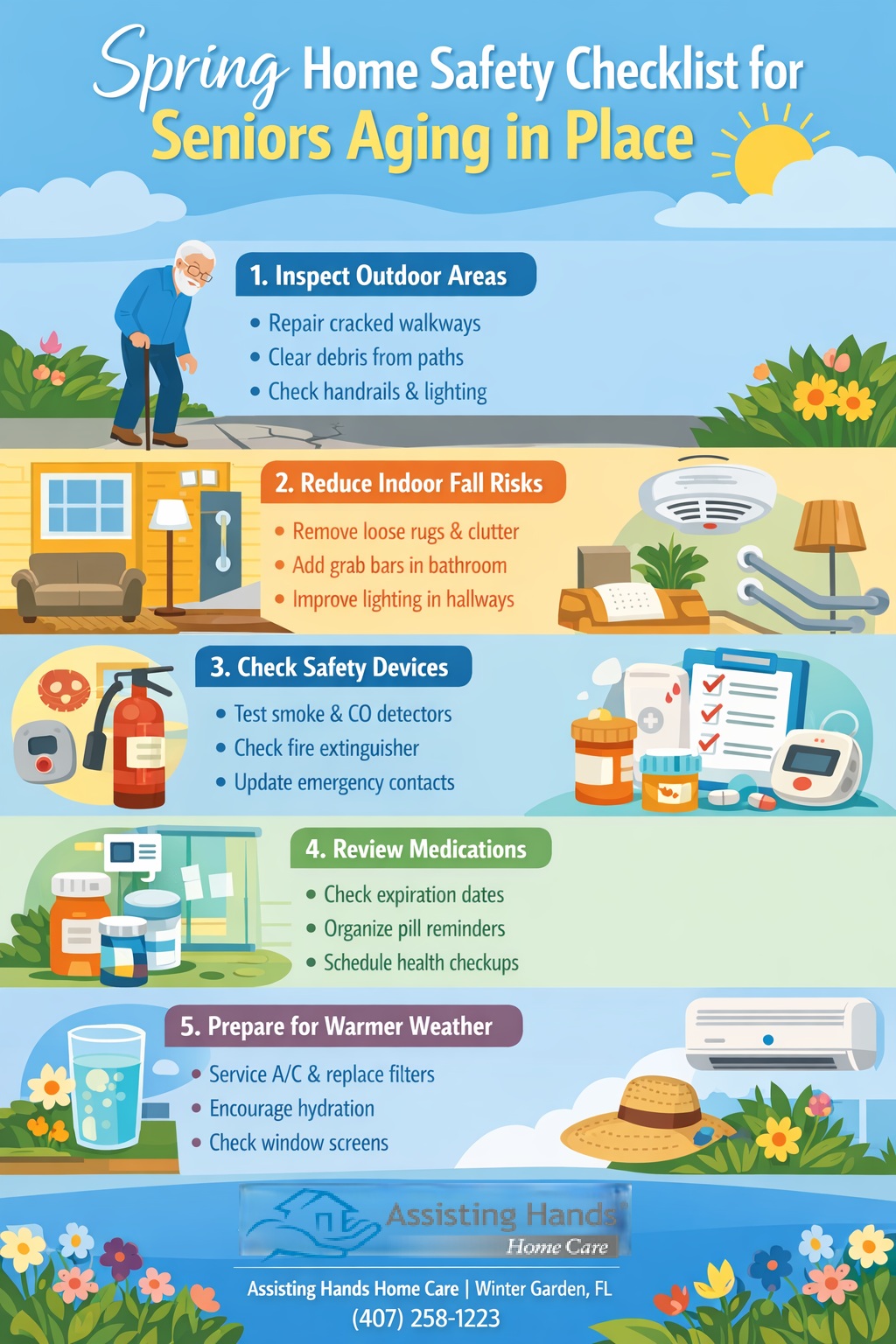
Inspect Outdoor Walkways and Entrances
Winter weather can leave behind hidden hazards around the home, making walkways and entrances especially risky for older adults. Ice, and freezing temperatures can cause cracks in pavement, loosen stones, and leave behind debris that increases the chance of slips and falls. As spring arrives, it’s a good time to carefully inspect the areas seniors use most often when entering and exiting the home.
Start by clearing away leaves, branches, and other debris that may have accumulated over the winter. Even small obstacles can create tripping hazards, particularly for seniors who use walkers, canes, or have limited mobility. Walkways and driveways should be kept clean and smooth to allow for safe movement.
Next, check for uneven pavement, loose stones, or cracks in concrete that may have developed during the colder months. Repairing these issues promptly can help prevent trips and falls. It’s also important to make sure that railings and handrails on stairs and ramps are secure and sturdy, providing reliable support when needed.
Proper lighting is another key safety feature. Replace burned-out bulbs and ensure that outdoor lights illuminate pathways, steps, and entryways clearly during the evening hours. Finally, inspect surfaces for moss or algae buildup, which can make walkways slippery when wet. Cleaning these areas can significantly reduce the risk of falls.
Taking a few simple steps to maintain outdoor walkways and entrances can go a long way in helping seniors move safely in and out of their homes throughout the spring season.
Reduce Indoor Fall Risks
Falls are one of the most common safety concerns for older adults and can lead to serious injuries that affect independence and mobility. Because many falls occur inside the home, taking time each spring to review the indoor environment can help identify and eliminate potential hazards.

Start by addressing loose rugs and floor coverings. Rugs that slide or curl at the edges can easily cause someone to trip. Removing them entirely or securing them with non-slip backing can greatly improve safety. It’s also important to keep hallways, stairways, and commonly used pathways free of clutter such as boxes, cords, or small furniture that may obstruct movement.
Furniture placement should allow for clear and easy navigation throughout the home. Seniors who use walkers or canes especially benefit from wider pathways that allow them to move comfortably without bumping into objects. Rearranging furniture to create open walking spaces can make daily movement much safer.
Bathrooms are another area where falls frequently occur due to slippery surfaces. Installing grab bars near the toilet and inside the shower or bathtub can provide important support when sitting, standing, or stepping in and out of the tub. Non-slip mats can also help reduce the risk of slipping on wet floors.
Finally, keeping frequently used items within easy reach can prevent unnecessary stretching, bending, or climbing on stools. Organizing kitchens, bathrooms, and closets so essential items are easily accessible helps seniors move more safely throughout their day.
Check Home Safety Devices
Spring is also a good time to check the safety devices in the home that help protect seniors in case of an emergency. These systems often go unnoticed until they are needed, so making sure they are working properly can provide valuable peace of mind for both seniors and their families.
Start by testing all smoke detectors and carbon monoxide detectors throughout the home. These devices play a critical role in alerting residents to potential dangers such as fires or harmful gas leaks. Replace the batteries if needed and confirm that each alarm is functioning correctly.
Fire extinguishers should also be inspected during a seasonal safety check. Make sure they are easily accessible and check the expiration date or pressure gauge to ensure they are ready to use if necessary. Keeping extinguishers in key areas like the kitchen and garage can help improve household safety.
It’s also important to make sure emergency contact information is easy to find. Posting a list of important phone numbers, such as family members, neighbors, doctors, and emergency services near the phone or on the refrigerator can be helpful if assistance is needed quickly.
Many seniors benefit from using a medical alert system. These devices allow individuals to call for help at the press of a button, which can be especially valuable if a fall or medical issue occurs when they are alone at home.
Review Medications and Health Needs
Spring is the perfect time to review medications and overall health routines, helping seniors stay on top of their wellness and avoid potential risks. Changes in weather and daily routines can affect how medications are taken, so a seasonal check-in is a simple but important step for safe aging in place.

Start by checking expiration dates on all medications. Expired medications can lose effectiveness or even pose health risks, so replacing them promptly ensures safety and proper treatment. Organizing medications with a pill organizer or clearly labeled system can make it easier to remember doses and reduce the risk of missed or double doses.
Routine medical checkups should also be scheduled if they haven’t been recently. These visits allow healthcare providers to assess overall health, adjust medications if needed, and provide guidance on managing chronic conditions. Updating emergency medical information such as doctor contacts, allergy lists, and medication details ensures that caregivers or first responders have the information they need in case of an emergency.
Reviewing medication instructions with a doctor or pharmacist can clarify proper use, potential side effects, and interactions with other drugs. This step helps seniors maintain their health safely and independently.
Prepare the Home for Warmer Weather
As spring transitions into warmer months, it’s important for seniors to make adjustments that keep the home comfortable, safe, and healthy. Warmer weather can bring new challenges, from heat-related health risks to increased exposure to allergens, so a seasonal check-up can help prevent problems before they arise.
Start by servicing air conditioning systems or fans to ensure they are working efficiently. Replacing HVAC filters not only improves airflow but also enhances indoor air quality, which is especially important for seniors with respiratory conditions. Checking window screens for damage can help keep insects out while allowing fresh air in, making indoor spaces more comfortable and safe.
Outdoor spaces also deserve attention. Make sure patios, porches, and garden seating areas are stable and free from hazards such as loose boards or wobbly chairs. A secure and accessible outdoor space encourages safe activity and fresh-air breaks, which are beneficial for both physical and mental health.
Warmer temperatures increase the risk of dehydration, particularly for older adults. Encourage regular water intake throughout the day and keep beverages easily accessible in frequently used areas. Small reminders like this can make a big difference in preventing heat-related health issues.

Using a spring checklist ensures that caregivers stay organized and focused on the most important safety concerns, making home care more effective and manageable.
Spring Safety Checklist FAQs
What safety checks should I do at home for my aging parent?
To help your aging parent stay safe and independent, it’s important to perform regular home safety checks. Key areas to focus on include:
- Outdoor walkways and entrances: Clear debris, repair cracks, check railings, and ensure proper lighting.
- Indoor fall hazards: Remove loose rugs, declutter hallways, adjust furniture for easy movement, and install grab bars in bathrooms.
- Home safety devices: Test smoke and carbon monoxide detectors, check fire extinguishers, and keep emergency contacts accessible.
- Medications and health needs: Review expiration dates, organize medications, schedule routine checkups, and update emergency medical information.
- Preparing for seasonal changes: Service air conditioning or fans, check window screens, ensure safe outdoor seating, and encourage hydration as temperatures rise.
By systematically addressing these areas, you can significantly reduce risks and create a safer environment for your senior parents.
How does a senior home safety spring checklist help family caregivers?
A spring safety checklist provides family caregivers with a structured approach to maintaining a safe home for their loved ones. It helps by:
- Highlighting key risk areas: Walkways, fall hazards, and home safety devices are all addressed.
- Encouraging proactive care: Seasonal checks prevent accidents before they happen.
- Reducing stress: Knowing the home has been reviewed gives caregivers peace of mind.
- Supporting independence: Seniors can stay in their own homes longer when safety measures are in place.
- Guiding professional support: The checklist can help identify areas where in-home caregivers may be needed for additional assistance.
How can I reduce fall risks for seniors living at home in Orlando or West Orange County?
Falls are one of the leading causes of injury for older adults, so reducing fall risks should be a priority. Start by ensuring walkways inside and outside the home are clear and well-lit. Install grab bars in bathrooms, secure or remove loose rugs, and keep commonly used items within easy reach. In homes throughout Orlando and West Orange County, adding non-slip mats and improving lighting in hallways and staircases can significantly reduce the risk of falls and help seniors move safely around their homes.
Why is spring a good time to review home safety for aging parents?
Spring naturally encourages cleaning, organizing, and home maintenance, making it an ideal time to review safety conditions around the house. Winter weather can leave behind hidden hazards like cracked walkways or damaged railings, while warmer temperatures bring new concerns such as dehydration and air quality. For families in Winter Garden and nearby West Orange County communities, completing a seasonal safety check helps identify risks early and ensures seniors can continue living comfortably and safely at home.
When should families consider professional home care for aging parents?
If safety concerns continue to appear despite making improvements around the home, it may be time to consider professional in-home care. Signs may include frequent falls, missed medications, difficulty preparing meals, or challenges with daily activities like bathing and dressing. In Winter Garden and the greater Orlando area, professional caregivers can provide assistance with safety monitoring, mobility support, meal preparation, and medication reminders while allowing seniors to maintain independence at home.
How can caregivers help seniors stay safe during warmer Florida spring and summer weather?
Warmer temperatures in Central Florida can increase the risk of dehydration, heat exhaustion, and fatigue for older adults. Encourage seniors to drink water regularly, keep indoor temperatures comfortable with properly functioning air conditioning, and avoid outdoor activities during peak heat hours. Families in Orlando and West Orange County should also make sure seniors have easy access to shaded outdoor areas and light clothing to help prevent heat-related health issues.
What home safety improvements provide the biggest benefit for seniors aging in place?
Small home modifications can make a big difference in safety and independence. Installing grab bars in bathrooms, improving lighting in hallways and stairways, securing railings, and removing trip hazards are some of the most effective changes. In homes across Winter Garden and West Orange County, many families also add medical alert systems and medication organizers to help seniors manage daily routines more safely.
How can adult children start a home safety conversation with aging parents?
Many seniors value their independence and may initially resist safety changes. The best approach is to frame improvements as a way to help them stay in their home longer, not as a loss of independence. Start by pointing out small upgrades that make everyday tasks easier and safer. Families in Orlando and West Orange County often find that involving their parents in decisions about home safety modifications makes the conversation more comfortable and productive.
How often should families review a home safety checklist for seniors?
A home safety review should be completed at least twice a year, typically during seasonal transitions such as spring and fall. However, additional reviews may be necessary after health changes, hospital visits, or mobility issues. Regular safety checks help families in Winter Garden and surrounding West Orange County communities catch potential risks early and maintain a safe environment for seniors aging in place.
Get Extra Support for Safe Aging in Place from Assisting Hands
Even with a thorough spring safety checklist, maintaining a safe and comfortable home can sometimes feel overwhelming, especially for seniors managing mobility challenges, health conditions, or daily tasks. Professional home care can provide the support your loved ones need to live independently at home this spring and throughout the year.
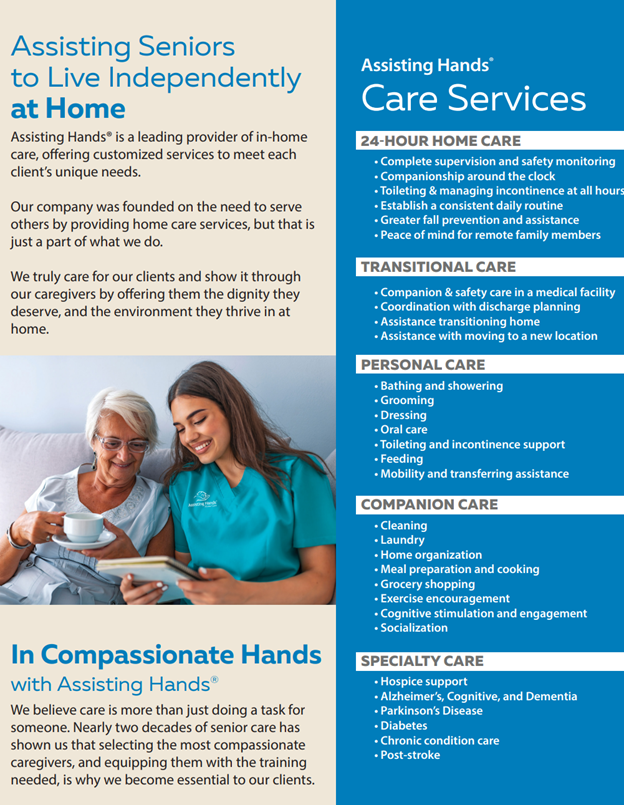
Caregivers from Assisting Hands Home Care provide personalized support designed to keep seniors safe, healthy, and independent. We can help with household safety checks, medication reminders, meal preparation, mobility assistance, and more, giving both seniors and their families peace of mind.
Spring is the perfect time to take proactive steps for safety and comfort. To learn more about how professional senior home care can help your loved one continue aging in place safely, call Assisting Hands Home Care at (407) 258-1223 and schedule a consultation today. Your loved one’s safety and independence are worth it.

