

Dementia progresses through seven stages defined by the Global Deterioration Scale (GDS), developed by Dr. Barry Reisberg at NYU: no impairment, very mild decline, mild decline, moderate decline, moderately severe decline, severe decline, and very severe decline. Symptoms typically become noticeable to family around stage 3, and outside support becomes necessary by stage 5. Understanding each stage helps families plan for memory care before the need becomes urgent.
According to the Alzheimer’s Association’s 2025 Facts and Figures report, 7.2 million Americans age 65 and older are living with Alzheimer’s dementia today. That number is projected to reach 13.8 million by 2060 without medical breakthroughs. Here is what families in Westlake, Ohio, and their loved ones can expect at each stage.
What Is Dementia?
Dementia, which causes abnormal brain changes, is not a disease itself. It’s a term used to describe a collection of symptoms that affect cognitive abilities enough to interfere with daily life. Alzheimer’s disease is the most common cause of dementia, though vascular dementia, Lewy body dementia, and other conditions also produce these symptoms.
Dementia symptoms also affect feelings, behaviors, and relationships. While dementia affects each individual differently, depending on which areas of the brain become damaged and the underlying cause, many people experience classic symptoms. Memory loss is common, and short-term memory is usually affected first. Seniors with dementia find it difficult to concentrate and complete everyday tasks, such as counting the correct change during a shopping trip. They may become confused about time and place, struggle to follow conversations, and have trouble choosing the right words. Mood changes are common too.
Dementia is progressive: seniors experience no symptoms at first, and once symptoms appear, they gradually worsen over the years. Doctors often describe this progression using the Global Deterioration Scale, developed by Dr. Barry Reisberg, which divides dementia into seven stages ranging from no impairment to very severe decline.
Some clinicians and caregivers prefer a simpler framework that groups these into early, middle, and late phases. If you’d rather start there, see our guide to the three stages of dementia and how to support a loved one through each phase.
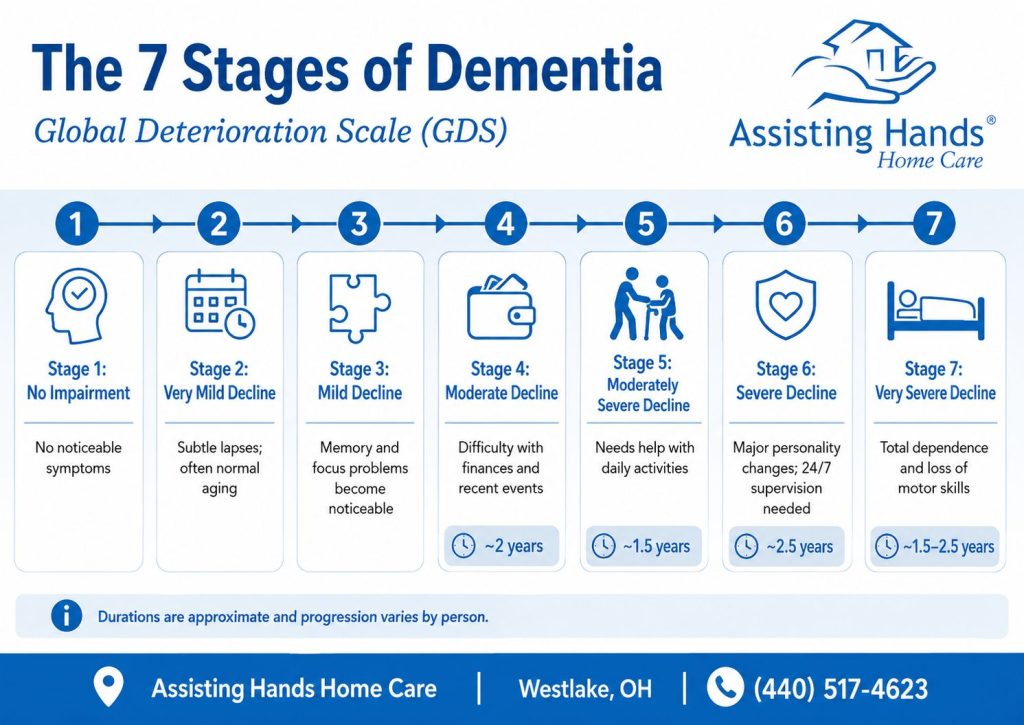
The 7 Stages of Dementia
Stage 1: No Impairment
The senior has no symptoms, but brain changes may already be underway. During this presymptomatic phase, there’s no memory loss or other dementia symptoms, but the condition can sometimes be detected via biomarker tests, such as PET scans showing amyloid plaque buildup, or specialized blood tests. Genetic testing can identify high-risk individuals.
Stage 2: Very Mild Cognitive Decline
Subtle memory lapses appear but go unnoticed by others. The older adult may begin forgetting names of friends and family without it being apparent to loved ones or doctors. They misplace objects and experience subtle memory lapses that continue to go undetected. At this stage, symptoms are often indistinguishable from normal age-related forgetfulness.
Stage 3: Mild Cognitive Decline
Memory and concentration problems become noticeable to family and friends. Loved ones begin to notice the senior’s struggles with memory and concentration, which may be confirmed during a medical exam. The senior can acquire new knowledge but quickly forgets it, and work performance declines noticeably.
Stage 4: Moderate Cognitive Decline
A doctor can typically detect dementia at this stage, which lasts about two years on average. Suspicion of dementia may prompt a medical interview, during which symptoms are identified: forgetfulness of recent events, difficulty with tasks like paying bills and managing finances, and moodiness or withdrawal from social situations.
Stage 5: Moderately Severe Cognitive Decline
The senior now needs help with daily activities; this stage lasts about 1.5 years on average. As memory deficiencies accelerate, the senior relies on others for activities of daily living (ADLs), including bathing, dressing, eating, toileting, and mobility. They may be unaware of the time, date, their location, address, or phone number. This is often the point at which families arrange for in-home care.
If your loved one is approaching this stage, now is the time to start the conversation about in-home support, not after a crisis forces the decision. Call (440) 517-4623 to talk through your options with our Westlake team.
Stage 6: Severe Cognitive Decline
Personality changes emerge and around-the-clock supervision becomes necessary; this stage typically lasts 2.5 years. Awareness of recent experiences and surroundings is lost. The senior may no longer remember their spouse’s name, and bowel and bladder control issues emerge. Major personality shifts are prominent, and wandering becomes a safety concern. This stage can also bring delusions, compulsions, and anxiety. Seniors forget major past events, have trouble speaking, and struggle with simple mental tasks like counting down from 10. Sleep patterns often change significantly as well.
Stage 7: Very Severe Cognitive Decline
The final stage brings total dependence on caregivers and may last 1.5 to 2.5 years. The senior can no longer respond to their environment, speak, or communicate in other ways, and loses motor skills, including, eventually, the ability to walk. This stage also causes physical symptoms such as abnormal reflexes and rigid muscles, and the swallowing mechanism becomes impaired. Full caregiver support is needed, as the senior cannot sit without support, hold their head up, or eat independently.
How Long Does Dementia Progression Take?
Brain changes caused by dementia occur years before outward symptoms appear or a formal diagnosis is given. How long someone spends in each stage is impossible to predict precisely, but the senior eventually loses the ability to function independently.
Life expectancy varies by dementia type. On average, people with Alzheimer’s disease live four to eight years after diagnosis, though some live 20 years or more. Vascular dementia carries an average life expectancy of about five years, and Lewy body dementia typically progresses over two to eight years after symptoms appear.
When Should Families Plan for Memory Care?
Because dementia is progressive, affected seniors rely on family caregivers, but family members are limited in how much consistent care they can provide as symptoms worsen, and many older adults don’t have friends or family nearby for support.
Seniors diagnosed with dementia are encouraged to plan for memory care early, ideally before reaching stage 5, when help with daily activities becomes necessary. In-home dementia care is available for those who wish to age in place.
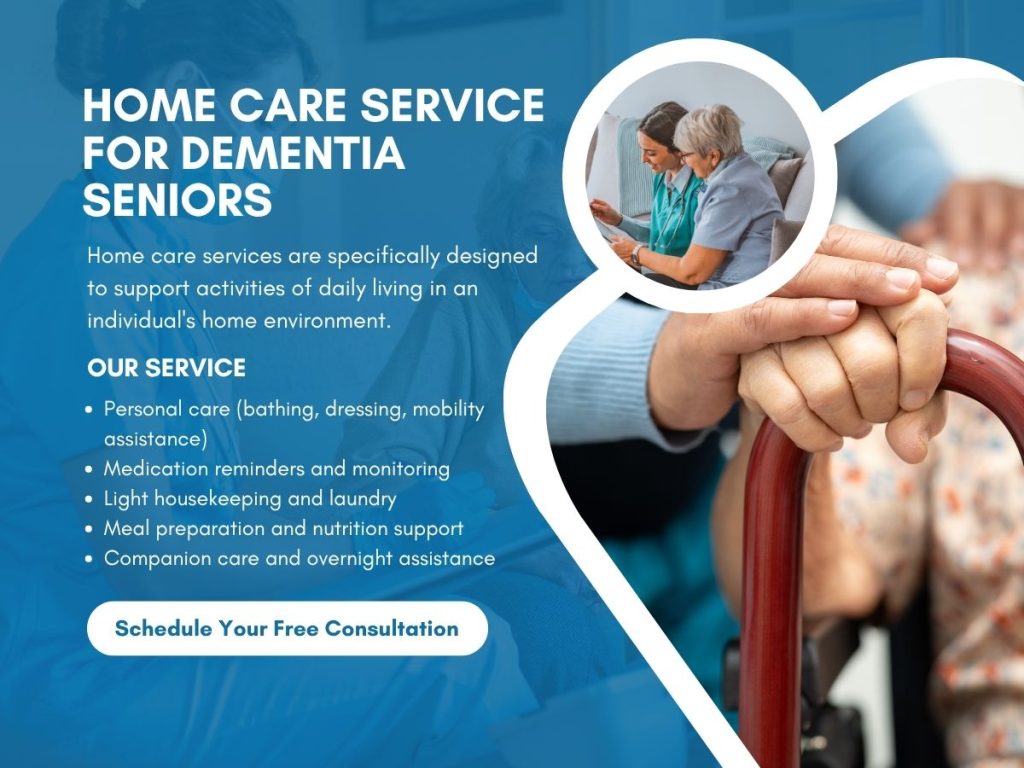
Assisting Hands Home Care provides compassionate memory care to seniors in the comfort and familiarity of home in Westlake, North Ridgeville, North Olmsted, Avon, Avon Lake, and the surrounding communities. Our caregivers deliver non-medical care services to support the safety, comfort, and well-being of seniors with dementia, including:
- Help with hygiene: bathing, toileting, and dressing
- Meal preparation, light housekeeping, and medication reminders
- Companionship: familiar faces, stimulating games, and light conversation
- Wandering prevention through safe walking routes and supervised accompaniment
- Calming techniques for dementia-related agitation, such as a favorite snack, music, or a walk
Families and their aging loved ones are encouraged to take a proactive approach to a dementia diagnosis and explore dependable memory care early. Call (440) 517-4623 to schedule a free in-home consultation with our Westlake, Ohio, team today.
FAQs About the Stages of Dementia
How fast do the stages of dementia progress?
Progression varies by individual and by dementia type, but on the Global Deterioration Scale, stage 4 lasts about two years on average, stage 5 about 1.5 years, stage 6 about 2.5 years, and stage 7 between 1.5 and 2.5 years. The earliest stages can span many years before symptoms are noticeable, and some types of dementia, such as vascular dementia, progress in sudden steps rather than gradually.
Does everyone with dementia go through all 7 stages?
Not necessarily. The seven stages describe a typical pattern, but dementia affects each person differently depending on the underlying cause and which brain areas are damaged. Some people skip the outward signs of certain stages, progress at different speeds, or experience symptoms out of the usual order. Some pass away from other causes before reaching the final stage.
How can I tell what stage of dementia my mom is in?
Compare her symptoms to the hallmarks of each stage: noticeable memory lapses suggest stage 3, trouble managing finances suggests stage 4, needing help with bathing or dressing suggests stage 5, and incontinence or failing to recognize close family suggests stage 6. Only a physician can determine the stage accurately, so schedule a medical evaluation for a formal assessment. A doctor can also rule out treatable conditions that mimic dementia.
At what stage do dementia patients forget family members?
Seniors typically stop recognizing close family members during stage 6, severe cognitive decline. At this stage, they may no longer remember their spouse’s name or recognize adult children, though moments of recognition can still occur. In earlier stages, they may forget acquaintances or distant relatives while still knowing immediate family.
How long does end-stage dementia last?
Stage 7, the final stage, typically lasts 1.5 to 2.5 years. During this time, the senior loses the ability to speak, walk, sit without support, and eventually swallow, and requires full-time care. Hospice services often complement in-home caregiving during end-stage dementia.

