
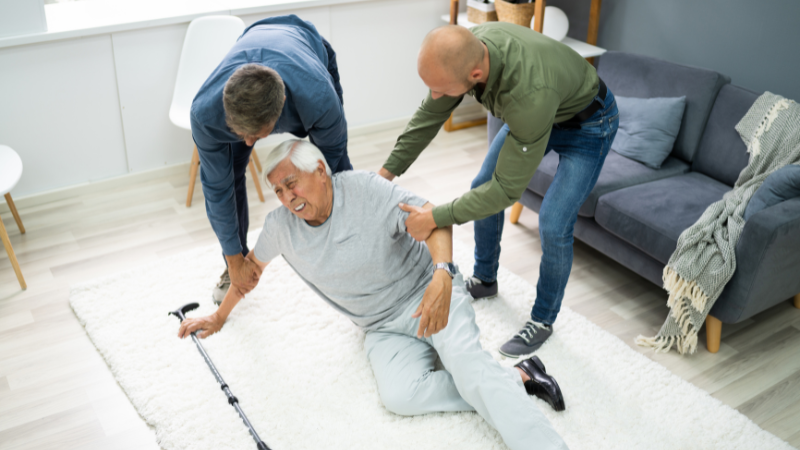
Falls are one of the leading causes of injury among older adults in the United States. According to the Centers for Disease Control and Prevention (CDC), 1 in 4 adults aged 65 and older falls each year, and falls lead to over 3 million emergency room visits annually.
For family caregivers, seeing a loved one fall can be frightening. Knowing how to safely help a senior up after a fall can prevent further injury to both the senior and the caregiver. This guide explains what to do immediately after a fall and how to help an elderly person get up safely.
What to Do Immediately After a Senior Falls
The first moments after a fall are very important. Many caregivers instinctively try to lift their loved one right away, but this can actually cause further injury if the person has a fracture, head injury, or internal trauma.
If an older adult falls, caregivers should take the following steps:
- Stay calm and reassure your loved one
- Encourage them to take slow, deep breaths and remain still
- Ask if they feel pain and where it is located
- Check for visible injuries such as swelling, bruising, or bleeding
- Look for signs of serious injury such as confusion, dizziness, or inability to move
If your loved one appears injured, complains of severe pain, or hit their head, do not attempt to move them. Call 911 immediately so emergency responders can properly evaluate the situation.
Even when there are no obvious injuries, first responders can provide what is known as a “lift assist,” helping seniors get up safely without risking harm to the caregiver or the senior.
Caregivers should avoid lifting an older adult alone, because improper lifting can easily lead to back injuries, muscle strain, or accidental dropping.
When It Is Safe to Help a Senior Get Up
If the senior says they feel okay, shows no signs of injury, and feels able to move, they may be able to get up slowly with assistance. However, caregivers should still move cautiously and allow the senior to do most of the physical effort.
Helping a senior stand up properly helps prevent:
- further falls
- muscle strain
- joint injuries
- caregiver injuries
Before helping them stand, ask the senior if they feel dizzy or weak. If they do, it may be better for them to remain on the floor until professional help arrives.
Step-by-Step Method to Help an Elderly Person Up After a Fall
If the senior feels capable of getting up and there are no signs of serious injury, caregivers can guide them through the following safe process.
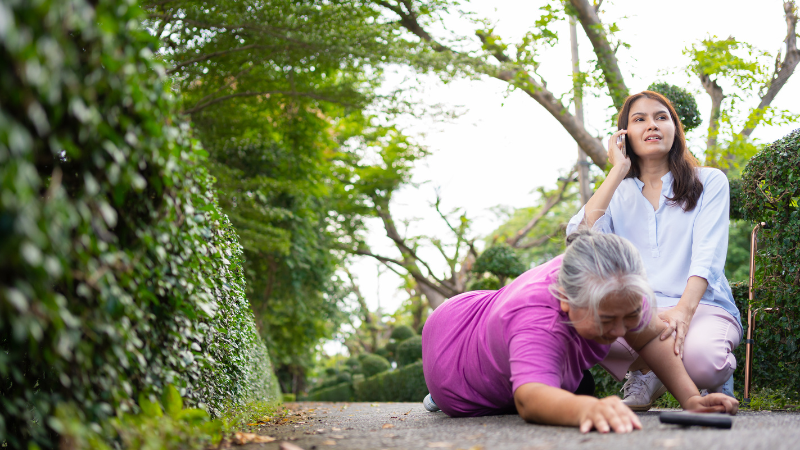
1. Help Them Roll Onto Their Side
Ask the senior to slowly roll onto their side and pause for a moment to catch their breath. Sudden movement may cause dizziness, so taking a moment here is important.
2. Move Into a Hands-and-Knees Position
Next, guide them to push themselves up onto their hands and knees. If their knees are uncomfortable, place a towel, blanket, or cushion underneath for support.
3. Place a Stable Chair Nearby
Position a sturdy chair directly in front of them. The chair should not slide or move when pressure is applied.
4. Bring One Foot Forward
Ask the senior to move their strongest leg forward so they are in a kneeling lunge position.
5. Push Up Using Arms and Legs
While holding the chair for support, the senior should use their arms and legs to slowly raise themselves upward.
6. Sit in a Second Chair
Place another chair behind them so they can slowly turn and sit down safely once they are standing.
During this process, caregivers should focus on stabilizing the senior rather than lifting them. Keeping your back straight and avoiding lifting protects you from injury as well.
What to Do After Helping a Senior Up
Even if your loved one says they feel fine, the fall should still be taken seriously. Some injuries, especially head injuries or internal bleeding, may not show symptoms immediately.
Caregivers should monitor their loved one for the next several hours and watch for symptoms such as:
- headaches
- dizziness
- nausea
- confusion
- unusual fatigue
- increasing pain or swelling
If any of these symptoms appear, seek medical attention right away.
It is also important to inform the senior’s doctor about the fall. Falls can indicate underlying health issues such as balance problems, medication side effects, or muscle weakness.
Why Falls Are So Dangerous for Seniors
Falls are the leading cause of injury-related hospitalizations among older adults. According to data from the Centers for Disease Control and Prevention:
• More than 800,000 seniors are hospitalized each year due to falls
• Hip fractures and Knee pain are one of the most serious fall injuries, often requiring surgery and long recovery periods
• Many seniors who fall once are twice as likely to fall again
To learn more about knee-related issues in the elderly, read Weak Knees in Seniors: Causes, Home Care Tips, and Exercises
Beyond physical injuries, falls can also create fear of falling, which may cause seniors to reduce activity levels. Reduced activity can lead to muscle weakness, which increases fall risk even further.
Why Many Seniors Do Not Report Falls
Despite how common falls are, many seniors do not tell their doctors or family members when they fall.
This often happens because older adults:
- feel embarrassed
- worry about losing independence
- fear being moved to assisted living
- do not believe the fall was serious
Unfortunately, hiding falls prevents families and doctors from identifying the causes and taking steps to prevent future accidents.
How Families Can Help Prevent Falls at Home
Preventing falls is one of the most important ways families can protect aging loved ones. Many falls occur because of simple hazards around the home.
Caregivers can help reduce risks by:
- installing grab bars in bathrooms
- improving lighting throughout the home
- removing loose rugs and clutter from floors
- keeping stairways clear
- ensuring seniors wear supportive footwear
- encouraging regular exercise to improve balance and strength
Mobility aids such as canes or walkers may also help seniors maintain stability while walking.
Professional Senior Home Care

One of the ways you can help your senior loved ones avoid falls is by working with a home care agency like Assisting Hands Home Care. We provide complete home care services for seniors who are aging in place that includes personal care and help with tasks around the home. Our caregivers can also help your loved ones move around the home and keep walkways and stairways clear to help prevent falls.
If you have senior loved ones who could benefit from elder home care, make sure to give Assisting Hands of Westlake, OH, a call today at (440) 517-4623.
Frequently Asked Questions About Senior Falls
When should you call 911 after a senior falls?
Call emergency services if the senior:
- hit their head
- cannot stand or move
- has severe pain
- shows signs of confusion or dizziness
- may have broken a bone
How long should a senior stay on the floor after a fall?
Seniors should not remain on the floor for extended periods. Remaining on the floor for more than an hour, sometimes called a “long lie,” can lead to dehydration, muscle damage, and other complications. If the senior cannot get up safely, emergency assistance should be requested.
What is the “long lie” after a fall?
The term “long lie” refers to a situation where a senior remains on the floor for an hour or longer after falling. This can lead to dehydration, pressure injuries, muscle breakdown, and other medical complications. Research from the Centers for Disease Control and Prevention highlights that extended time on the floor significantly increases health risks.
What rooms in the house have the highest fall risk for seniors?
Certain areas of the home pose a higher risk for falls. These include:
- bathrooms with slippery floors
- stairways and hallways with poor lighting
- bedrooms where seniors may get up at night
- kitchens where spills can occur
- living areas with loose rugs or clutter
How can seniors get help if they fall while alone?
Many seniors use medical alert systems that allow them to call for help by pressing a wearable button. Some systems also include automatic fall detection that alerts emergency services if a fall is detected. These devices are especially helpful for seniors who live alone.
Why do seniors fall more at night?
Nighttime falls often happen because of:
- poor lighting
- rushing to the bathroom
- grogginess from medications
- balance problems when waking up
- clutter or obstacles in hallways

