
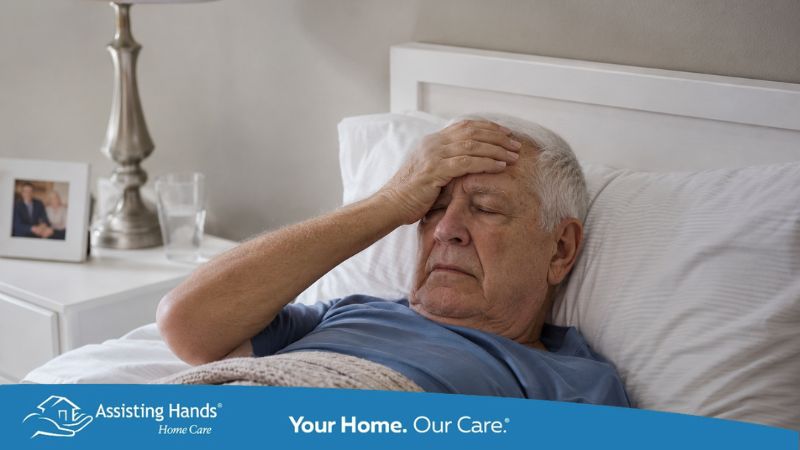
Your loved one finished inpatient rehab. They passed the discharge tests. The doctors said recovery is going well. But now that they are home, they cannot get through a simple conversation without needing to rest. They forget what they said ten minutes ago. They get overwhelmed by the television. They seem like a completely different person by early afternoon.
You are not imagining it. And it is not laziness, depression, or lack of motivation.
What your family is experiencing has a name: post-stroke cognitive fatigue. It affects a significant majority of stroke survivors, it is rarely explained at discharge, and it is one of the most misunderstood parts of life after a stroke. This guide breaks down exactly what it is, why it happens, and what families in the Greater Cleveland area can do to help.
What Is Post-Stroke Cognitive Fatigue?
Post-stroke cognitive fatigue is not ordinary tiredness. It is a neurological condition caused by the brain working significantly harder than it did before the stroke to complete tasks that used to be automatic.
Before a stroke, your brain routes signals along well-established pathways. After a stroke damages those pathways, the brain must reroute those same signals through alternative neural routes. That rerouting takes far more energy. The result is a profound sense of exhaustion that hits after even minor mental effort, not just physical exertion.
Reading a paragraph, holding a conversation, watching television, following instructions during physical therapy – all of these tasks can trigger cognitive fatigue in a stroke survivor. The brain is not broken. It is working overtime just to function.
This is why your loved one may seem fine in the morning and completely depleted by noon. The brain’s energy reserves are real, and they are limited during stroke recovery.
How Common Is Post-Stroke Cognitive Fatigue?
Very. Research published in peer-reviewed neurology journals puts the prevalence of post-stroke fatigue between 29% and 85% of stroke survivors, depending on where in the brain the stroke occurred, the severity, and how long ago it happened. Studies published in 2025 and 2026 continue to identify it as one of the most under-addressed complications of stroke recovery.
A 2026 review in Frontiers in Neuroimaging confirmed that post-stroke cognitive impairment, which includes fatigue as a core symptom, is gaining widespread attention due to its high incidence and its connection to reduced rehabilitation outcomes and increased risk of stroke recurrence. A separate 2026 systematic review and meta-analysis published in Frontiers in Neurology, drawing on data from 7,048 patients across six countries, further documented the scale of this problem among first-time stroke survivors.
Despite how common it is, most families leave the hospital without a clear explanation of what cognitive fatigue is or how to manage it at home. That gap between clinical care and daily life is exactly where recovery can stall.
What Post-Stroke Cognitive Fatigue Actually Looks Like in Your Home
This is where families get confused. Cognitive fatigue does not look like someone lying in bed all day. It often looks like personality changes, memory problems, or emotional outbursts. Here is what to watch for:
- Shortened attention span. Your loved one may start a task and lose the thread within minutes, not because they are distracted but because sustained attention draws heavily on a brain that is already working at capacity.
- Memory gaps. Short-term memory is particularly vulnerable. They may repeat questions, forget what was said moments ago, or lose track of simple routines. This is not dementia. It is a brain under strain.
- Emotional dysregulation. Cognitive fatigue reduces the brain’s ability to regulate emotions. Irritability, sudden crying, and emotional outbursts that seem out of proportion to the situation are common and documented symptoms, not character flaws.
- Sensory overload. Background noise, multiple conversations, a busy room, or even a television on in the background can be genuinely overwhelming. Stroke survivors may fidget, withdraw, or become agitated in environments that feel normal to everyone else.
- The afternoon crash. Many families notice a clear pattern: their loved one functions reasonably well in the morning and deteriorates significantly as the day goes on. This is the brain’s energy reserve depleting. It is predictable, and it can be planned around.
- They look fine, but they are not. This is perhaps the hardest part for families. Stroke survivors with cognitive fatigue often look healthy. There is no visible disability. This makes it easy for others, and even the survivors themselves, to assume they should be doing more, trying harder, or pushing through. That assumption causes real harm.
Why Does the Brain Get This Tired?
Two primary mechanisms drive post-stroke cognitive fatigue.
- Neural rerouting demands. When stroke damages brain tissue, surviving neurons must compensate by forming new connections and taking over functions previously handled by the damaged areas. This neural plasticity is remarkable and is the basis for stroke recovery, but it is metabolically expensive. The brain consumes glucose and oxygen at a higher rate when rerouting signals, and that cost is felt as fatigue.
- Neuroinflammation. A 2026 narrative review published in PMC found that neuroinflammatory processes play a significant role in post-stroke fatigue. Inflammatory cytokines produced during the brain’s healing response can cross the blood-brain barrier and affect neuronal activity. One study cited in the review found that 60% of stroke survivors with clinically significant fatigue had elevated levels of the inflammatory marker IL-6. The brain is not just healing tissue; it is managing an ongoing inflammatory response that drains energy reserves.
Understanding these two mechanisms matters because they explain why rest alone does not resolve cognitive fatigue. The brain needs the right conditions to recover, and simply sleeping more does not reset a system under neuroinflammatory stress.
Managing Post-Stroke Cognitive Fatigue at Home: A Practical Guide for Families
These are concrete, practical steps that make a measurable difference in managing post-stroke cognitive fatigue at home.
- Build a predictable schedule. The brain recovers better in routine. Consistent wake times, meal times, activity times, and rest periods reduce the cognitive load of navigating an unpredictable day. Post the schedule where your loved one can see it.
- Protect the morning. Cognitive function is typically at its peak in the morning hours. Schedule the most cognitively demanding activities, including therapy exercises, appointments, and important conversations, before noon. Save quieter, lower-demand tasks for the afternoon.
- Reduce environmental stimulation intentionally. Turn off background television during meals and conversations. Choose quieter rooms for important discussions. Limit the number of people talking at once. These small adjustments reduce the sensory input the brain has to process and conserve energy for tasks that matter.
- Break every task into smaller steps. Instead of asking your loved one to “get ready,” walk through each step of getting dressed, one piece at a time. Instead of giving a list of instructions, give one instruction at a time and wait for it to be completed before moving to the next.
- Build rest into the plan before fatigue hits. Do not wait for your loved one to crash before offering a rest break. Schedule short, planned rest periods throughout the day. A 15 to 20 minute quiet period after any cognitively demanding activity can extend your loved one’s functional window significantly.
- Do not mistake quiet for recovery. Sitting in front of the television is not rest for a stroke survivor. The brain is still processing visual input, sound, and story. True cognitive rest means a quiet room with minimal stimulation, ideally lying down with eyes closed.
- Track patterns and share them with the care team. Note what time of day fatigue peaks, what activities seem to trigger it, and what helps. This information is valuable to neurologists, occupational therapists, and home care providers. Recovery plans improve when they are built on real observation, not assumptions.
The Gap Between Rehab and Home
This is the part that does not get talked about enough.
Inpatient and outpatient therapy is designed to help stroke survivors rebuild skills. But therapy sessions happen in controlled, one-on-one environments with trained professionals who understand pacing, cognitive load, and fatigue management. The moment your loved one comes home, they are navigating a far more demanding environment, often without that structured support.
Families are doing their best. But managing cognitive fatigue at home requires knowledge that most families simply were not given at discharge. It requires understanding not just what your loved one can do in a good moment, but what depletes them, what the warning signs of overload look like, and how to structure an entire day around a brain that is healing.
At Assisting Hands Home Care in Westlake, this is the work our caregivers do every day for families across the Greater Cleveland area. We are trained to recognize the signs of cognitive fatigue before they escalate, to structure daily routines that conserve energy for what matters most, and to provide the consistent, one-on-one support that bridges the gap between formal therapy and daily life.
We work alongside your existing therapy team, not instead of them. Our role is to make every hour outside of therapy as recovery-supportive as possible.
When to Talk to a Professional
Post-stroke cognitive fatigue can improve significantly over time, especially in the first year of recovery. But it requires the right support to do so. Talk to your loved one’s neurologist or primary care physician if:
- Fatigue is worsening rather than stabilizing after the first few months
- Emotional dysregulation is significantly affecting relationships or safety
- Your loved one is refusing therapy or rehabilitation because they are too exhausted to participate
- You, as a caregiver, are becoming burned out managing the unpredictability of fatigue-related behavioral changes
Cognitive fatigue is treatable and manageable. It is not a life sentence, but it does require acknowledgment, planning, and the right level of support.
How In-Home Support Bridges the Gap Between Rehab and Real Life
If you searched for answers because your loved one came home from the hospital and something felt wrong that you could not name, you were right to keep looking. Post-stroke cognitive fatigue is real, it is neurological, and it is not your loved one’s fault or yours.
The families we work with in Westlake, Rocky River, Bay Village, Avon Lake, and across the Greater Cleveland area find that simply having a name for what their loved one is experiencing changes everything. It shifts the conversation from frustration to understanding. And understanding is where recovery actually begins.
If your family is navigating life after a stroke and needs support, contact Assisting Hands Home Care Westlake today. Our team can answer your questions, assess your loved one’s needs, and help you build a care plan that supports real recovery at home.

