
Flu Fighter Chicken Noodle Soup
Whether it’s the flu, allergies, or that lovely spring cold, flu fighter chicken noodle soup is the perfect comfort food…
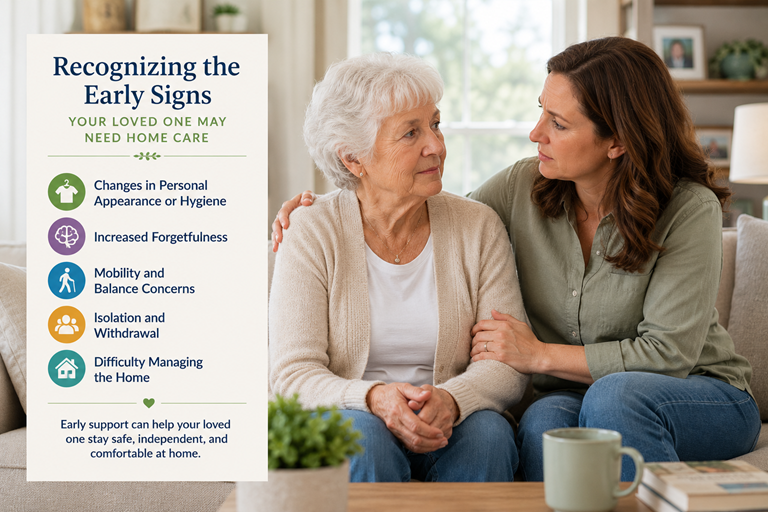
For many families, the realization happens slowly.
You may notice unopened mail piling up on the counter. Maybe your mom seems more forgetful than usual, or your dad no longer keeps up with household chores the way he once did. Sometimes it is a small moment during a visit that quietly raises concern.
The truth is that many older adults do an excellent job hiding their struggles. They value their independence and often do not want to worry their family members. Because of this, the signs that help may be needed can sometimes be easy to overlook at first.
Recognizing concerns early can help families put support in place before a crisis occurs.
Changes in Personal Appearance or Hygiene
One of the first signs families often notice is a change in grooming or cleanliness.
You may observe:
These changes do not always mean a senior can no longer live independently, but they may indicate that daily tasks are becoming more difficult or exhausting.
Increased Forgetfulness
Occasional forgetfulness happens to everyone, but consistent memory concerns may signal the need for additional support.
Families sometimes notice:
Even mild memory challenges can affect safety and daily routines.
Mobility and Balance Concerns
Pay attention to how your loved one moves around the home. Difficulty standing, slower walking, holding onto furniture, or recent falls may indicate increased risk for injury.
Some seniors begin avoiding stairs, outdoor activities, or errands because movement has become more challenging.
Early support can help reduce fall risks and maintain confidence at home.
Isolation and Withdrawal
Many older adults become more socially isolated over time, especially after losing a spouse, close friends, or the ability to drive.
Signs of isolation may include:
Loneliness can impact both emotional and physical health, even when a senior appears outwardly independent.
Difficulty Managing the Home
A once organized home may begin showing signs that everyday responsibilities are becoming overwhelming.
You may notice:
These changes often happen gradually, making them easy to dismiss at first.
Home Care Is Not About Losing Independence
One of the biggest misconceptions families face is believing that accepting help means giving up independence. In reality, home care often helps seniors remain independent longer.
Support may begin with only a few hours each week for companionship, meal preparation, transportation, light housekeeping, or medication reminders. Small amounts of assistance can greatly improve safety, comfort, and quality of life.
Starting the Conversation Early Matters
Families often wait until an emergency occurs before exploring care options. Starting conversations earlier allows seniors to participate in decisions and receive support before daily challenges become overwhelming.
Sometimes the most loving step a family can take is recognizing that no one should have to navigate aging completely alone.
Whether it’s the flu, allergies, or that lovely spring cold, flu fighter chicken noodle soup is the perfect comfort food…
It’s no secret that exercise is good for us. Good for our heart, our mood, our general well-being, but for…
Spring has been in the air…even if just as a tease (depending on your area of the country), and it…
Most of the time, February is associated with hearts because of Valentine’s Day. However, there’s another reason we should think…