
When your parents live in Arlington Heights and you live hours (or states) away, caregiving can feel like you are always “on call,” but never quite close enough. You want to help them stay safe and independent, yet coordinating care from a distance can quickly become stressful, confusing, and emotionally draining.
This guide gives you a clear, realistic system you can start using today—without trying to do everything at once.
Long-Distance Caregiving: Quick Plan (Start Today)
If you only have 10 minutes, do these five steps first:
- Create one shared care document (medications, doctors, emergency contacts, allergies).
- Confirm legal permissions (healthcare POA/proxy + ability to speak with providers).
- Choose a local “eyes-on” person (neighbor, friend, or family member nearby) plus a backup.
- Set a weekly routine (video call + one local check-in).
- Fill care gaps with professional support (home care for daily tasks; respite for caregiver relief)
How do you coordinate care for elderly parents when you live far away?
The best approach is to treat it like a simple care system with three parts:
- Information: everything important is organized and easy to access
- People: a small, dependable local network
- Support: professional help for the tasks you cannot do from a distance
When those three pieces are in place, you spend less time reacting to crises and more time making steady, calm decisions.
1. Maximize what you can do from a distance
If you can’t be there in person, focus on what you can do and play to your strengths:
- Financial Management: If you’ve got a natural knack for numbers, help with budgeting, paying bills, reviewing insurance, and monitoring any suspicious charges.
- Organization & Scheduling: Skilled, intuitive planners shine here! To help your senior loved one you can keep medical, legal and financial documents in one place. By using a binder, folder or digital system to track appointments, medications and important contacts you can take the mental strain off your loved one and help ensure their lives are well organized and healthily balanced.
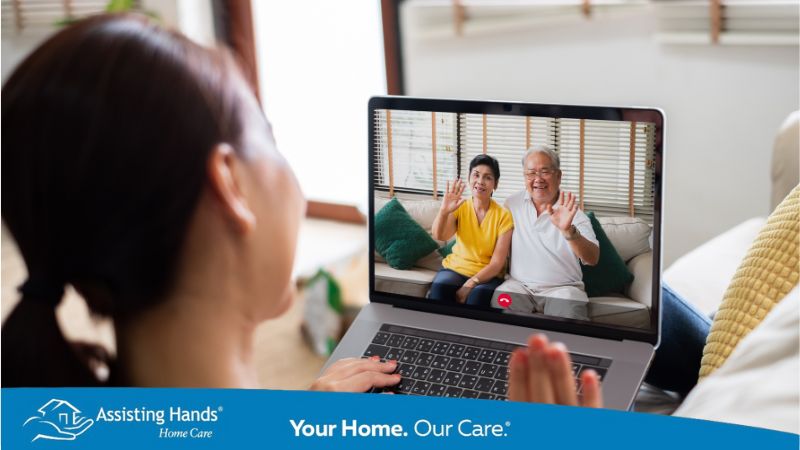
- Video Check-Ins: In this day and age regular video calls aren’t only accessible but they’re in every corner of our worlds! Not to mention, it’s great mental stimulation for your loved one to be able to navigate technology. Sometimes our parents, grandparents, etc. can’t be there for that basketball game or birthday celebration but they can still be kept in the loop with a quick video call – while also providing an organic opportunity for family to observe any change in health and behavior.
- Meal & Grocery Deliveries: Setting up meal services or grocery deliveries to ensure fridges and pantries are stocked is an efficient use of both time and resources!
Helpful Article: How to Protect Your Elderly Relatives From Senior Scams
2. How do you build a local support network in Arlington Heights?
Distance caregiving gets easier when you have trusted local support.
Identify “safe local contacts”
- Ask: who can physically check in if something feels off?
- A neighbor your parent trusts
- A close friend
- Someone from their faith/community group
- A local family member (even if not hands-on daily)
Add simple safety supports at home
- These can prevent emergencies and ease your worry:
- Medical alert system
- Smart locks (so help can access the home if needed)
- Motion lights, grab bars, non-slip mats
- A “safe folder” near the fridge with emergency contacts
Consider community resources
Illinois has structured aging resources that can help you locate local programs, caregiver support, and services through Area Agencies on Aging.
3. When should you bring in professional support?
Most long-distance families need professional help at some point—not because they “can’t” do it, but because distance makes consistency hard.
In-home care services (fills daily-life gaps)
Home care can support:
- ADLs (bathing, dressing, grooming, toileting, transfers)
- IADLs (meals, light housekeeping, laundry, errands, companionship)
For many seniors, home care helps them continue aging in place—something a large majority say they want. (AARP reported 77% of adults 50+ want to remain in their homes long term.)
Geriatric care managers (care coordination + advocacy)
A care manager can be helpful when the situation is complex—multiple diagnoses, frequent hospitalizations, family conflict, or uncertainty about next steps. They can assess needs, coordinate services, and advocate locally.
“Carrier Alert” programs (a helpful layer, where available)
Some communities offer programs where mail carriers watch for warning signs like mail piling up and can notify appropriate parties. (Availability varies; check locally.)
4. Organize Medical, Legal & Financial Matters
- Have a conversation with your loved one about the significance and solace in establishing Power of Attorney (POA). Ironing out the details before tragedy strikes is a key component to ensuring financial and healthcare wishes are honored and seen through.
- It’s tough enough keeping track of your own appointments! To help ease the load of doing all that for someone else – keep a list of doctors, medications, and emergency contacts readily accessible!
- The truth is, all of this can add up! It’s always helpful to identify payer sources when considering healthcare, assisted living, home care, geriatric care managers, etc. To help alleviate the strain – research Medicare, Medicaid, VA benefits and private insurance options to cover care costs.
5. Plan for the future (before you’re forced to)
- Emergency planning is one of those things that stings you in the now and saves you in the later. These conversations can feel uncomfortable and stiff at first but trust us when we say they’re so valuable. Having conversations about what to do in emergency situations, end of life planning or even simpler instances like a fall or power outage can ensure a plan is in place and measures are being taken to keep health and safety intact.
- Consider options to enhance your loved ones wellbeing: assisted living, independent living in a senior community, home care, etc. Considering 77% of adults 50 and older say they want to remain in their homes as they age rather than move to a facility (AARP), home care is a fabulous option for your loved one. From companionship to personal care, home care can help bridge the gap between their care now and the care they deserve. At Assisting Hands, we’re not only providing care, we’re building relationships.
6. Take care of yourself too (because burnout is real)
Supporting aging parents from afar can be emotionally and mentally taxing. Remember to prioritize self-care, seek support and resources when needed and recognize that you’re doing the best you can.
By taking a proactive approach, staying organized and making the most of local resources, you can lend meaningful care and support for your aging parents, no matter the distance.

Need help coordinating care in Arlington Heights?
If you are coordinating care from afar and want a reliable local partner, Assisting Hands Home Care can help support your loved one at home, whether you need companionship, help with daily activities, safety support, or a consistent caregiver presence.
Call (847) 499-1307 to learn how we can support your family.

