
We often hear the advice, especially during the summer months, to “drink more water,” but for seniors, staying hydrated is about much more than simply drinking to quench thirst. The right hydration is key to maintaining energy levels, cognitive clarity, circulation, and overall physical health.
As we age, our bodies experience changes that make staying hydrated a daily challenge. Our thirst signal becomes less sensitive, meaning many older adults may not feel thirsty even when their bodies need fluids.
At Assisting Hands Home Care, we understand that supporting senior wellness often comes down to small daily habits. Understanding why senior hydration matters and knowing how to encourage it can make a big difference in helping loved ones remain healthy, comfortable, and independent at home.
Why Hydration Is Different After 60
Hydration supports many important functions in the body:
- Maintaining healthy circulation
- Supporting blood pressure regulation
- Helping regulate body temperature
- Supporting digestion
- Improving energy levels
- Protecting brain function
However, seniors are more vulnerable to dehydration because of several age-related changes.
One of the biggest reasons seniors become dehydrated is that the body’s natural thirst response becomes weaker with age. Unlike younger adults, older adults may not receive a strong signal telling them they need to drink.
This means dehydration can develop before a senior even realizes they are thirsty.
Many older adults take medications that can affect hydration, including some that increase fluid loss. Conditions involving the kidneys, heart, or diabetes may also impact how the body manages fluids.
Dehydration can sometimes appear as symptoms that families may mistake for other health concerns. A loved one who suddenly seems more tired, confused, irritable, or dizzy may simply not be getting enough fluids.
The Hidden Signs of Dehydration in Seniors
Since many older adults may not recognize thirst, family members and caregivers should watch for subtle signs of dehydration in elderly adults. Some common signs include:
- Changes in Mood or Confusion — A sudden increase in confusion, forgetfulness, or changes in mood
- Persistent Fatigue or Weakness — Unusually tired, sluggish, or less interested in activities
- Dry Mouth or Skin — Dry lips, mouth, or skin that appears less elastic
- Changes in Urine — Dark-colored urine, urinating less frequently, or a noticeable change in output
- Dizziness and Increased Fall Risk — Lightheadedness, weakness, and balance issues can increase the risk of falls. Our fall prevention support can help reduce this risk.
How Proper Hydration Supports Senior Health
Staying hydrated helps seniors in many important ways:
- Supports Brain Health — Water helps the brain function properly. Even mild dehydration can impact concentration, memory, and alertness. Read more about supporting brain health at home.
- Promotes Heart Health — Plenty of fluid helps maintain healthy blood flow, allowing the heart to work efficiently. See our related tips on heart health after 60.
- Improves Movement — Hydration supports muscle function and joint comfort, helping seniors stay active and independent.
- Supports Digestion — Fluids help prevent constipation and support a healthy digestive system.
- Helps Prevent Urinary Tract Infections (UTIs) — Drinking enough fluids can help flush out bacteria from the urinary system, reducing the risk of infection.
Creative Ways to Encourage Hydration in Seniors
Encouraging a loved one to drink more water does not have to be a daily struggle. Small changes can make it easier and more enjoyable.
Sometimes the best encouragement comes through companionship. Enjoying an afternoon tea, sharing a glass of flavored water, or even sitting together during meals can make hydration feel like a social activity instead of a chore.
Keep their favorite cup, water bottle, or pitcher within reach of a favorite chair, bedside table, or dining area. If plain water isn’t appealing, try a few of these instead:
- Fruit-infused water with lemon, berries, or cucumbers
- Herbal teas
- Low-sugar flavored beverages
- Soups and broths
- Water-rich foods like watermelon, oranges, and cucumbers
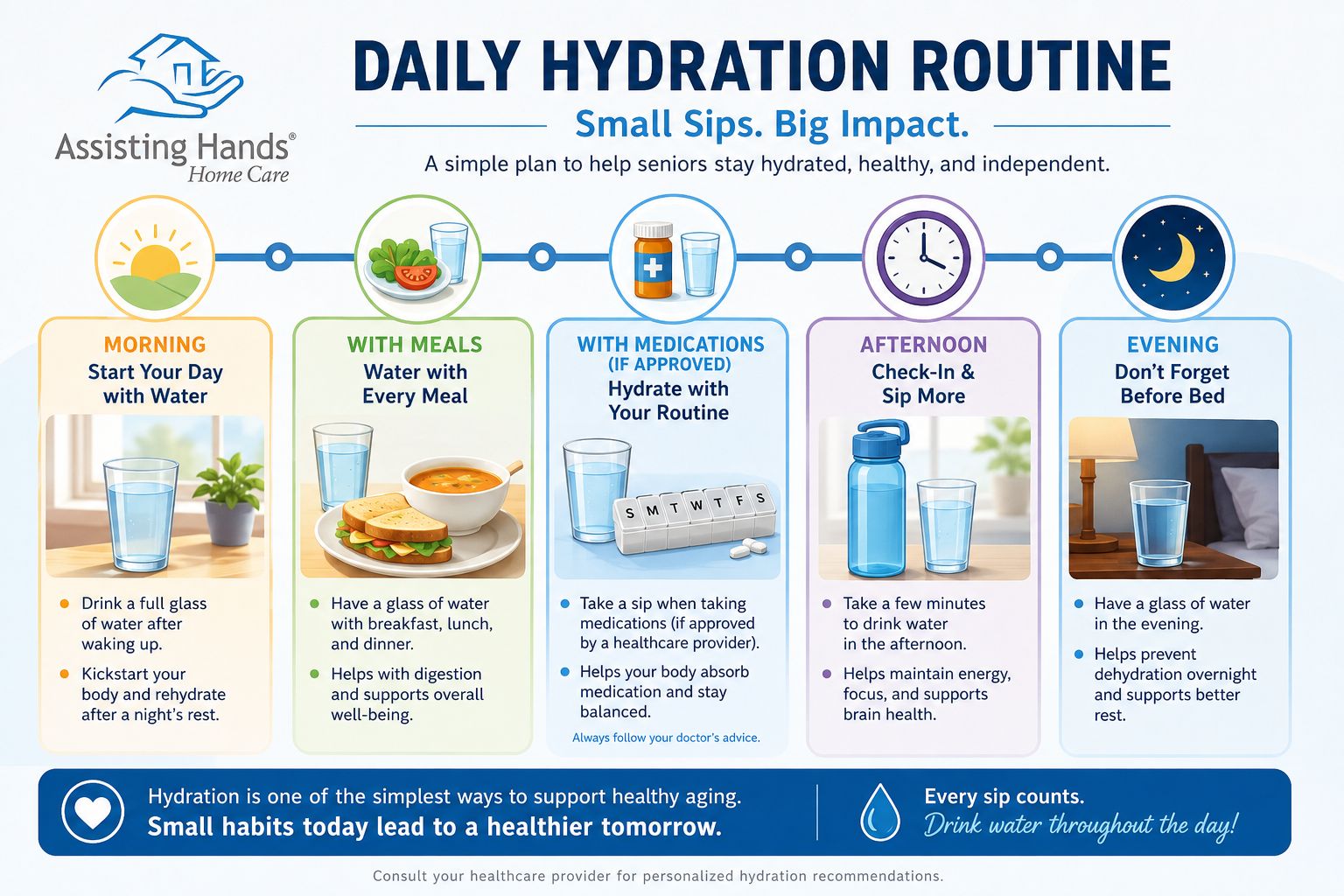
Building hydration into existing habits can make it easier. This might mean having a glass of water with meals, drinking water during medication routines (if approved by a healthcare provider), or setting reminders throughout the day. Small, consistent efforts can make the biggest difference.
 How Assisting Hands Home Care Can Help Seniors & Families in Arlington Heights
At Assisting Hands Home Care, we believe that quality care is about more than completing daily tasks. It’s about supporting the habits that improve quality of life. Our caregivers provide personalized support by:
- Offering friendly reminders to drink water
- Preparing meals and hydrating snacks
- Monitoring changes in daily routines
- Encouraging healthy habits
- Providing companionship during meals and activities
- Communicating concerns with families
Whether it’s preparing refreshing drinks, sharing a conversation over lunch, or simply being there to offer encouragement, our caregivers help your loved ones feel supported and cared for in the comfort of their own homes.
Small Habits Can Make a Big Difference
Hydration is one of the simplest ways to support healthy aging, yet it is often overlooked. By recognizing the warning signs of dehydration and making fluids a regular part of the day, families can help protect their loved ones’ energy, safety, and overall well-being.
If you or a loved one could benefit from additional support at home, Assisting Hands Home Care is here to provide compassionate care tailored to your family’s needs.
Get Trusted Home Care in Arlington Heights and Nearby Areas
If you or a loved one is considering in-home care, Assisting Hands Home Care Arlington Heights is ready to help. We provide personalized senior care services, whether you need short-term support after an illness or ongoing long-term care.
We proudly serve Arlington Heights and nearby communities, including Mount Prospect, Wheeling, Glenview, Prospect Heights, and surrounding areas. Call us today at (847) 499-1307 to learn more about our compassionate senior home care services.
Senior Hydration FAQs
How much water should a 70-year-old person drink a day?
Most 70-year-olds need about 9 cups of fluid a day for women and 13 cups for men, per National Academy of Medicine guidelines for adults over 50. This total counts water, other beverages, and water-rich foods, not just plain water. A simpler rule of thumb is one-third to one-half of body weight in ounces per day. A doctor should confirm the right amount if kidney disease, heart failure, or diuretic medication is involved.
What is the best hydrating drink for seniors?
Plain water is the best hydrating drink for seniors. Strong alternatives include low-fat milk, coconut water, unsweetened herbal tea, and diluted fruit juice, since each adds fluid along with useful electrolytes. Sugary sodas, energy drinks, and alcohol should be limited because they can increase fluid loss instead of replacing it.
Should older people drink more or less water?
Older adults need as much water as younger adults, not less. The difference is that their thirst signal weakens with age, so they often don’t feel thirsty even when their body needs fluids. This makes scheduled reminders and easy access to drinks more important than relying on thirst alone.
What happens if a senior doesn’t drink enough water?
Inadequate fluid intake in seniors can cause confusion, fatigue, dizziness, constipation, and a higher risk of falls. Left unaddressed, it can lead to urinary tract infections, kidney strain, and electrolyte imbalances. Dehydration tends to progress faster in older adults, so these symptoms can appear before thirst does.

