

Spring is a welcome change after a long winter. Warmer temperatures, blooming trees, and fresh green lawns signal a new season of growth and renewal. But along with the beauty of spring comes a less pleasant reality: rising pollen counts and seasonal allergies.
While allergies are often associated with children and younger adults, many seniors are affected each year. In fact, an estimated 3–12% of older adults in the United States experience allergic conditions. As the body ages, the immune system changes, which can alter how seniors respond to allergens. Older adults may experience symptoms differently, recover more slowly, or face complications due to underlying health conditions.
Because spring pollen is airborne and widespread, avoiding exposure can be difficult. As trees, grasses, and flowers release pollen into the air, allergy triggers become nearly impossible to escape. For seniors, this seasonal shift can mean increased discomfort and potential health risks.
Understanding how spring allergies affect older adults is the first step toward protecting their health and comfort. Below are practical tips to help keep seniors safe and breathing easier during allergy season.
What Are Seasonal Allergies?
Seasonal allergies, also known as hay fever or allergic rhinitis, occur when the immune system overreacts to airborne substances that are typically harmless. During spring, the most common triggers include pollen from trees, grasses, and weeds. When these tiny particles are inhaled, the body identifies them as threats and releases chemicals like histamine, which cause allergy symptoms.
Common symptoms of seasonal allergies include:
- Sneezing
- Runny or stuffy nose
- Itchy or watery eyes
- Scratchy throat
- Coughing
- Sinus pressure or headaches
For seniors, allergy symptoms may sometimes be mistaken for a cold, sinus infection, or even medication side effects. Additionally, older adults with asthma, chronic obstructive pulmonary disease (COPD), or other respiratory conditions may experience worsened breathing difficulties during peak allergy season.
Unlike colds or viruses, seasonal allergies are not contagious and tend to last as long as exposure to allergens continues. Because pollen levels rise and fall with weather patterns, symptoms may vary from day to day throughout the spring months.
Recognizing the signs of seasonal allergies is key to managing symptoms early and preventing complications, especially for older adults whose immune systems and respiratory health may already be more vulnerable.
Tips to Help Prevent Allergies in Seniors During Allergy Season
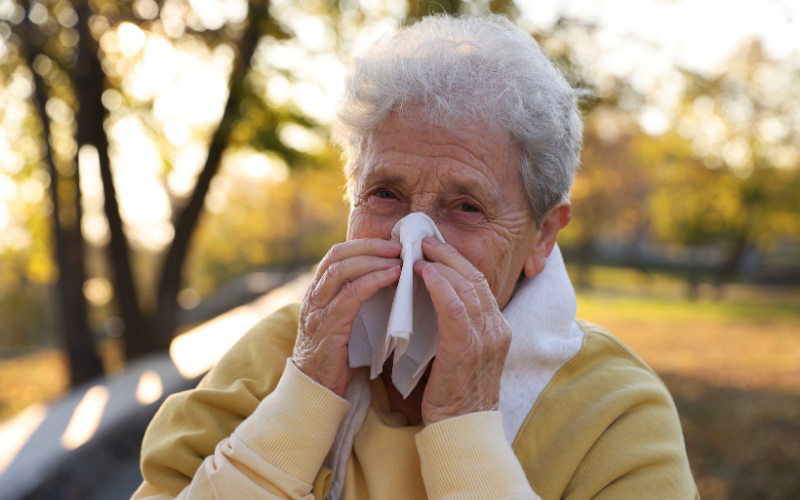
While it may be impossible to eliminate exposure to spring pollen entirely, there are practical steps seniors and caregivers can take to significantly reduce allergy triggers and minimize symptoms.
1. Monitor Daily Pollen Counts
Check local pollen forecasts and limit outdoor activities when counts are high, typically in the morning and on dry, windy days. Planning errands or walks for later in the day can reduce exposure.
2. Keep Indoor Air Clean
- Keep windows and doors closed during peak allergy season.
- Use air conditioning instead of opening windows.
- Replace HVAC filters regularly.
- Consider using a HEPA air purifier in bedrooms or main living areas.
3. Change Clothes After Being Outdoors
Pollen can cling to clothing, shoes, hair, and skin. Seniors should change clothes and wash their hands and face after spending time outside. Showering before bedtime can also help prevent pollen from transferring to pillows and bedding.
4. Maintain a Clean Living Environment
Regular dusting and vacuuming (using a vacuum with a HEPA filter) can help remove allergens that make their way indoors. Washing bedding weekly in hot water also reduces pollen buildup.
5. Wear Protective Gear Outdoors
If seniors enjoy gardening or walking outside, wearing sunglasses and a wide-brimmed hat can help reduce pollen exposure to the eyes and face. In some cases, a lightweight mask may also be helpful on high-pollen days.
6. Stay Hydrated
Drinking plenty of fluids helps thin mucus and can reduce congestion. Proper hydration also supports overall immune function.
7. Review Medications with a Healthcare Provider
Some allergy medications may interact with prescriptions commonly used by seniors or cause side effects like drowsiness or increased blood pressure. Always consult a healthcare professional before starting any new allergy treatment.
By taking preventive steps early in the season, seniors can reduce the severity of symptoms and stay more comfortable throughout the spring months.
Over-the-Counter Medicines and Remedies for Seasonal Allergies

For many seniors, over-the-counter (OTC) treatments can provide effective relief from seasonal allergy symptoms. However, because older adults are more likely to take prescription medications or manage chronic conditions, it’s especially important to choose remedies carefully and consult a healthcare provider before starting anything new.
Antihistamines
Antihistamines help block histamine, the chemical responsible for many allergy symptoms like sneezing, itching, and runny nose. Newer, non-drowsy options are often preferred for seniors because they cause fewer side effects such as confusion, dry mouth, or dizziness. Some first-generation antihistamines may increase the risk of falls or interact with other medications, so they should be used cautiously.
Nasal Corticosteroid Sprays
Steroid nasal sprays reduce inflammation in the nasal passages and are highly effective for congestion, sneezing, and runny nose. These sprays are generally safe for longer-term use when directed, but proper technique is important for best results.
Saline Nasal Sprays or Rinses
Saline sprays and nasal rinses are drug-free options that help flush pollen and irritants from the nasal passages. They can be used daily and are a gentle, low-risk solution for managing mild symptoms.
Decongestants (Use with Caution)
Oral or nasal decongestants can temporarily relieve sinus pressure and congestion. However, they may raise blood pressure or heart rate and are not recommended for seniors with hypertension, heart disease, or certain other medical conditions unless approved by a doctor.
Eye Drops
For itchy or watery eyes, lubricating or antihistamine eye drops can provide targeted relief. Seniors should follow usage instructions carefully to avoid irritation.
Natural and Supportive Remedies
Some older adults find relief from simple supportive measures such as:
- Using a humidifier (if indoor air is dry)
- Drinking warm fluids to soothe throat irritation
- Applying a warm compress to relieve sinus pressure
While OTC options can be helpful, persistent or worsening symptoms should be evaluated by a healthcare professional. The goal is not only to relieve discomfort but also to ensure allergy symptoms do not interfere with breathing, sleep, or overall well-being.
Supporting Seniors Through Allergy Season with Home Care

Spring allergies can be more than just a seasonal nuisance for older adults. Congestion, fatigue, breathing difficulties, and medication side effects can interfere with sleep, daily routines, and overall well-being. For seniors with chronic conditions such as asthma, COPD, or heart disease, unmanaged allergy symptoms can even lead to more serious health concerns.
Family caregivers often do their best to monitor symptoms, manage medications, and keep the home environment clean and allergen-free. However, balancing these responsibilities with work and other obligations can be challenging.
Professional home care services can make a meaningful difference during allergy season. Caregivers can help seniors monitor symptoms, follow medication schedules, maintain a clean living space, prepare nutritious meals, and reduce exposure to environmental triggers. Just as importantly, they provide companionship and attentive support that promotes comfort and peace of mind.
If your loved one needs extra help this spring, Assisting Hands Home Care offers compassionate, personalized in-home care services designed to support seniors safely at home. Whether assistance is needed for a few hours a week or more comprehensive daily care is required, our trained caregivers are ready to help.
Call Assisting Hands Home Care at (630) 407-1932 to learn how professional home care can help your senior loved ones in Hinsdale, IL as well as Burr Ridge, Brookfield, Clarendon Hills, Downers Grove, Darien, La Grange, Oak Brook, Western Springs, Willowbrook, and the surrounding areas in DuPage and Cook Counties.

