
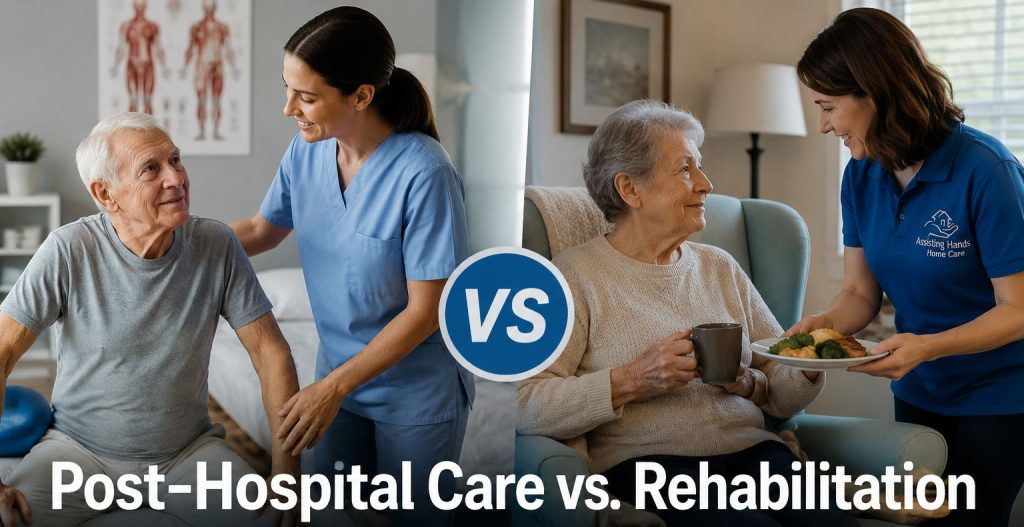
Leaving the hospital does not always mean a senior is fully recovered. Many older adults still need help with activities of daily living (ADLs), moving around safely, taking medications on schedule, and getting back on their feet after an illness, injury, or surgery. If your parent or loved one was recently discharged, you may be asking a familiar question; does she need rehab, home care, or both?
Families often use the terms “rehabilitation” and “post-hospital care” as if they mean the same thing, and it is easy to see why. Both can happen after a hospital stay, and both are meant to help someone recover. But they serve different purposes. Rehabilitation focuses on medical recovery and rebuilding physical abilities. Post-hospital care focuses on supporting daily needs and making the transition home a safe one.
Here is how to tell them apart, and how to figure out which type of support fits your situation.
Post-Hospital Care vs Rehabilitation
Post-hospital care helps seniors manage daily activities and recover safely after discharge, while rehabilitation focuses on restoring strength, mobility, and independence through therapy. Some people need both services during recovery.
What is Post-Hospital Care?
Post-hospital care is the support a senior receives after returning home from the hospital. It bridges the gap between discharge and full recovery, when someone is well enough to leave the hospital but not yet ready to manage everything on their own.
The goal is to help seniors:
- Recover safely at home
- Follow their discharge instructions
- Manage daily activities
- Avoid complications during recovery
- Lower the risk of ending up back in the hospital
Services often include:
- Personal care assistance
- Bathing and dressing support
- Meal preparation
- Medication reminders
- Transportation to follow-up appointments
- Help getting around the home
- Light housekeeping
- Companionship
- Safety monitoring
This kind of post-surgical and recovery care is non-medical and supports daily living and safety, not clinical treatment.
What is Rehabilitation?
Rehabilitation is a structured program built to help someone regain strength, mobility, and independence after an illness, injury, or surgery. It is hands-on, therapy-driven work led by licensed professionals, and it usually follows a specific plan with measurable goals.
Rehabilitation may include:
- Physical therapy: Helps to rebuild strength, improve balance, practice walking, and work through mobility exercises.
- Occupational therapy: Helps with daily tasks, restoring independence, and adapting the way someone does everyday activities after an injury or illness.
- Speech therapy: Supports communication, addresses swallowing difficulties, and works on cognitive challenges.
Depending on the person’s needs, rehab might happen in a skilled nursing facility, an outpatient center, or at home through a home health agency.
Key Differences Between Post-Hospital Care and Rehabilitation
The difference between home care and rehabilitation comes down to what each one is trying to accomplish. One supports your daily life. The other rebuilds a specific ability. Here is a side-by-side look.
| Post-Hospital Care | Rehabilitation |
| Focuses on daily support after discharge | Focuses on improving physical or functional abilities |
| Usually provided at home | May take place in a rehab facility, an outpatient center, or at home |
| Helps with everyday activities | Uses therapy programs and structured exercises |
| Supports medication routines and home safety | Works to restore strength and mobility |
| Provided by trained caregivers | Provided by licensed therapists and healthcare professionals |
Who Needs Rehabilitation After a Hospital Stay?
Rehabilitation after hospitalization is usually recommended when someone needs to recover a physical or functional ability they lost. Common situations include:
- Recovering from a stroke
- Hip or knee replacement
- A serious injury
- Loss of mobility
- A long hospital stay that left them weak or deconditioned
- Neurological conditions
- Recovery from major surgery
A doctor or the hospital’s care team typically decides whether rehab is needed, and what kind. If therapy is part of the discharge plan, that recommendation is your starting point.
Who Needs Post-Hospital Care at Home?
Post-hospital care makes sense when the main concern is daily safety and support rather than clinical therapy. A senior may benefit from care after hospital discharge if they need help with:
- Getting around the home safely
- Bathing and dressing
- Preparing meals
- Managing medications
- Getting to follow-up visits
- Preventing falls
- Adjusting to being back home after a hospital stay
If your loved one is medically stable but you are worried about them being alone after surgery, falling, missing a medication dose, or skipping meals, home care can fill this gap.
Can Someone Need Both Rehabilitation and Post-Hospital Care?
Yes, and this is more common than families expect. The two are not either-or. Rehabilitation improves specific abilities, while home care handles the daily routine and keeps things safe in between therapy sessions.
Here is what that looks like in practice; a senior recovering from hip surgery may go to physical therapy to rebuild strength while a caregiver helps with meals, bathing, transportation, and moving safely around the house at home. The therapist works on the recovery goal. The caregiver makes sure the rest of the day runs smoothly and safely.
Pairing the two often leads to a better recovery, because the progress made in therapy is easier to protect when someone has consistent help at home.
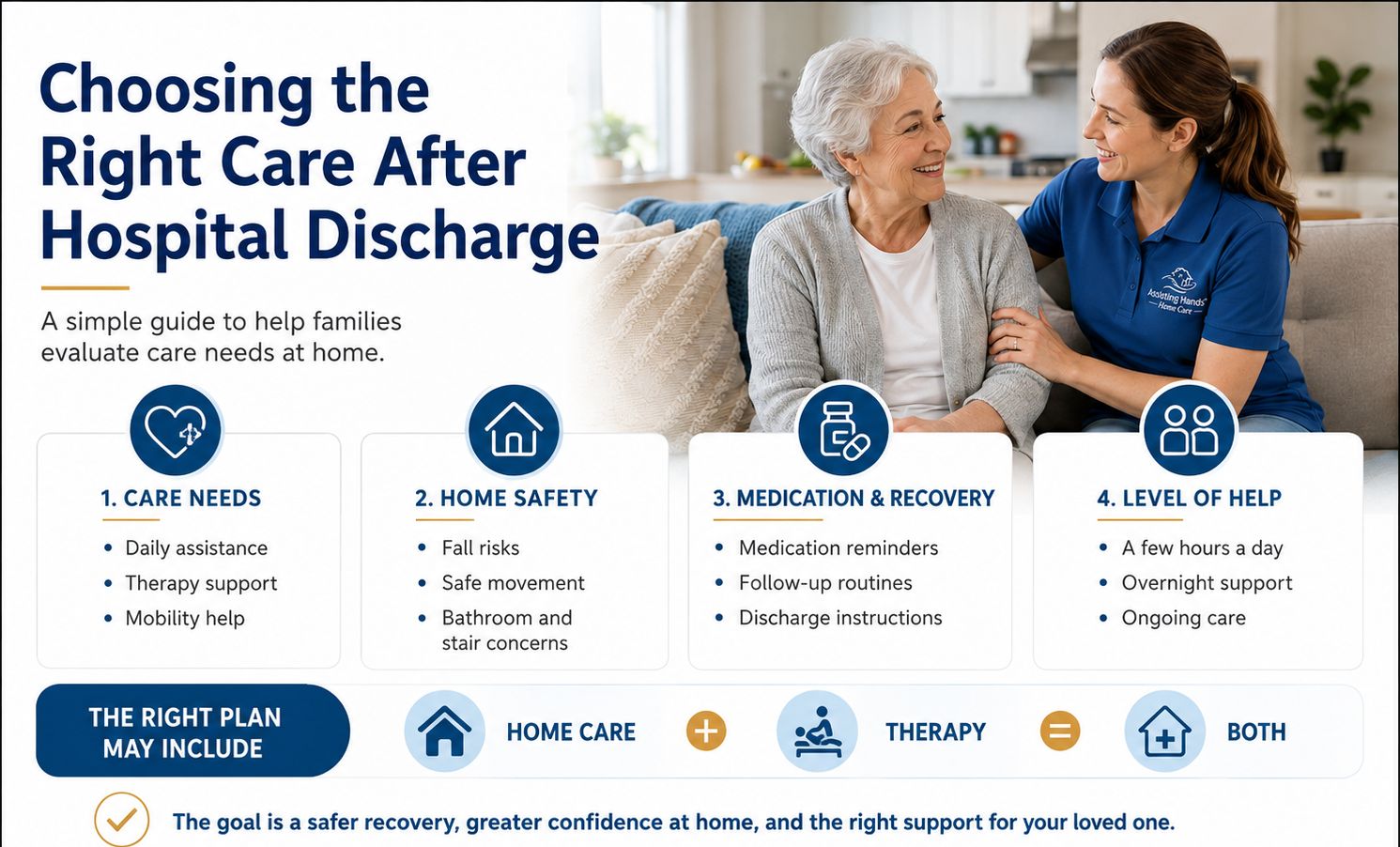
Questions to Ask Before Choosing Care After Hospital Discharge
Before you decide what type of care is needed, it helps to talk through a few questions with your family and the discharge team:
- What kind of support does my loved one need?
- Do they need medical therapy, daily assistance, or both?
- Can they manage safely at home right now?
- Are there fall risks in the home?
- Do they need help managing medications?
- How much help will they need each day?
- What does the discharge plan recommend?
The answers usually point clearly toward therapy, home care, or a combination of the two.
How Post-Hospital Care Helps Prevent Hospital Readmissions
The days and weeks right after discharge are when many seniors end up back in the hospital, often over something that could have been caught early. A caregiver in the home can lower that risk by:
- Making sure medications are taken correctly and on time
- Watching for changes in health day to day
- Supporting good nutrition and hydration
- Helping the senior get to follow-up appointments
- Spotting warning signs before they become emergencies
- Reducing fall risks around the home
Readmissions are costly for families and hard on seniors. Having the right care and support in place upon discharge can greatly reduce the risk of setbacks that lead to rehospitalization.
How In-Home Care Supports Recovery After Hospitalization
For seniors recovering at home, professional caregivers provide the kind of steady, day-to-day support that makes recovery safer and less stressful for the whole family. That includes personal care, meal preparation, transportation, medication reminders, help with mobility, companionship, and safety monitoring.
At Assisting Hands Home Care in Hinsdale, our caregivers work alongside your loved one’s recovery plan, whether that plan involves rehab, home care, or both. If your family needs support quickly after a discharge, care can often begin within 24 to 48 hours of the initial consultation.
Our post-surgical care ensures that your loved one gets the extra support they need after returning home from the hospital to make their recovery safer and more comfortable. Call us at (630) 407-1932 to schedule a free in-home consultation and talk through the right support for your situation.
Post-Hospital Care vs. Rehabilitation FAQs
What is the difference between post-hospital care and rehabilitation?
Post-hospital care supports daily activities and safety after a senior returns home, such as bathing, meals, medication reminders, and transportation. Rehabilitation is therapy-based care that helps someone regain strength, mobility, or function after an illness, injury, or surgery. In short, home care supports your daily life while rehab rebuilds a specific ability. Many seniors use both.
Is rehabilitation the same as home care?
No. Rehabilitation is a structured therapy program led by licensed professionals like physical, occupational, and speech therapists, and it targets specific recovery goals. Home care is non-medical support with everyday activities, provided by trained caregivers. They can happen at the same time, but they do different jobs.
Does Medicare cover rehabilitation after hospitalization?
It depends on eligibility and the type of service. Medicare may cover certain rehabilitation services, such as skilled therapy or a stay in a skilled nursing facility, when specific conditions are met following a qualifying hospital stay. Coverage rules and time limits vary, so it is best to confirm the details with Medicare or the discharge planner before making a decision.
How long does someone need post-hospital care?
It depends on the person’s recovery. Some seniors need support for a week or two while they get back on their feet, while others benefit from care for several weeks or longer, especially after major surgery or a long hospital stay. Needs often change as recovery progresses, so a good care plan can be adjusted over time.
Can seniors recover at home after hospitalization?
Many can, with the right support in place. Recovering at home is often more comfortable and less disorienting than staying in a facility, as long as the senior is medically stable and has help with daily activities, medications, and safety. Home care makes recovery at home realistic for a lot of families.
When does a senior need rehab instead of home care?
Rehab is the priority when the main goal is recovering a physical or functional ability, such as walking again after a hip replacement or regaining speech after a stroke. If the concern is clinical recovery and therapy rather than daily assistance, rehabilitation is usually what the care team will recommend. Keep in mind that home care can still run alongside rehab.
What services are included in post-hospital care?
Common services include personal care and hygiene help, bathing and dressing, meal preparation, medication reminders, transportation to follow-up appointments, mobility assistance, light housekeeping, companionship, and safety monitoring.
How can home care prevent hospital readmission?
Caregivers help by making sure medications are taken correctly, watching for changes in health, supporting proper nutrition and hydration, helping with follow-up appointments, catching warning signs early, and reducing fall risks in the home. That steady, in-home attention helps small problems get addressed before they turn into another hospital visit.

